Arequipa: Chasing Volcanoes

I am falling way behind on the blog and my notes from the week I spent in Arequipa are sparse because I was traveling with Camille and it’s hard to be as diligent about note taking and story telling when you’re traveling with someone. I will do my best to keep the blog alive and am attempting to catch up, but the motivation has already started dwindling as my travels continue. Some of the in the moment thoughts and detailed descriptions from Arequipa have already been lost in time and space. Such is life with travel tales. Hopefully Brazil will revive it! 

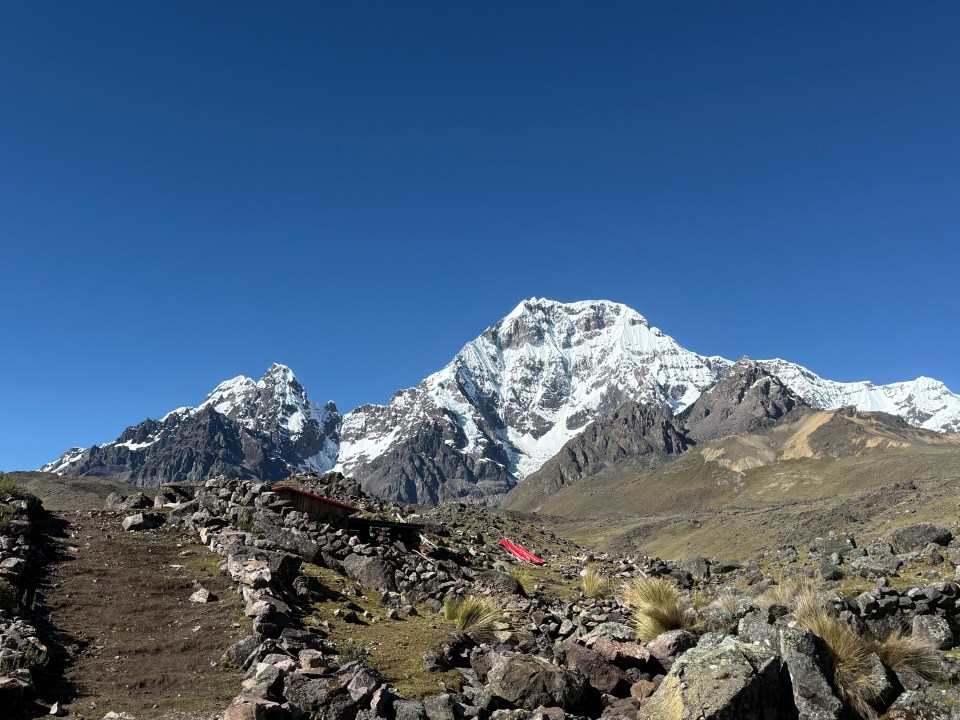
Arequipa is the unassuming second most populated city in Peru with a population of 1.18 million people sitting at an altitude of a measly 7,627 feet. It was the lowest I’d been in over a month, but the city is surrounded by three volcanoes that define its skyline, landscape, and local culture. El Misti standing at 19,101 feet high is the symbol of the city with its perfectly conical shape and the only one that is currently active. Chachani the tallest peak overlooking the city at 19,872 feet. And finally Pichu Pichu, the oldest and smallest of the immediate trio which has seven summits and stands at 18,582 feet at its highest point. So there was still more high hiking I wanted to do while I was so acclimatized. I was in prime shape for high altitude hiking and didn’t want to stop now. 

Nicknamed “La Ciudad Blanca” the historic center is famed for its colonial architecture and white walled buildings made from sillar – a bright white volcanic rock. It has a European feel in the center with narrow cobblestone alleys with potted plants hanging from window sills and unexpected courtyards behind close doors. It’s a fun place to roam around without an agenda and get lost on a beautiful side street. 

I had only spent a few days in Arequipa last time I was in southern Peru and it was one of my favorite Peruvian cities. I really wanted to slow down and take my time this round; and was immediately drawn back into the city’s tranquil vibes and romantic charm. 

I also love that if you go outside the historic center then you are immediately thrown into the hectic market chaos and crowded streets that I know and love about Peru. It’s a nice mix of European and Peruvian vibes blended into one city.

Getting In

I had struggled to fall asleep in the beginning of the ten hour bus ride from Cusco but I passed out hard during the last couple of hours. I was so asleep that I didn’t even wake up when we arrived in Arequipa; Camille had to shake me awake. We got in around 7am.

Lodging 

Camille and I stayed at Andes B&B for five nights over the course of a week (she stayed four because we parted ways so I could hike Chachani and she could go north to Paracas on the coast); and the other two nights were spent “sleeping” at the Base Camp of volcano hikes – Misti and Chachani. Andes B&B was a cozy bed and breakfast in a great location right by the Plaza de Armas with comfortable beds and a very nice courtyard/kitchen area. Plus breakfast was included. It was a good place to call home for the week. They were even kind enough to let us check into our room at 7:30 in the morning when we first arrived from Cusco; which was unbelievably nice! We were so tired after the overnight bus and we basically got a whole extra day for free by checking in that early. Five star service right there!

Food

Arequipa has a number of distinctive dishes that are specific to the city. According to our walking tour guide, there are more unique recipes from Arequipa than any other city in Peru. There were a few dishes that I had tried last time that I ate again like rocoto rellena with pastel del papá (spicy red pepper stuffed with ground beef, olives, raisins, and hard boiled eggs topped with cheese that is paired with savory thinly sliced potatoes, Andean cheese, milk, and eggs baked until bubbly), chicharrón de cerdo (deep fried pork skin often with a layer of fat and meat still attached), and queso helado (my favorite daily sweet – milk base simmered with cinnamon sticks, cloves, and vanilla extract with shredded coconuts and egg yolks steeped into the base. The final serving is topped with ground cinnamon).

But I also tried a few new ones: chupe de camarones (soup made of a creamy shrimp chowder in a spiced broth with potatoes, corn, rice, peas, and cheese), costillar dorado (tender ribs simmered in a sauce) and Arequipeño Buñuelos (very lightly fried flour dough kind of like a beignet that was topped with queso helado. It’s served for breakfast and tasted like apple pie; which I was totally okay with)

Wandering around Town

There were a few slow moving days during my week stay in Arequipa and that was exactly the vibe I was seeking. It’s a good city to sit back, relax, and soak in the energy of the white sillar buildings and surrounding volcanoes. I had been going nonstop for my first 6+ weeks of travel so I was totally fine with spending a week in Arequipa slow traveling.

On the first morning we took advantage of our early 7:30am check in and slept in late. Then after breakfast we went to a tour agency, Waiky Adventures, to book our Volcano Misti tour for the next day (I would end up using the same agency for Chachani). The agent Flore was super friendly and really liked our energy. Camille is a strong hiker but she was a bit hesitant to do another high altitude hike. She knew I was eager to do it and said she would be willing to join (even though I told her that she didn’t have to). It was her birthday that Sunday, day two of the trek, on summit morning; so it was shaping up to be a memorable birthday (little did we know what that would really entail). 

After booking our volcano trek, I gave Camille my tour of highlight attractions around town from last time I was in Arequipa: San Lázaro (oldest and most picturesque neighborhood in the city with a maze of beautiful narrow cobblestone streets of sillar volcanic wall and relaxing vibe) > Yanahuara Scenic Overlook (quaint plaza with beautiful views overlooking Misti Volcano and Chachani Volcano) > Mercado San Camilo (chicharrón sandwich with jugo de cherimoya and lucuma for lunch). It was a pleasant day exploring the city at a leisurely pace. We picked up the needed supplies for the trek and had a chill early evening.

Misti Volcano – two days, one night; 8.0 miles; 5,181 feet elevation gain; summit – 5,822m – 19,101 feet

Misti Volcano Day 1 – 1.9 miles; 1,923 feet elevation gain

The group was me, Camille, an Australian guy Ben, and two Arequipeña women Evelyn and Lily; and our guide was Elvis. We left Arequipa around 8:30, and I was in the back seat with the two Peruvian women. We chatted it up for the first half of the ride talking about places I’d been in Peru, travel, food recommendations for traditional Arequipeño dishes, and music we liked. Evelyn was quite chatty which was nice for the ride but turned out to be a little annoying later on in the night when trying to sleep. It was a three hour drive along some windy dirt roads with occasional construction. The road became extra bumpy toward the end as we got closer to the volcano.

The biggest challenge of day one was the crazy amount of weight in our backpacks. We were told to bring five liters of water per person (two liters would be used for cooking and hot tea…you’d think they’d figure out a meal that didn’t require us to bring so much water). On top of all this water weight, I was carrying mine and Camille’s tent, a sleeping bag, a mat, snacks, and all my layers of clothes needed for the next day. It was a very heavy backpack. Add on top of this that we were walking (sinking?) in volcanic sand. The distance was short but it was a tough terrain with a decent bit of elevation gain at altitude with a heavy pack. Luckily I live for this! 

Similar to the beach, distances are deceptive when walking in volcanic sand. Nothing ever looked that far away but when you constantly have that sinking sensation with each step you take then hiking takes a lot longer than usual. 

It was a steady uphill battle as we climbed up the sandy dunes of the volcano. The Peruvian girls were much slower (a sign of what was to come the next day) and eventually Elvis just let the rest of us plow forward at our own pace. 

We got to base camp at an elevation of 15,582 around 3:30. It was just a couple of rock circle formations setup to help block the wind for the tents. After setting up camp we just chilled for a bit. Soup dinner and chaufa was served at 4:30. I appreciated the hot soup at the time but I’m unsure if it was worth bringing the extra two liters of water. Afterwards we sat around chatting for a bit but everyone went to their tents by 6pm as we had to wake up at midnight. It was starting to very lightly snow as the sun went down. Elvis said not to worry about it and that the weather should be nicer in the morning. 

Somehow I feel asleep by 6:30pm and actually slept better than a lot of the previous nights only waking up once the entire time before midnight. Poor Camille had a terrible night of sleep and the Arequipeña girls kept her up by loudly chatting all night. South Americans usually aren’t very good at keep their voice to a whisper. 

Misti Volcano Day 2 – 6.1 miles; 3,258 feet elevation gain

When I woke up around 11:30pm to use the bathroom, there was at least a half of inch of snow on the ground. So much for the weather improving. Our midnight wake up time came soon after and by 12:30am we were having coca tea and eating bread with jam. It was already very cold and we were only at base camp. 

Lots of long switchbacks as we worked our way up the volcano in the dark. At first we were trudging through light snow but the amount increased as we got higher. The air got thinner, the incline of the slope got steeper, and the snow got deeper. Sometimes best not to see the steep slope ahead since it’s dark and just keep the headlamp down stepping one foot in front of the other. It’s the monotonous rhythm of night hiking. In the beginning, to pass the time I was thinking back upon my trip going through all the places I’d been and experiences I’d had. It was a good mental reminder of all that I had done in the past 1.5 months. I’m glad I did it early on in the hike before it got more intense and all mental energy had to shift focus.

We went at a snail’s pace which was good to keep heart rate down and breathing steady. I understand why the guides do it but for me it was a bit too slow. Other people in the group were still struggling though. One of the Peruvians, Evelyn, would keep asking to take a break every 10 minutes and Elvis did a good job continuing to plow us forward. He would say no we can’t stop here and keep us going another 10-15 minutes until we could find a good rock to block the wind. This is one thing that irks me with high altitude hikes in South America. There’s no questions asked or qualifications required to do these high altitude hikes and some people aren’t ready for it. I think next time I come back to the Andes for a shorter time period with a strong hiking partner and we figure it out on our own. I love meeting people on group treks here but sometimes I get sick of being with novices on difficult big mountain hikes. Plus the logistics and gear required are too difficult to deal with on a long term backpacking trip

I also felt bad for Camille because she was feeling some minor altitude sickness. I don’t think this was her idea of an enjoyable birthday morning but she had just gone along with me for the ride. Early on in the hike she was feeling nauseous so I was worried about her. But to her credit she kept plowing forward and by the time we were halfway up she seemed to be feeling much better. But then the crazy weather kicked in and a whole new type of challenge presented itself. 

When I had looked before the trek, the mountain forecast for Sunday showed sun with cloud. Elvis said the same. No one expected a storm like this. As we kept working our way up the infinite switchbacks gaining 800 feet the first mile and over 1,500 feet the second mile, we reached a particularly exposed section where the trail was at a weird angle and the wind just started ripping us. And it began to snow again. Conditions were getting harsh. A few times on this section Evelyn asked if we could take a break and we all yelled no. We had no protection from the wind and snow and had to keep moving our bodies. Mother Nature hit us with her fury: snow, 50+ mph wind gusts, clouds, temporary white out conditions, and extreme cold weather. 

I thought the hike had been relatively easy at the pace we were going until that last 1-1.5 hours of the ascent got so crazy with the wind and snow. Even I was questioning everything. It was steep slanted uphill while we were getting snowed on. When we got near the top of that section, the wind was absolutely ripping us. It had to be at least 50+ mph gusts and was creating white out conditions. We were over six hours into the ascent and only had 20 more minutes, but I thought we weren’t going to make the summit given the weather conditions. 

I give Elvis credit, after a couple minute pause we kept plowing forward even with the strong winds. The final section was a bunch of small switchbacks that felt like a lifetime with the insane wind. My legs and breathing were fine, and my body was warm, but my fingers were absolutely frozen (the gloves they gave me at the agency didn’t really fit. This was a mistake not to be more diligent when trying them on. So instead I was just using my alpaca gloves which was not providing sufficient warmth). I was rotating putting my hands in my pockets and would just hold both poles in the other hand planting them in the ground like an ice axe. 

While we couldn’t see anything at the summit, it was such a reward to make it to 19,101 feet at the top. Plus now every time we looked at Misti from Arequipa we would know that we made it to the peak of the volcano. It is an active volcano with the classic conical shape and normally you can look into the crater but given the current cold and cloudy conditions we couldn’t see much. Chachani Volcano and Arequipa would become visible for 5-10 seconds then the strong winds would blow the clouds in front of them seconds later and they would vanish again. The views never lasted. High altitude hiking is not for the faint of heart. All of this hard work for no visual rewards; just the physical and mental ones. And the sensation of being over 19,000 feet high. While I would have preferred a beautiful sunny day, it was still worth it. If it’s not going to be a beautiful day then at least bad weather will make for a good story…afterwards. It really sucked in the moment but then you look back upon the experience and it’s very memorable. I’m sure Camille will never forget this birthday morning. Elvis said a storm like this in late May is incredibly rare. Of course the one day we summited.

We stayed at the top for less than 10 minutes. Everyone was freezing and needed to keep moving. On the way down, instead of doing all the switchbacks, we took a more direct route straight down the side of the volcano through snow and volcanic sand that you could kind of surf down. Snow on volcanic sand is an interesting sensation and went way quicker than our uphill battle. It also did a great job dirtying the shoes. 

At this point we had survived the gauntlet of ascending the volcano during the storm so everyone was in good spirits all things considered; we were all just super exhausted. But at least we could reminisce on how crazy the morning had been. It’s all downhill from here. It took us about 1.5 hours to get back to camp. Elvis told us that we could just leave the tent, sleeping bag, and mats for the next group. Luckily them not having to carry up all this gear! But they would also have to sleep in our slightly damp equipment due to the snow. Another one of life’s trade offs.

The final descent from camp down to the car took less than an hour as we just surfed down the sandy volcano. There was no need to follow switch backs, you could just go straight down. And for the first time all day the sun decided to poke its head out. Oh how nice! Right when we’re finishing. Better late than never. We got back to the car a little before noon. A solid eleven hour morning on trail with inclement weather. It was an unforgettable experience that’s for sure.

After our incredibly long morning, we returned to Arequipa from Volcano Misti in the mid afternoon. It was still Camille’s birthday but we were both zombies after the midnight wake up to summit the volcano and crazy day we had on trail. So after taking a three hour afternoon nap, we went out for a nice birthday dinner, then immediately went back to sleep. We ate at Victoria Museo Picantería, recommended to us by our local Arequipeña friends Evelyn and Lily during the Misti trek and it did not disappoint. The restaurant offered a full range of local dishes with a high quality fine dining experience. The menu was laid out based on the historical timeline and heritage of each dish; so it was cool to see that breakdown. We got a tasty rocotto relleno with papá de pastel and a delicious grilled octopus! Of course we paired it with some pisco sours. I told the waiter it was Camille’s birthday and she brought us out a queso helado topped with berries for desert. It was a nice ending to a very long day.

Santa Catalina Monastery

On the fourth day, rejuvenated from a full night’s sleep and a slow start to the morning, we went to the Santa Catalina Monastery. This massive, brightly colored complex covers an area over 20,000 square meters. It occupies an entire city block in Arequipa with a fortified stone wall to protect the covenant. Founded in the late 1500s, this monastery housed 450-500 people during its golden years (around 150 nuns and up to 300 personal slaves and cooks). It was designed with four distinct neighborhoods that had colorful blue and orange painted sillar walls, winding streets, beautiful courtyards, a plaza, a cemetery, a garden, and a church. It was truly a village in and of itself and a very gorgeous complex to walk through.

It was fun to walk around the colorful monastery and picture the lives of the nuns here hundreds of years ago. There was an app with a guided audiobook that went along with touring the facility and added some good context to the experience. To gain entry into the covenant, a family would have to pay an equivalent to $150,000 in today’s money so it wasn’t exactly a place for your average nun. You could almost pay for a Tulane education with that kind of money. These woman would live in private multi-room apartments with a kitchen, bedroom, sitting room, courtyard, and balcony access. It was truly luxury living for some of these woman. The broke backpacker in me was jealous about the luxurious lifestyle being lived by these late 1500s nuns.

Camille liked to look in every room so we ended up being there for close to three hours. A bit long winded for me to be at a museum but I still enjoyed the experience. It was fun to have an audience to laugh at my silly jokes along the way. We made a halfway stop at the cafe for a coffee and snack break so that helped split up the day. It was a very immersive monastery and I could see why it’s one of the top attractions in Arequipa. I’m not sure how I missed it last time but I would recommend.

Later that evening, we got massages to celebrate our hard work summiting Misti Volcano. It was a very relaxing 1.5 hour massage that went way too quickly. It’s amazing how fast time can fly during a good massage. Then we met up with my friend Anne for dinner (German girl who I met in Cochabamba weeks before who now also happened to be in Arequipa, which I knew thanks to seeing her Instagram story). She’s a really good vibe and energy and it was fun to catch up with. Even though she’s only 22 years old, she has the travel maturity and social skills of someone much older.

On our fifth day in Arequipa we decided to do the free walking tour. Even though we had been there for a while and already knew some of the cool spots around town, it’s always good to get some more context on the city. In the morning we went back to the market for another local menu del dia lunch and queso helado from the original location (on the second floor of Mercado San Camilo; we found this out thanks to the woman working at the tour agency, Flore. I told her that I loved queso helado and she said we had to try it in the market. She wasn’t wrong!).

There was an insane amount of people signed up for the 3pm walking tour. I hadn’t seen this many gringos since the streets of Cusco. It was a good thing that we both knew Spanish so we walked with the Spanish tour which only had eight people versus the nearly fifty people in the English walking tour. We quickly lost the other group and it made me wonder if they gave us the more local walking tour in Spanish. They began by talking about how all the buildings in the center were made from volcanic sillar rock to withstand the forces from earthquakes in the area. It was a highly active seismic activity and apparently there had even been a small earthquake the day before during our massage. I certainly didn’t feel it.

Then they continued to take us to a number of locations throughout the next two hours, some classic highlights and some new ones: Santa Catalina Monastery (just from the outside) > Alpaca World (facts about alpacas and they let you feed them for free) > San Lázaro neighborhood (my favorite neighborhood. The guide told us the story of how the Spaniards were mostly on the coast when they first arrived to be close to the port. But the weather was consistently gray and foggy so they went three hours inland and discovered Arequipa. The locals kindly let them co-inhabit the land, a decision they would later regret) > Fundo el Fierro (first artesanal market) > Plaza San Francisco (quieter more peaceful square) > Biblioteca Regional Mario Vargas Llosa (in honor of the famous Peruvian author and politician) > Casona Azul (prior to 20th century all houses were colorfully painted) > Cloisters de la Compañía de Jesus (17th century architectural complex with a beautiful courtyard) > Iglesia de la Compañía de Jesús (intricately carved cathedral with mosaics depicting tropical birds, native flowers, and warriors) > Plaza de Armas > drinks at a terrace bar above the Plaza de Armas with volcano views during the sunset.

I already had a strong appreciation for all the hidden gems and beauty of Arequipa and this tour solidified my love of the city. The guide told us it had been 2000 years since the last Misti eruption but it’s supposed to happen every 2000 years; that’s got to be pretty unsettling for the people of Arequipa. Hopefully that is not an event that I witness happening during my lifetime. 

That night we went out to dinner at La Benita de Los Claustros, which had been recommended by our walking tour guide. Our guide plus our Arequipeña girls from Misti had been hyping up chupe de camarones as their favorite dish so we figured we had to try it; even though it was the most expensive dish on the menu. When in Arequipa! It was decent tasting but not anything too special. Compared to some of the shrimp dishes I’ve had in New Orleans the flavor was average at best. Me and Camille didn’t get the hype. Eating shrimp is a real luxury here. We also got rocotto relleno with pastel de papa just to eat that classic again. 

After spending five days with Camille in Arequipa, we parted ways so that I could hike Chachani Volcano (doing Misti was more than enough for her) and she could go to Paracas (a coastal town that I had visited during my last trip in Peru and didn’t need to double take). Then we were going to meet back up in three days in Lima to spend our final few Peruvian days together. 

Chachani Volcano – two days one night; 3,632 feet elevation gain; 7.67 miles; 6,057m – 19,872 feet

Even though Chachani Volcano is higher than Misti, it is considered an easier ascent (and one of the easiest 6000m peaks in the world) because you start higher and don’t have to hike as far to base camp; and the terrain isn’t dense volcanic sand so it’s easier to walk on. Chachani is a dormant volcano so it does not have the classic conical shape. It looks more like a ridge line connecting multiple mountain peaks. I was excited to surpass the heralded 6000m mark again and this would be my second highest peak behind Huayna Potosi. 

It was another three hour drive along rough roads, even more steep and bumpy than the ride to Misti. We had a large group, eight counting me – a German couple (Lisa and Eric), two young Swiss kids (Jann and Sylvan), a French woman (Flo), an Italian guy (David), and a Belgian guy (Arvin) which also meant two guides – Berly and Hugo. 

Chachani Volcano Day 1 – 1.67 miles; 558 feet elevation gain

Once again we had to carry five liters of water weight. Also they had told me the day before the tents would already be setup but then that morning things changed and we would have to bring up the tent, mat, and sleeping bag. Of course always being the porter. Oh well it was a much shorter distance and elevation gain than Misti so I didn’t really mind.

The hike to base camp started on a flat rocky path then it was about 15 minutes of boulder hopping followed by another flat section and then a small final uphill to camp. It was a cake walk of a hike compared to many of the hikes I had done over the past month. The landscape was very beautiful, more so than Misti. We had nice views of some of the former peaks of the Chachani volcano. I spent most of the hike chatting it up with the German couple, Lisa and Eric.  

Berly explained to us some of the local plants. The yareta plant is one of the oldest living organisms on Earth with rock hard density in spite of looking like velvety moss. Local Andes cultures have used the sap and leaves to brew medicinal tea for high blood pressure and diabetes.

He also pointed out the chachacoma plant which is also put in teas for local remedies such as altitude sickness, respiratory relief, and anti inflammatory properties. We ended up drinking chachacoma tea at camp and it had a nice herbal flavor to it. 

We got to camp around 2pm at an elevation of and 16,955. After setting up our tents we just hung around and chatted. Then we had lunch/dinner around 3. It was soup with chaufa just like Misti. Good enough! The Italian guy David was my tent mate and by 5pm we were already lying in bed trying to sleep. This time I wasn’t as lucky as Misti and I struggled to sleep through the night. It took me awhile to initially fall asleep then I kept waking up every 20-30 minutes. It was not an amazing night’s sleep.

Chachani Volcano Day 2 – 5.9 miles; 3,074 feet elevation gain 

All too soon the 12:30am alarms were going off and it was time to wake up. We had our coca tea and bread and jam breakfast at 1 and were on trail by 1:30. Since we had two guides, we were able to split off into the quicker and slower group, which was nice. We still walked at a snail’s pace with me in the front right behind the guide Berly but at least we didn’t have to wait for everyone. It was a constant back and forth on short switchbacks working our way up the volcano. We were gaining about 750-1300 feet per mile so it had some incline but was never too steep. Even though it was nice, clear weather (unlike Misti), it was still incredibly cold temperatures and every single layer of clothing was necessary. This time I made sure the mountaineering gloves fit me better; so that was a big help. But my hands still felt very cold at times. It’s just unavoidable when hiking at this high of altitude. 

About halfway through, Lisa started feeling extreme nausea so her and Eric headed back down. The guides had setup a headlamp on a rock to make it obvious as to where camp was. Now we were six. Flo went way slower than everyone else so she was in the back with Hugo as her guide and Berly led the other five of us. 

The pace was slow so I never had any really struggles until the last couple hundred meters. At this point the air was getting extra and breathing more difficult. I was still completely fine but could certainly feel the impact of the high altitude and was glad to be going at a slow pace.  

We had to get our crampons on for the final 15 minutes to the summit. It started out with a steep side angled snowy section with some exposure so that got the heart racing a bit. But then it leveled off into a short flat section before the last snowy uphill to the summit. I was the first at the top standing 19,782 feet high and was elated when we actually had clear views! I could see Misti perfectly and Arequipa loomed in the distance. We could also see all the way to some of the other massive volcanos in the region: Ampato and Nevado Coropuna (the highest volcano in Peru).

We enjoyed the views from the top for about 15 minutes but the wind was fierce and it got cold quickly up there. Then it was time to head back down the volcano, and just like Misti, we didn’t have to follow all the switchbacks we had taken up, we could just run/surf down the side of the volcano and let the dirt catch us. Berly and I were talking most the way down. He’s a madman! He was going straight from this trek to Misti back to Chachani to Ampato. The guy guides treks seven days a week during peak season and he absolutely loves it! When I asked what he does on his time off, he hikes/climbs other mountains. A true mountaineer! 

We got back to base camp in under an hour and had some time to chill. Once again we didn’t have to pack up the tents or sleeping bags so yay for not having to bring those things down. My bag felt very light as we hiked back down the section we had done the morning before. It was another successful 6000m peak and sadly the last high altitude hike I will be doing for a while. I was in peak acclimatization but at some point you have to let that go. I will get it back soon enough. 

On my final day in Arequipa, I had the entire day to kill until my 6:30pm bus to Lima. I walked around town to some of my favorite spots getting a coffee and queso helado in Fundo el Fierro, sitting in Plaza de San Francisco soaking in the local vibe one last time, and going to Mercado San Camilo for another menu del dia lunch (costillar de dorado) with a jugo de tumbo with orange. I had another good convo with my juice lady, Delia. We talked about our families, travel, she disliked how much china was taking over her country, and she hoped I would find a woman maybe even a Peruvian. It was a solid twenty minutes of banter that I was loving. It was nice traveling with Camille but the random interactions were more limited. There’s something about being solo that just opens up more opportunities.

I also visited Museo Santuarios Andina which houses the famous Juanita mummy. No photos were allowed inside the museum so there will be no visual accompaniments. In 1995 at Mount Ampato two archaeologists stumbled upon a mummy. Volcanic activity of nearby Sabancaya had melted the snowy Ampato exposing the remnants of Juanita, a mummified body of a young girl about 13-14 years old who had been sacrificed during an Inca ceremony. The tour started out with a National Geographic video describing the expedition and work that has been done to uncover the tale since. It was discovered that she died from a violent blow to the head. While this sounds cruel, it was an honor in Incan culture to be sacrificed to the Gods. She was found dressed in royal clothing. They also found the bodies of two younger children slightly further down the volcano (with no blow to the head) that probably weren’t able to hike as high as Juanita could. 

Eight bodies have also been found at Misti but mostly melted from the gases of the active volcano. Sacrificed bodies have also been found at Picchu Picchu. Then finally we were shown the main highlight…Juanita. Sadly it was a replica because the real version was being restored. She was in the fetal position and still had her hair and teeth, but lost her eyes and lips.

Cusco: The Wonders of Incan Engineering and the Sacred Ausangate Mountain

Once the administrative capital and epicenter of the Incan empire, the old city is in the shape of the sacred puma with the head represented by the Sacsayhuamán ruins, the belly by the Plaza de Armas, and the tail by the Tullumayo River. Today the city has a population of nearly 530,000 people and lies at an average elevation of 3,399 meters (11,152 feet); so some people need to acclimatize their first few days. I was coming from La Paz so it was actually a decline in elevation for me. Like many South American cities, the Plaza de Armas is in the valley and the city extends up into the hills so walking uphill is unavoidable. Cusco is an amazing city, but very touristy. You can’t go five feet without getting offered a massage or a tour. I spent about two weeks here during my last South American adventures and eleven more days this time. The real highlight of Cusco is its easy access to the Sacred Valley villages, many incredible multi day treks, and the jungle. One could spend months exploring the surrounding area and still not see it all. 

Getting In 

I met up with the boys: Charlie, Jude, and Costa to commute to the La Paz airport together since we were all evacuating on the same flight to Cusco. We took the purple line teleférico up to El Alto and soaked in the views of La Paz one last time. I also broke my watch when I accidentally hit it against the teleférico. Well my cheap watch from Cochabamba lasted less than two weeks…not surprising. You get what you pay for. Then it was a short taxi ride to the airport. It was mostly smooth sailing to get through security and customs (I accidentally left my pocket knife in my small backpack so that gotten taken at security) and we had plenty of time to kill before the flight. Once again my Capital One Priority Pass lounge access came in handy. I ditched my friends to enjoy my lounge perks. The food spread was very weak, but I ate some snacks and a subpar sandwich. The real highlight was the free beer, comfy seats, and easy access to chargers. 

During the flight the guy in front of me goes “Colin?” It turns out it was this British guy Martin who sat at our table at Noma in Copenhagen (the three star Michelin restaurant I went to with Jordan). A month prior he had messaged me on Instagram asking for South America recommendations. I don’t quite recognize who it was but saw that Jordan was our mutual friend and thought it was some Denver club kid, but once I saw his face I remembered him from Noma. What are the odds?!  When we landed, the customs line to get into Peru moved painfully slow. My seat was in the middle of the plane and it still over 45 minutes. 

Lodging 

I spent my first two nights in Cusco and the night before Ausangate in Magicpacker Hostel. It actually turned out to be quite social. The first night after my search for an Ausangate tour I almost went to read in bed, but I decided to have a beer instead. I ended up drinking and chatting for hours with two Scottish guys, an Irish guy, an Australian girl, and a few Brits – a group of native English speakers shooting the shit. 

The next night I was partying with two Argentinians, Frederico and Nico, who were volunteering for two weeks at the hostel. We spoke nearly two hours and It was nice to see I could hold down such a long convo in Spanish with them. They were riding their bicycles from Argentina all the way to Colombia continuing through all of Central America then up the west coast of the U.S. (if they can get a visa). Sheesh how crazy! They were camping along the way and volunteering at hostels and already had some great stories. They were telling me how difficult it was to get over some of the mountain passes in Bolivia. Obviously I told them about my experience in Argentina during the World Cup. Then we mostly talked about travel. Afterwards I drank with the English speaking crew.

The two nights at my hostel in Urubamba were not particularly social as I was one of only three people staying at the hostel. That was fine by me, I would just watch AppleTV in my bed. I had booked a six person dorm and they put me in a twelve person dorm. I was annoyed at first but I had the entire room to myself both nights so that was cool. The walk into the center was 20 minutes so it was a bit of a trek to go out for dinner, but the town was quiet and safe so I didn’t mind. The views of the surrounding mountains were nice from the hostel.

My last two nights in Cusco after the Ausangate trek I stayed in a cheap hotel. It wasn’t particularly nice but at least I wasn’t in a hostel dorm. The shower was cold the night I had returned from five days of trekking and four nights of sleeping in a tent so that was a bummer. All I wanted was to relax in a hot shower and instead I quickly washed myself in less than a minute. The lady at the desk was nice and let me switch my room. She said I had to wait at least three minutes for it to warm up. My next shower was better (it wasn’t piping hot but at least it was warm). 

Food

I was stoked to eat some good Peruvian food after spending a month in Bolivia. I had some good meals in Bolivia but overall I found the food average. There is a much greater variety of Peruvian food and the dishes are more flavorful. Although after spending three weeks in Peru, I ended up having more stomach problems here than in Bolivia. I need not go into details but there were a few meals that really upset my tummy. All that aside the food was still delicious. In Cusco and Urubamba I had a variety of classic Peruvian dishes from lomo saltado to aji de gallina to chaufa to pollo tipikay and a number of different types of soups. Cusco can be quite expensive so I tried to stick to the menu del dia in Mercado San Blas, Mercado San Camilo, and at random local hole in the wall spots. 

The Hunt for an Ausangate Tour

The main reason I came back to Cusco, other than to escape the La Paz bloqueos, was to do one or two multi day treks that I didn’t do last time. I was between choosing the Ausangate circuit and Choquequirao; with the possibility to do both. The Ausangate circuit is a high altitude five day trek that circles around Ausangate mountain, the highest mountain in the Cusco region at 6,384 meters (20,945 feet). The hike to and from Choquequirao is a four day trek to an archaeological park nearly as impressive as Machu Picchu but with a fraction of the visitors due to being less known and the fact that you can only get there by hiking (although sadly there is talks of building a cable car to the site in the near future. It’s still in the preparation stages but appears to be a real possibility soon enough). The photos I saw of Ausangate looked incredible so I decided to make that my top priority. Plus I’m addicted to high altitude hiking and this would satisfy my itch. It was hard to pass up on Choquequirao, especially with the pending cable car construction that would ruin its quiet and remote charm, but alas life is about making decisions and in the end I was incredibly happy with my decision to do Ausangate.

After checking into my hostel, I spent my first evening going to a bunch of different agencies to get a price quote on Ausangate. It’s a much less popular trek than the Inca Trail and Salkantay trek, both of which go to Machu Picchu. Many agencies said I needed to find a group to get a lower price and others cost up to $650 which was more than I could stomach. I ended the night feeling discouraged.

The next day I looked online and found an agency that would do it for $350 (plus $25 for sleeping bag rental). It seemed too good to be true. I sent them a few WhatsApp messages and sure enough that was the price, but I had to wait until Friday (it was only Monday at this point). I went to the agency in person to pay to ensure it was actually the tour I wanted and all was well. It was a bit outside the center in a more local area and they were the ones who did the tour, rather than many of the other agencies who contact out to third parties. Perfect! The plan was in motion. Now I just had to fill my next couple days so I decided that I would spend two nights in a small Sacred Valley village rather than Cusco.

Sacsayhuamán

After resolving the Ausangate trek plans, I met up with my Italian buddy Costa to explore the Sacsayhuamán ruins located at the top of the hill above Cusco (the head of the puma). It was an uphill walk from the center where we passed by some aqueducts next to a beautiful narrow street lined with flower pots outside peoples’ homes. 

When we got to the ruins you had an option to buy a one day pass for a few archaeological sites or a ten day pass that included additional sites. Both were quite expensive by Peruvian standards ($20 and $38 respectively) but I remembered this being a thing last time I was in Cusco. I bought the ten day pass since I planned to visit a few of the other sites. Once inside we also decided to pay for a guide and ultimately I was glad that we did (the archaeological sites provide zero informative signs). “I’d rather do one site well and have a quality experience than try to quickly do multiple sites.” – Costa. He made a good point. 

Even though the guide spoke English, we decided to do the tour in Spanish since we were both adept enough. The guide was incredibly detailed and I took some notes but there was no way to recount everything. I enjoyed his level of detail in the beginning but the tour ended up being over 1.5 hours and my attention span was really fading the last 30 minutes. 

Here are a few takeaways from notes. Sacsayhuamán means “satisfied falcon” in Quechua and the ceremonial fortress was built during the height of the Incan empire in the 15th century. When looking at the archaeological site from above it is shaped after the Milky Way. The Incans were big on astronomy and on numbers representing different things. 

When the sun enters in perfect alignment with the three doors located on each level of the terrace then it’s the winter solstice. How they figured this out is quite miraculous. The guide would also point out shapes in the rocks like a llama and a puma paw. He also showed us three “portals” where the number of corners on the stones symbolized different things in Incan mythology. Sometimes it almost felt like he made this shit up to add more intrigue for tourists, but it’s truly hard to say. It’s like any religion; it requires having faith to believe. 

But the biggest mystery of all is how they dragged these massive rocks down the mountain and masterfully pieced them all together to create this fortress. It would take years (decades?) to bring down the stones. The guide said they used ramps made of soil and bronze tools as levers. Are we sure the Incans didn’t have help from aliens?   

Urubamba

While waiting for the Ausangate trek, I decided to spend a few nights out of the hustle and bustle of Cusco and in the Sacred Valley. I had already visited Pisac and Ollantaytambo on my previous trip so I decided to stay in Urubamba. Nestled in the Sacred Valley surrounded by beautiful mountains, this town has good central access to archaeological sites and day hikes in the area.

Point to Point Hike: Chinchero – Urquillos Trail (7.0 miles; 784 feet elevation gain; 3509 feet elevation loss)

I found a trail that started in Chinchero and cuts across to the other side of the highway to Urquillos where I could then catch a colectivo to Urubamba. I already wanted to check out the Chinchero archaeological site (it was on my ten day ticket) and since I was only bringing my smaller backpack I figured this would be a fun way to get to Urubamba. After breakfast at Magicpacker hostel, I headed to Calle Pavitos, the main area in Cusco to catch a colectivo for Urubamba. I got super lucky as I was the last person on the colectivo so it left immediately. It was heading to Urubamba but I let the driver know to drop me off at Chinchero. 45 minutes and 8 soles later (about $2.20) and I was there. 

There were a bunch of shops selling artesenal goods on my walk to the ruins and I asked one of the ladies if she could fix the zipper on my backpack (it had broken during the Pico Austria trek). She pulled out her pliers and a few minutes later it worked again…for now. I decided to buy a hat to thank her since I had accidentally forgotten mine and I also tipped her a few extra soles. I continued along to the Chinchero archaeological site, which were a series of terraced ruins with mountains in the backdrop. It also was the starting point of an old Incan trail leading to Urquillos.

The trail was pretty much all downhill to Urquillos (besides going down to see the waterfall and heading back up). The landscape was incredibly green coming off rainy season. It was a bit cloudy so you couldn’t see the tops of the mountain peaks but still beautiful views. It was very quiet and peaceful along the trail. About a mile in, I ran into the first people I’d seen since the ruins, and began to chat with this nice German couple who were on a one month vacation. We ended up doing the rest of the hike together. They were actual hikers rather than just backpackers so we talked mountain talk – both summer hiking and winter skiing. It was the guy’s first time in South America and he had strong opinions about the inefficiencies in Peru. Sorry bud but you’re not in Germany anymore. Overall I enjoyed their company. 

We made a detour to the Poq Poq Waterfall where we had to pay a small entry fee. It was a good size waterfall and worth a visit. This was the only spot where we saw other people all day, and it was just one Peruvian family. Otherwise the whole day on the trail was remote. After the waterfall we continued the downhill walk to Urquillos chatting the entire time. We passed through multiple farms along the countryside as we worked our way to the small village. 

Once in Urquillos we went along a road to Huayllabamba to make it back to the highway and catch a colectivo. The Germans were heading back to Cusco so we were going in opposite directions. As we got close to the highway, a colectivo heading in the direction of Urubamba was stopping to drop off some people so I quickly said my good byes and ran to catch it. It was starting to drive away but I knocked on the side of the van just in time for it to stop. Once again I got lucky and didn’t have to wait any time at all. I hopped on and 15 minutes later I was in Urubamba. I paid a few soles (less than $1) for the ride and got out on the main street. It was a highly successful colectivo day. For around $3 plus an amazing hike, I made it to Urubamba from Cusco. 

Point to Point Hike: Tarabamba – Maras Salt Mines – Maras – Moray (9.1 miles; 2,894 feet elevation gain; 774 elevation loss)

After having a morning coffee and empanada in the center, I walked toward the Urubamba bus terminal to catch a colectivo. On my way to the terminal I passed by the market and it was popping off (I had read Wednesday is the main market day). I love a good market so naturally I walked through to soak in the site. I bought a carrot juice for 1.50 soles (about $0.40) and the juice lady topped me off with la yapa after. It was a nice start to the morning. Once at the station I told one of the colectivo drivers I wanted to be dropped off at Tarabamba and he led me to his van. For the third straight colectivo ride I got lucky and we left immediately. Once we got close to the trailhead I had to yell at the colectivo driver to drop me off. When I asked the price he didn’t say anything so I just handed him 2 soles ($0.60) and walked out. 

The hike to Maras salt mines was about 1.7 miles and 600 feet of gain along a dirt road. It was not too exciting of a hike, but as I got closer to the salt mines it was cool to see them from the other side before getting to the crowds at the main site. This is a major day trip tourist attraction from Cusco so after seeing no one else on the walk up (other than construction workers fixing the dirt road), I was in the midst of countless tour groups. The Mara’s salt mines contain over 3,000 terraced salt ponds fed by a natural underground spring. The site dates back to Pre-Incan times and is entirely operated by local community families. You don’t need a lot of time here but it was worth a visit. 

Then I worked my way away from the crowds and continued along an actual trailhead up some steep switchbacks to enter the beautiful countryside between the salt mines and the town of Maras. This was my favorite part of the hike being surrounded by mountains and farmland that displayed the true beauty of the Sacred Valley. 

The next 2.7 miles to town were quiet and remote as I gained 1,100 feet of elevation without even really noticing. I was in my happy place walking along the trail soaking in the gorgeous landscapes. It was so much more peaceful than the hectic crowds of the salt mines and exactly the reason why I prefer making my own adventures versus doing guided tours. The Sacred Valley area is magical if you can get away from the day tours and instead navigate the colectivos and trailheads yourself. 

Once in the town of Maras, I got ceviche for lunch. It was tasty but turned out to be a slight mistake for my stomach in the middle of a hike. After lunch, I continued walking another 4.5 miles to Moray, which was a mix of narrow trails and dirt roads. It had a slight incline and went through farmland with cows, donkeys, bulls, and pigs. The Andes mountains continued to tower off in the distance. It was a gorgeous day

The Moray archaeological site was another unique and impressive display of Incan engineering. It consists of three sets of concentric circle terraces and is widely believed to have been an ancient agricultural laboratory where the Incas studied how different microclimates affected crop growth. The highest terrace is 490 feet higher than the lowest terrace and the sun hits each terrace at different angles which can lead to a temperature difference of up to 27 degrees Fahrenheit. Of course this all just a theory since the Incans didn’t have a written language. Yet another mystery of their ancient engineering practices that we are still attempting to explain today. 

I had read that you could colectivo from Moray back to Maras but the ticket attendant told me you had to take a taxi. It was either that or walk. And at this point I was ready for ease of transportation. Luckily there were two woman from San Francisco right outside the entrance also waiting for a taxi so we joined forces to split the cost. It was 10 soles per person (just under $3) so still not too bad. Once back in the square of Maras, there was a colectivo waiting for us. But it was empty so I had to wait this time. Luckily it didn’t wait to fill up and after about 10 minutes we were already on the road. For 4 soles ($1.20) I was back on the main street of Urubamba. It was another cheap and beautiful day exploring the Sacred Valley without doing a tour. 

Ausangate Circuit – 5 Days, 4 Nights Trek (42.31 miles; 9,894 feet elevation gain; 16,737 highest elevation pass)

As previously mentioned, the Ausangate circuit is a high altitude five day trek that circles around Ausangate mountain, the highest mountain in the Cusco region at 6,384 meters (20,945 feet). The entire trek is between 14,100 and 17,060 feet high and you go over four mountain passes (five if you count the fact that we did one of the passes from both sides in order to detour to Rainbow Mountain). This trek blew away and shattered all expectations. It was one of the best treks I’ve ever done with every day full of incredible landscapes and jaw dropping views. It was impossible to narrow down my 100+ photos from the five days. 

Plus the hike itself provided just the right amount of high altitude climbs to remain a challenge but not be too overly difficult (although it would have been very hard if doing self guided and carrying all your own food, tent, sleeping bag, etc). The mountaineer in me feels like a bit of a sissy to have the gear carried by horses, but in the midst of a long term backpacking travel trip I didn’t have time to do the detailed research required to do a trek like this without a guide, nor did I have the gear. 

I got picked up from my hostel at 3am for the 3.5 hour ride to the trailhead. It was a super windy road so I couldn’t really sleep. The last section of the road got really bumpy and gutted out. It was a group of ten of us for the first three days and then just six of us for all five days. We had a great crew and once again a multi day trek together in the wilderness proved to be a strong bonding experience. The five day crew was me, an American guy Joe, a Taiwanese guy Luhan, a French girl Camille, and a Belgian (Flemish speaking) couple Laure and Lander; and the three dayers were a Belgian couple (French speaking) Noeh and Marion, a French Canadian Melanie, and a British girl Maisy. We had just one guide for all of us, Juanito, as well as a cooking and horse crew. Luckily Juanito would let us go at our own paces for the mountain passes so I was able to go at my quick speed and race ahead during some of the more challenging uphill sections. I will go into some detail about the trek but I’m already falling behind on the blot and the photos speak for themselves so I’ll let them do the talking. 

Day 1 (7.88 miles; 1,985 feet elevation gain; 1,354 feet elevation loss; hiking between 14,514 and 15,585 feet)

The first day was mostly Inca flat with some uphill sections, but no mountain passes and nothing too steep. Immediately the beauty and power of the three peaks of the Ausangate Mountain made their presence felt. 

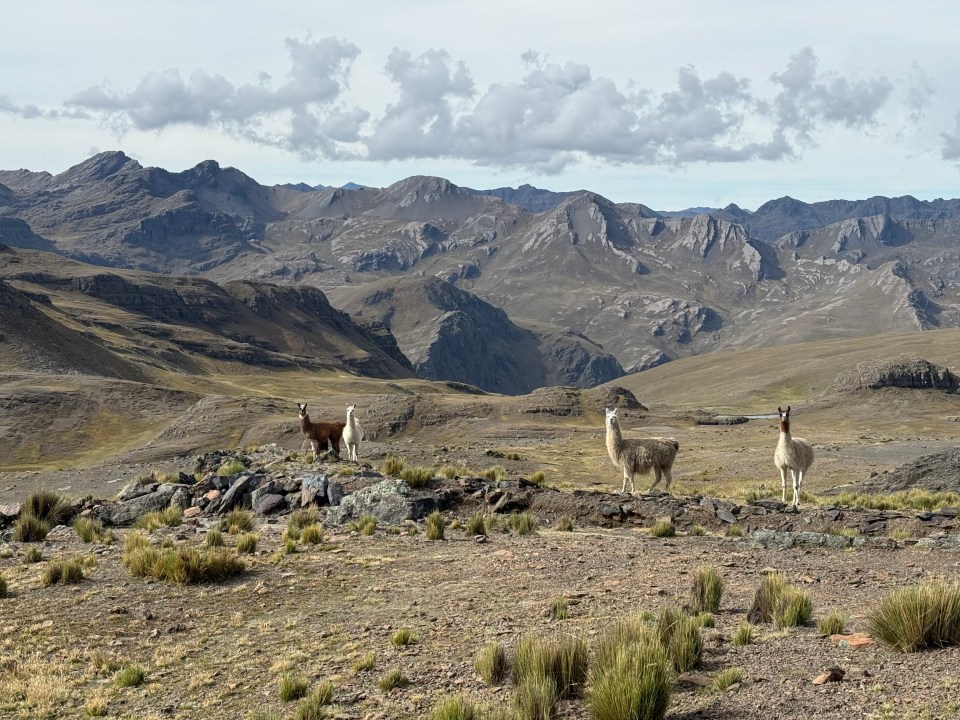
We saw a bunch of llamas and this continued to be a daily theme as we would pass through countless llama farms over the five days. Joe and I chatted a good bit and we ultimately became tent mates for the four nights. He was a military man and gun toting American so a bit more on the conservative side, but at least he disliked Trump, so there was no arguing there. While he wasn’t the typical person I would hang out with at home, we got a long pretty well. He was also very smart and well informed about politics and history so he had some very interesting insight. 

Besides the overpowering beauty of Ausangate Mountain, there were a number of other beautiful mountains. We also walked by a few different gorgeous high alpine turquoise colored lakes during the morning too. It was a good acclimatizing warm up day (although I was already quite acclimatized after my time in Bolivia). 

We made it to camp just after noon and our campsite was in front of Laguna Hatun Pucacocha and had direct views of Ausangate. I could get used to this. After lunch most people napped but Juanito said we could explore the surrounding area so I channeled my inner mountain goat and walked up a few of the nearby hills to get the best 360 views of camp. Noeh and Marion joined me when they awoke from their nap and we had some solid convos. 

We had our nightly tea time around 5:30 which consisted of hot tea and popcorn. We went around the table getting to know each other better talking about where we’re from and what we do for a living. Dinner was an hour later. Every meal started with soup and then we would have a couple platters to share usually a meat, rice, potatoes, and veggies; accompanied by some type of beverage. They always provided a generous portion of food so there was no need to be a shy. Most of the meals were quite tasty especially given the circumstances where we were. I was impressed with the service. 

That night Juanito told us some “ghost” stories of legends of horror stories or outer worldly experiences that have happened on the trail. While he spoke decent English, he told his nightly stories in Spanish and Joe (who spoke great Spanish) would act as the translator for those who didn’t understand. Juanito also told us about the history of the Ausangate trail and how it has been traversed since pre Inca times for the transport and sale of goods. The Ausangate mountain is considered an apu; which means it’s a sacred mountain in the Incan culture. I can see why. It is now sacred in my life too. A new life goal of mine is to climb it one day. There are a few technical sections but it’s not too overly crazy. We’ll see. I would definitely need more ice climbs under my belt first. It also costs a pretty penny. 

The sleeping bags they gave us weren’t amazing but they also gave us a small blanket to put inside the sleeping bag and a plastic “vessel” filled with hot water to keep in the bag for warmth. This was the first of four nights sleeping in extreme cold. It was one of the hardest parts of the trek.

Day 2 (10.15 miles; 3,012 feet elevation gain; 2,470 feet elevation loss; hiking between 15,149 and 16,392 feet: 2 mountain passes) 

Juanito woke us up at 6am with coca tea delivery service to the tent. It was fucking cold. I put on every layer that I had in order to get out of bed. Breakfast was served with this surprisingly good hot bean juice.

By 8am we were on trail and started our first mountain pass. We climbed around 1,000 feet in 1.1 miles to reach a 16,128 foot pass with stunning views in both directions. Juanito remained in the back and let everyone go at their own pace so I was the first one to reach the top. I was feeling great after all the high altitude hikes I had done in La Paz so I had no issues. Of course it wasn’t easy but I love this type of challenge when I’m in my hiking mode. 

There was a local woman with her kids selling drinks and snacks at the top of the mountain pass so Joe and I decided to have a 8:30am beer. Why not? 

Then we went down the other side of the pass saying goodbye to Ausangate for now and enjoying new mountain by views and more llamas. Melanie and I had some nice chats as we enjoyed a leisurely pace heading down from the pass. After about 1.5 miles downhill it was time to start going up again as we approached the next mountain pass. This one started with a subtle incline before becoming steeper and higher than the last pass. Once again the group split up based on “hiking your own hike” and I ran off in front at my own pace. It was a good heart racing climb as we made our way up to 16,392 at the top of this next pass. The views along the way were amazing! 

Once at the top we took a rest to soak in the scene. Just wow! It was the type of unreal Andes mountains beauty that made me fall in love with this mountain range years before. Moments like this affirm why hiking is my favorite sport. There was no other place in the world that I would rather be. And the thing I loved so much about the Ausangate trek is the remote solitude. Throughout the entire five days we only saw a handful of other people. 

Then it was back downhill to the other side of the pass where camp was to be setup. Those of us in front arrived at camp just after noon and helped the porters setup the tents. Juanito gave us the option to take the afternoon off to chill; or to relax a bit then do Rainbow Mountain and the Red Valley for sunset (rather than doing it the next morning for sunrise..which would also allow us five day people to sleep in more the following day). As a group, we all decided that we had energy to keep hiking in the afternoon after lunch. Juanito made it seem like Rainbow Mountain wasn’t that far away, but little did we know doing that and the Red Valley would basically double the mileage for the day. While it wasn’t too steep, it did end up adding another 700-800 feet of elevation gain and the round trip mileage was about five miles. 

I really liked the Red Valley but Rainbow Mountain was kind of overrated. The rainbow colored mountain had become visible in the last decade due to glacial melt and it’s become an Instagram sensation ever since. It’s one of the most popular day tours from Cusco, but I thought it was kind of average. I think most people on Instagram add a filter because the colors were not as pronounced as photos I had seen. The fourteen color mountain outside of Jujuy in Argentina was way more impressive. Don’t get me wrong, it was still cool, but mostly because we had earned the experience having hiked over two mountain passes that day to arrive where we were; rather than doing the day tour taking a four hour bus, hiking one hour, snapping photos, then another four hour bus back to Cusco. 

The nice thing was that we had Rainbow Mountain to ourselves (there was only three other people) since we were there close to sunset rather than in the morning when all the day tours from Cusco arrive. The best view of Rainbow Mountain is from the top of Vinikunka standing at 16,523 feet so that’s also pretty cool.

On our way back to camp we were treated with an incredibly colorful sky as the sun set off in the distance. It was the icing on the cake to a day full of stunning beauty. Pure magic! Two days in and the Ausangate trek had already stolen my heart. 

It was dark for the last half mile back to camp, but worth every second of daylight we had enjoyed. We were all in good spirits talking and laughing during tea time; which was quickly followed by a delicious lomo saltado for dinner and an early bedtime. Everyone was exhausted. We said our goodbyes to the three day people as they were heading to rainbow mountain for sunrise (they did it twice since we had decided to do sunset) where they would then take a bus back to Cusco after.   

Day 3 (9.50 miles; 2,598 feet elevation gain; 3,162 feet elevation loss; hiking between 15,125 and 16,737 feet; 2 mountain passes)

We got to sleep in more since we had already done Rainbow Mountain so Juanito woke us up at 7am with our delivery coca tea (I had already woken up around 6:15). Once again it was freezing cold upon wake up. Luckily the temperature would raise drastically when the sun came out and it would usually be pretty warm by 8am. After breakfast, we started the day with a steep uphill section to go back over the other side of the mountain pass we did the day before and get back on the Ausangate circuit (the addition of Rainbow mountain in the past few years has created this need to go up and over the same pass). It was about 700 feet of gain in 0.5 miles so a quick way to wake up the legs.

Then it was about two miles of downhill on the other side of the pass before we entered the valley and walked on mostly flat paths through the farmlands for a couple hours. Me, Joe, and Lander had some good convos but it was an easy day to just zone out and soak in the Andes countryside; quiet, peaceful bliss.

A little over 5.5 miles into the day we stopped for lunch. It was nearly 2 in the afternoon by the time we finished and we had to decide whether to stay in this camp spot or to do the highest mountain pass and camp on the other side. The original itinerary had us chilling at this campsite, but since we had gotten ahead of schedule by doing Rainbow Mountain the day before, it had been a fairly easy day. If we did the pass now then we could have one more big day on the fourth day and have a very easy final fifth day. The biggest factors were that it was getting later in the afternoon and that some members of the group had slight headaches and stomach aches. I felt totally fine so I was indifferent. Whatever the group wanted to do. In the end we decided to plow forward and conquer the pass.

This was the hardest section of the hike so I definitely went ahead at my pace. It’s easier for me to hike at my quick pace than to go slow. I would get way ahead of the group then wait for them to catch up. I prefer that rhythm over trying to walk super slowly. We had to gain a little over 1,500 feet in 1.7 miles reaching around 17,060 feet high at the top of Palomini Pass so it was a doozy. Some parts were quite steep and it really got the heart rate pumping but I was in peak trekking form at this point. 

And of course the steepest part was the last quarter mile push. It was a good challenge. While I was huffing and puffing at times, I still felt strong during the ascent. Even when breaking to wait for the others, I made it to the top 10-15 minutes before the rest of the group enjoying yet another set of mountain views that were some of the best so far. This trek!! 

Once the whole group was at the top, Juanito gave us each three coca leaves and performed a little ceremony to the Gods. He said a prayer to Inti, the sun God, then we said gracias to each of the surrounding Apus (sacred mountains) and blew on the leaves in the direction of the mountain he named. Then we held our heads down for twenty seconds of silence and perfectly on queue the sun came out for the first time in hours. It was eerily timed with our moment of silence to Inti and made a believer out of me in that moment. The universe works in mysterious ways. 

Time for more downhill to camp. It was another two miles and 1,500 feet of descent into the valley to the next camp. Luckily we made good timing ascending the pass and were able to arrive at camp before dark. The colors behind the snowy mountains lit up the sky with shades of pink and oranges. It was another beautiful day on trail. This campsite was Juanito’s favorite and I could see why. Even though darkness was quickly creeping in, the power and proximity of the mountains could be felt. But so could the wind sweeping in the valley. This might have been the coldest night of all. Luckily this campsite was at a farmer’s home so there was an actual building to sit inside for dinner, as well as real toilets. Luxury living.

That night before dinner, Laure and Lander taught us the rules to play a game they brought called Boonanza. We didn’t have any time to play before food was served but at least the rules had been explained and we would be ready the next day. After dinner, Juanito told us a few more “ghost” stories from the Inca Trail and Salkantay that get passed down amongst the guides; and claiming that he had first hand seen some of the mysterious figures in these stories. 

Day 4 (10.41 miles; 2,224 feet elevation gain; 2,151 feet elevation loss; hiking between 14,618 and 16,610 feet; 1 mountain pass)

It was back to 6am coca tea wake up to start out another long day on trail. Our ice cold awakenings had become routine at this point as we went through the motions of the morning and started hiking around 8am. The first few hours were Inca flat through llama farms as we walked through the valley surrounded by mountains on both sides and snowy mountain views in the distance. We saw a lot of viscochas (Andes rabbits) in the valley. The first 4.5 miles were mostly flat with some slight uphill. At this point my mind had entered a state of mountain bliss. I was having positive clear thoughts about my life, my hiking career, my friends, my family. I felt very grateful for the life I live and appreciative of the present state of mind I had entered during this trek. Nirvana achieved. 

The next 2.5 miles were a continual uphill climb at a moderate incline as the views kept getting better and better. It was day four and new mountains and crystal blue lakes were still making an appearance. Once again the weather was perfect and the beauty of this trek shined in the sun. We could not have been more lucky. It was a long ascent to the final mountain pass standing at 16,610 feet. But we felt small next to the towering mountains on all sides and the valley below. The wow factor never stopped. 

After a small flat section we headed downhill for three miles to reach our campsite at Laguna Pucacocha. Normally I don’t listen to music when I hike unless I’m tired but I decided to pop on Billy Strings while enjoying the stunning valley views. The geology of the landscape felt very layered as Billy’s hypnotic guitar looks filled my ears. I was nonstop smiling the whole time down. What a journey these past four days had been! 

We got to camp a little after 2:30. Everybody was starving since we hadn’t eaten lunch yet, only small snack breaks. After lunch we lied on a tarp watching the clouds and admiring the mountains one last day. We only had a few hours downhill the next day so it was the point of the trek where you could relax and soak it all in. The hardest parts were all behind us. 

Then in the late afternoon we finally played Boonanza and it was incredibly fun! The game was fairly easy to pick up and was a mixture of mostly luck with slight skill and strategy. It was definitely something I could see playing with my family or at Yen’s mountain house with friends. We played a few rounds before the snack hour. The group energy was at an all time high as we shared photos of our families, talked about our hobbies at home, discussed our dream jobs as kids, and generally felt more comfortable with each other than ever after the experience we had shared together these past few days. 

Day 5 (4.37 miles; 75 feet elevation gain; 1,191 feet elevation loss; hiking between 15,198 and 14,082 feet)

We woke up at 6am again on the final morning and while I was sad that it was the last day of the trek, I was very excited not to sleep in the cold anymore. Since we had fast tracked the schedule starting day two; it was an easy final day. Camille and I talked most of the way down as we enjoyed the final views of Ausangate and passed by a few more lakes. As we got close to the small village of Pacchanta we started running into the crowds of day tours doing the seven lagunas of Ausangate (a mixture of hikers and horse riders). This was by far the most people we’d seen in days and a sign that we were re-entering civilization. In less than two hours we had made it to Pacchanta. Here we had the opportunity to enjoy some small hot springs. They weren’t piping hot but the warm water felt good on the body after five days of hiking. We had one final group lunch before hitting the road for another 3.5 hour drive back into Cusco. The landscapes and mountains were more beautiful than I even anticipated; and a strong bond had been formed with the group of people I got to experience it with. I was all smiles on the way back.  

Life After Ausangate 

We got back to Cusco from Ausangate around 3pm and all decided we should meet up later that night for drinks. I picked out a random craft beer bar and got there around 7. In the beginning, it was just me and Camille and we had some good conversations over beers and decided to travel to Arequipa together next. Eventually Joe showed up and finally Laure and Lander got there around 10pm, but we didn’t have much gas left in the tank.

The following afternoon we all met up again and played a few more rounds of Boonanza first over coffee and juice before switching to pisco sour and beers as the night went on. It was fun to continue riding the high of the group energy for one more night. 

On the final day in Cusco, Camille and I had to wait all day for our night bus to Arequipa so we ran a few small errands, bounced around from park to park, and went to see the new Mandalorian movie in theaters in Spanish. It was one of those days where you’re just killing time until the bus but it actually went by fairly quickly all things considered and we had a good time together.

Stuck in La Paz: High Altitude Hikes and Bloqueos

This was my second visit to La Paz after my one day stint early on in my Bolivia trip. It’s a beautiful city (not the buildings but the landscapes) surrounded by mountains including the two 6,000m behemoths Huayna Potosi and Illimani. It also has the interesting geological formations of Valle de la Luna and Valle de las Ánimas right outside the city. 

I had planned to spend about a week in La Paz as there was a few hikes I wanted to do including the three day, two night trek to Huayna Potosi. Little did I know that I would get trapped there due to the bloqueos (blockades) outside the city. I had read that blockades on the highways in Bolivia was a common occurrence for people to protest, but up to this point my transportation experiences in the country had been seamless. It wouldn’t be a trip to Bolivia without a few roadblocks. 

An electrician’s nightmare

On my third day in La Paz I started hearing stories of blockades popping up and people taking 3 days to get back from the jungle (normally 10 hours) because they had to “blockade hop” and take 5-6 different rides to keep moving. By the time I got back from hiking Huayna Potosi, tensions were high and the bloqueos had reached a new height with an estimated 64 road blocks around the country. The protestors had blocked every exit point from the country by road. My original plan before all this chaos was to head to Sajama National Park, but after waiting a few extra days in La Paz to see if the political situation would change, I decided that the uncertainty of waiting indefinitely was enough reason for me to get out of Bolivia and book a flight to Cusco. Even though it was kind of pricey, it was the only way out of La Paz. Oh Bolivia! You’ve been so good to me, but it was only fitting for me to experience the true turmoil within the country. At least it happened at the end of my stay here. And luckily I had a great crew after the Huayna Potosi trek so I had people to hang out with. While I was really looking forward to Sajama and sad to miss it, at least it was going to be my last stop in Bolivia. Something to come back to next time. Plus in hindsight I got lucky that I had changed my plans to do Bolivia first and Peru second (due to weather in Peru). Had I stuck with my original plan than the bloqueos would have ruined most of my Bolivia plans. Instead I had a great four week stint in the country and plan to return someday in the future. 

Getting In

I took the night bus from Cochabamba to La Paz. We were supposed to leave at 10pm but ended up leaving at 10:30, no biggie. I should have peed before we left as the bus had no bathroom, but luckily I fell asleep early on in the trip. I arrived in La Paz around 6:30am. Mark had an Air Bnb with a pullout couch in Sopocachi that he was letting me crash at for free (I ended up buying him a nice lunch to show him my appreciation). He sent me the building code and he left the key attached to the door know as he would still be asleep. It was easy entry and I fell asleep for about 45 minutes before he got up and we started our day. 

Lodging 

I spent my first four days at Mark’s apartment in  Sopocachi where we were on the 17th floor and had incredible views of the city, Huayna Potosi, and the Valle de la Luna. Two more floors up was the rooftop which had even slightly better views than our apartment. The sofa bed wasn’t amazing but it was comfortable enough. Plus the apartment had a washer so it was convenient to be able to do laundry. Mark cooked us breakfast the first two mornings and in the evenings we would watch a movie to wind down. It was nice to have some of the creature comforts. 

Mark left for the two day, one night trek to Huayna Potosi on day three so I had the place to myself that Saturday (although I was gone pretty much the entire day hiking Pico Austria). While I wanted to do the trek with him, the weather report looked cloudier on the weekend (in the end it would have been totally fine) than the middle of the following week, and I decided it was worth waiting since I had more time than him. Plus the agency he booked the trek with didn’t have amazing reviews, whereas I had been recommended another one by several backpackers, so I decided to wait a few extra days. 

Nights five and six I slept at base camp and high camp on Huayna Potosi trek (more on that later). Then I spent three nights at a hotel in El Centro to have some space to myself; which was much needed after the trek and after the big day of partying that followed. The hotel had a really nice seventh floor view from the breakfast area. My last night I stayed in a hostel just outside El Centro to save a little money and check out a new area. 

El Alto

On my first day in La Paz, after a leisurely start to the morning having breakfast in the apartment, listening to YouTube music, and chatting it up with Mark; we decided to go to El Alto. This was formerly a suburb of La Paz, but it officially separated from the city in 1987. In the early 1900s, El Alto’s population was mainly railway workers but it has been rapidly growing over the past few decades and now has a population of almost one million people, which is greater than La Paz. It is now the largest city in Latin America inhabited by indigenous Americans and the highest major metropolis in the world. 

El Alto’s main attraction is its open air market on Thursdays and Sundays that stretches over five kilometers and sells everything imaginable. Lucky for us it was Thursday. We walked to the teleférico and for less than a $1 took the yellow line to the silver line to get to 16 de Julio. This was my first trip on the famous La Paz teleférico. At first I thought okay I take gondolas all the time when skiing so this isn’t really a tourist attraction for me, but it was actually really cool. There were great mountain views of the giants Illimani and Huayna Potosi (covered in clouds) looming over the city but also a number of other peaks. The teleférico truly is a great form of transportation for a hilly city like La Paz. All the locals are so used to the views they were just listening to music and glued to their phones. The city is a little rougher around the edges as you go up the hill. More favela like with small houses clustered together and a staircase running through the middle to provide a pathway from the road. As we got to the top, some of the houses were on the edge of the hill and looked like they were one strong rainstorm away from land sliding down the valley. 

Once off the teleférico, Mark and I walked around for about 30 minutes window shopping all the different vendors. Just like La Cancha in Cochabamba, you can buy anything and everything at this market. We stopped for lunch to get chicharrón de cerdo and could not have picked a better time to be under a “roof.” All of the sudden dark clouds rolled in and it started raining, and then the rain turned into hail. It started absolutely dumping hail. The restaurant owners were using brooms to knock the hail off the canopy roof to ensure it didn’t get too heavy and collapse. At least we were under cover. 

We had finished our lunch but waited out the storm for another 20+ minutes before it settled down enough for us to walk back into the market toward the teleférico. It had been a beautiful day walking through the El Alto market until all hail broke loose. Our market experience got cut short but at least we got to spend some time walking around before the storm.

Valle de La Luna

On day two, after another home cooked breakfast in the apartment and leisurely start to the day, Mark and I decided to go to Valle de La Luna via public transportation. We walked down to the teleférico and took the blue line to the green line to get to Zona Sur in La Paz. The teleférico gives good perspective on both the massive expanse of the city as well as seeing some of the lower income neighborhoods that you wouldn’t necessarily want to walk through. 

It’s really humbling to see the lower income housing in the outskirts. Any time I think my life is tough than I can only imagine what they are going through. Some people are living on unimaginably small incomes just to feed their families and get by. Once you get to the other side of the hill, Zona Sur was really upscale and affluent, which was quite unexpected. From there we took a bus to Valle de La Luna. There was certainly no need to book a tour for this excursion, it’s always more fun when you figure it out on your own via public transportation. 

We only needed 45 minutes or less to walk around Valle de La Luna, but it was quite a cool site to see. The rock formations look like stalagmites and are the remains of a mountain composed of clay and sandstone battered by strong winds and time. It’s said that the name comes from Neil Armstrong comparing the geology to what he saw on the moon. If it impresses Neil Armstrong then it impresses me. It’s so crazy that these types of rock formations exists just right outside of La Paz. There really is so much diversity of landscape surrounding the city. 

Pico Austria (5,350m – 17,552 feet at peak; 6.1 miles; 2,755 feet elevation gain)

For my third day I had booked Pico Austria with Jiwaki, the same agency I would be doing Huayna Potosi with two days later. They gave me a small deal for booking both at once. While the hike didn’t necessarily need a guide (the peak is high altitude but there was nothing technical about the hike), transportation to the trailhead was difficult, and I didn’t feel like figuring all that out. Plus I wanted to meet some new people after spending the past few days only hanging out with Mark. The group size was way too large for a day hike with over 20 people in total, but I did end up meeting a lot of great people. I ended up having a conversation with most of the group, but highlight interactions were with an Australian couple Pat and Taylor, two Belgian sisters Elien and Hanne, an Austrian guy Manuel, and an American guy Stephen.

They had four guides to split up the large group but they could have done better. There was more than 10 people for the one guide in the front. Me, Manuel, and a Chilean guy wanted to go quicker (or at least to stop less) but we had to set a pace suitable for the large group size. It’s fine to go slower at high altitude but sometimes all the stops were a bit frustrating. It is harder to re-catch your breath with so many stops than it is to keep a slow continual pace.

The first 1.5 miles of the hike to Laguna Chiar Khota were a moderate incline to get our legs warmed up. This lake offered us our first stunning views of the giant mountains of the Bolivian Cordillera Real.

The next 1.1 miles up to the mountain pass was more challenging as we gained 1,400 feet of elevation and reached 16,840 feet high. The conversations were less and the stops more frequent as we trudged our way up this steep section along the side of the mountain. There was definitely some moments where my breathing was very heavy and it was much harder to re-catch my breath. But with one foot in front of the other, the body just keeps on moving forward. The views were astonishing: multiple lakes, countless peaks with Condoriri in the foreground, Glaciar Ventanini, and more. And we weren’t even at the top yet! Pico Austria was in sight.

The final push was another 550 feet of gain over 0.5 miles, but it didn’t seem as challenging as the last section as the peak got closer and closer. The terrain was rocky but there was nothing technical about it as we worked our way up the final set of switchbacks. 

It was an amazing sense of accomplishment to be at the peak: 5,350m – 17,552ft. It was the second highest I’d been up to this point, and the highest peak. The 360 views were out of this world with the Cordillera Real mountains on on one side, Huayna Potosi in the clouds on another, the buildings of El Alto looking like ants, Lago Titicaca, and way off in the distance you could see Sajama volcano (the highest point in Bolivia). There were some clouds but otherwise the weather was perfect. It was so nice that we were able to stay at the top for nearly 45 minutes eating our lunch and soaking in the views. 

It also just so happened to be my friends Sumner and Abby’s baby shower. I had held onto their invitation knowing I would probably be somewhere beautiful on that day; and it could not have been better timing for me to be at the top of Pico Austria. I took some photos and videos with the invitation to send to them. 

On the way down the guide let those of us who wanted to take a shortcut on steep crushed rock. It was a fun section to “run” down. Then we continued down the trail with everyone in happy spirits and chatty moods. I talked with Taylor most of the way down. When we got back to the car these two little boys ran up to us asking for snacks. They hauled in a bunch of fruits, chocolates, and other goodies. I’m sure that’s always the best part of their day. When we got back to La Paz, Manuel and I went out for beers. He’s a very smart guy and we had some good conversations, but it also got a bit too heavy into American politics and I was ready to have Mark’s Air Bnb to myself and watch a movie (this was the night he was doing Huayna Potosi). He did give me an interesting fact that only 20% of the Bolivian economy is salaried and reported to the government. I’m not sure where he got this statistic, but I believe it. Most of the country is one giant ope  air market with goods exchanged with cash. 

Cholitas Wrestling

On my fourth day in La Paz I mostly took it easy in preparation for the start of the Huayna Potosi trek the following day. I took Mark out to a nice churrasqueria lunch to thank him for letting me stay at the Air Bnb. I also felt bad because he wasn’t able to summit Huayna Potosi due to his partner. He had gotten partnered with an Israeli guy who had struggled all morning (and had even puked the night before) and they couldn’t summit. I made sure to double check with my agency what would happen if my partner couldn’t make it, and they said I would be paired up with a different group. Poor Mark. He just chose a bad agency. For high altitude hiking, it’s always worth double checking with the agency what their plan B is if someone in the group is struggling with altitude sickness. 

Anyways, Pat invited me to go to the cholitas wrestling event from 4-6pm and I figured why not; it’s considered a top tourist attraction and I would still be home early. I came in with low expectations and they were greatly exceeded. I ended up very much enjoying the event and was glad I went; even though it was very touristy.

The crew was me, Pat, Taylor, Stephen (all from Pico Austria), and Pat’s friend Charlie (who ultimately became my Huayna Potosi partner). We had front row seats, which was great for being in the action. And just like seeing a stand up comedy in the front row, it made us a part of the act. The whole experience was very interactive. 

The first round was two meat head wrestling guys in Lucha libre masks. I had come in knowing the wrestling was fake but there was a group of backpackers behind us disappointed to find this out. Personally I thought it added to the humorous good time. It was all very silly. At one point they took the girl sitting behind me’s flip flops to smack each other and shove in their mouths. I’m sure that tasted great. They also did the classic move of pantsing the ref. Eventually after 30 minutes of making a show, one guy won.

The next round was two fierce looking cholitas (indigenous Bolivian woman in traditional dress) who paraded around the stage during their entrance. One of the cholitas invited me to dance with her during her walk out song. The other one invited Pat on stage and they had him check their outfits for props and ended up kissing him on the cheek. He did a good job playing the part. Once again the match was very staged and they made it so one of the cholitas (my dancing partner) was the enemy we all booed. She kept spitting water on the other cholita and at one point we were in the splash zone. It was another 30ish minute match of staged moves and interactions. The best part was when one cholita went up to the second floor and flew down onto the other one. 

The final match was again two cholitas and while it was still entertaining; it was just more of the same. The highlight being when this little American kid got pushed on stage by his dad (all night the dad had been heckling the ref and the wrestlers) and he became a part of the show. The dad was being an embarrassingly loud and stereotypical American coaching him from the corner as the little kid participated in the wrestling moves. Good for that kid! This will be a childhood memory that lives on forever. The cholitas were loving it! Overall it was an entertaining couple of hours.

Huayna Potosi (6,088m – 19,774ft at the peak; 9.7 miles; 5,069 feet elevation gain; 3 days, 2 nights)

The main event of Bolivia – my first 6,000m summit and personal record for highest elevation. I had my eyes set on Huayna Potosi since I had heard about it nearly four years prior when backpacking South America. Huayna Potosi is the sixth largest mountain in Bolivia and it looms over the city of La Paz on a clear day. I had already seen it countless times from the city and couldn’t wait to get up close and personal with this beautiful beast. 

It’s known to be one of the “easiest” 6000m peaks but there is nothing easy about it (or any 6000m peak for that matter). The summit day requires a five hour ice climb ascending and two hours descending. It’s a very popular peak amongst backpackers: many try, many fail. This mountain is no joke. It’s also incredibly cheap for the experience: (a) it’s in Bolivia and everything is cheap and (b) lots of competition amongst the agencies helps keep the price down. For only $180, I paid for a three day trek that included ice climbing training; all meals and lodging; professional guides; mountaineering gear – heavy jacket and pants, crampons, harness, ice axe, fleece jacket and leggings, and gloves; and a sleeping bag (normally extra but mine was included since I booked pico Austria at the same time). You really can’t beat that deal! Needless to say I gave my guide a good tip because these guys work hard! They climb this mountain day after day; and they do a great job keeping all these non-mountaineers safe on a behemoth mountain. 

Day 1: Ice Climb Practice (2.5 miles; 853 feet elevation gain; sleep at base camp – 15,643 feet)

The buzz and excitement was real before the journey even began. We met at the agency at 8:30 to try on gear and already the group energy was high. I chatted it up with a few people including some good Spanish practice with a Bolivian girl (the only local amongst a mass of backpackers). She was doing the two day, one night trek so this would be the last we chatted. You have the option to do the climb in two or three days. The additional day includes a practice ice climb and a night sleeping at base camp which provides better acclimatization. I had the time and definitely think it’s worth it to add the extra day. Plus the ice climb practice turned out to be great! 

My mini bus to base camp had some familiar faces: the Belgian sisters Elien and Hanne from Pico Austria; as well as a German guy Niels and an Austrian girl Nicole who were traveling together and had been at the agency the same day as me when I booked Huayna Potosi. There was also the Bolivian girl and her French guy, and an older Dutch woman (who greatly underestimated what she signed up. She stayed in base camp night one then went back down). Niels was a German physicist and one of the smartest people I have met. He was incredibly talkative and knowledgeable about every subject matter. No matter what topic we discussed he knew obscure details and facts beyond belief. This would be a running theme throughout the trek. He also had a laugh you could hear from a mile away. Most everyone enjoyed his dense knowledge and subject matter expertise; except the group of four from Poland, who didn’t really vibe much with anyone. Niels was always talking and quite loud so I could see why it could be a bit much. 

On the way to base camp, we made a stop in El Alto to try on our mountain boots. Here I chatted with Charlie (the Australian guy who I saw the Cholito wrestling with). Even though he was from the flat lands, he seemed very determined to make it to the top, so we decided to be partners for summit day. I also chatted with a British guy, Jude, and an Italian guy, Consta, who would both turn out to be my good friends on the trek and over the course of the next week. 

Once at base camp, all 20 of us were crammed in one room (luckily I got a bottom bunk) and got handed our mountain gear that we had tried on that morning. The Refugio was actually quite large: hiker dorm, dining room, kitchen, area for putting on shoes, guide dorm, indoor bathroom, and two outdoor toilets (where you had to use a bucket of water and plunge down your poop with a stick since there was no running water). 

Then we had lunch – soup followed by llama with potatoes, rice, and veggies. Niels could be heard by all knowledgeably chatting about 30 different things. He clearly has a photographic memory for things he reads and hears. But it’s funny because Nicole said he can’t remember what they did two days before. Some brains just work different. 

Then we did a short hike to a Glacier Viejo where we were taught the basic techniques of ice climbing and then did a practice ice climb on a vertical wall (which was not necessary for Huayna Potosi). They showed us a few different techniques for walking up and down an ice slope with crampons and the ice axe that were good to know as it wasn’t always just walking one foot in front of the other like normal hiking. We practiced being roped up together and shifting which side you held the ice axe and the rope when coming up on a corner and changing direction. Finally we went up to a vertical ice wall where we all got the chance to use two ice axes and do an actual climb. Again, not necessary for the normal Huayna Potosi route, but it was great to get this experience. 

It was way more challenging than the guides made it look and only one person from our group, an Italian woman named Carlotta, made it to the top. We were all cheering her on and it was the beginning of three days of great group chemistry and all of us supporting each other. I made it a little more than halfway up before my arms totally gave in and I flung out on the rope. It was very strenuous on the forearms, especially since I had no real technique and wasn’t properly sticking my crampons into the wall. It was a decent enough attempt. My forearms were absolutely screaming afterwards. 

I’m glad we got this experience and I would definitely try it again. Ice climbing is very popular in Ouray, Colorado so maybe I will give it another shot sometime in the future. While I don’t expect to become an expert ice climber, learning the basics could open up some more technical mountaineering trips in the future. Although if this was just a practice wall, I can only imagine how intense the experience is on an actual mountain. But our practice wall was over 16,000 feet high so there’s no discounting the effort we undertook. After everyone got their turn at the wall, we made our way back down to base camp. It was a really fun first day together and the group was really clicking. Other friends I made besides previously mentioned people were: Lucie from Belgium, Ronan from France, Carlotta from Italy, Tom from England, and Joyce from the Netherlands. It was a very eclectic group. 

We got back for tea and popcorn and chill time. Not long after it was dinner time – soup followed by llama pasta. Then the head guide gave us a briefing for the next day’s schedule. Afterwards a big group of us played a few rounds of Uno using a combination of everyone’s different rules. We were all in bed by 8:30pm. The door to leave the dorm was squeaky and you could hear people leaving throughout the night to pee (one side effect of taking altitude medicine is it makes you pee more). I had to go twice myself. 

Day 2: Base Camp > High Camp (1.6 miles; 1,612 feet elevation gain; sleep at high camp – 17,277 feet)

It was a slow start to the morning where they loaded us up with a lot of food while we were at lower elevation (plus they have more food to serve at base camp than high camp). Even though breakfast wasn’t until 8, I was awake at 7 and wanted to beat others to using the inside toilet. Charlie was also awake so we chatted for a bit in the dining room as others slowly trickled out of the dorm. Breakfast was from 8-9 and we had a full spread of fruits, bread with jam and butter, and two pancakes each. Then we had an hour to pack our bags with all of our mountaineering gear, sleeping bag (which was incredibly bulky), and whatever else we needed to bring. My big backpack was filled to the brim. The weight was definitely going to add a challenge to the day. Then we all sat around anxious and excited before our 10:30 lunch of chicken thigh with rice and veggies. Even though we had just eaten breakfast, I did my best to shove down as much lunch as possible while at a lower elevation. Some people were struggling to eat, whether it was too soon after breakfast or the altitude.

We were on trail by 11:30 starting with the section we did yesterday to get to the glacier. The incline was mild but definitely made harder with the weight of the backpack. Then we continued another mile toward high camp as we climbed 1,300 feet with our heavy packs up a steep rocky incline getting to over 17,000 feet high. The main guide did a good job keeping us at a slow pace and taking periodic pauses; but it was still a tough stretch. I could definitely feel my breathing intensify and just tried to focus on one step at a time. At least the views kept getting better as we got higher. 

There was not a whole lot of chatting in the group during this part. Toward the end we had to go up a small staircase, which actually turned out to be the hardest part. Something about going up steps at that altitude and with that much weight on your back; it was an absolute ass kicker. Finally we made it up to high camp at 17,227 feet; just a little over two hours after we had started. It felt longer. I was toward the front of the group so once again I was lucky enough to get a bottom bunk. High camp was smaller than base camp but it still had all the essentials (although no indoor bathroom this time). 

Upon arrival, we had tea and crackers then we had the rest of the afternoon to chill and soak in the views. We sat outside chatting and continuing to enjoy each others’ company; hyping each other up for the big day ahead. There were also a few new characters in the group that were just doing the two day, one night trek; including a guy from Barcelona, Romá, who was in his mid 50s and chalked full of energy. He was very lively and made his presence felt immediately.

For dinner we had another soup followed by a chicken breast and veggies. Some people were really struggling with their appetite but I was able to eat perfectly fine. Then the head guide gave the briefing for summit day: 12:30am wake up with breakfast, gear up at 1:00, and start the climb at 1:30. It typically takes about five hours on the ascent to arrive at sunrise and two hours on the descent. Besides the sunrise views, it’s important to start so early because once the sun comes out then there is a greater risk of avalanches as the snow starts to melt. 

Afterwards we caught a beautiful sunset over the mountains before everyone attempted to go to bed around 7pm. It’s already hard enough to try to sleep at that hour and when you factor in the nerves, anxiety, and excitement for the summit push plus the altitude; almost everyone had a horrible night’s sleep and some people said they didn’t sleep at all. I finally fell asleep at some point because I had a few dreams but I don’t think I got more than two hours of sleep total. 

Day 3: High Camp > Summit > High Camp > Base Camp (6,088m – 19,774 feet at peak; 5.5 miles; 2,605 feet elevation gain)

12:30am came up way too quickly. Why do I like doing this type of torture? The brain was groggy. But without thinking I started putting on my layers and getting ready for the morning ahead. I drank some coca tea and had a few bites for breakfast to give myself some energy but I really wasn’t very hungry. Probably a mixture of nerves, altitude, and the fact that it was 12:40 in the morning. Not exactly my normal breakfast time. I was lucky to get out a quick poop before getting my harness on and really settling in to what lied ahead. 

Charlie and I were ready by 1:30 and our guide Felix had us get started before everyone else. I was cool with being in the front. That way if Charlie bailed out then it would be easier for me to join another group. It was a 5 minute walk scrambling over the rocks before we made it to the snow, put on our crampons, and roped up together. Here we go! 

Felix only spoke Spanish so had me in the middle and Charlie in the back so that I could be the interpreter. This also worked out because Charlie was slower and I was able to pull him along at times. The first section was immediately steep as we got into the rhythm of taking small steps and slowly made our way up the mountain. There was a clearly defined path as we started to zig zag across the mountain rather than going straight up. While we were in the front for our tour agency, we were behind a number of other different agencies. At certain points there would be a small “traffic jam” where we would have to wait. The angle of the slope with the crampons was absolutely killing my lower calves whenever we had to wait. I had to ignore the pain and focus on the goal ahead. We would go up 100-150 meters before taking a small break to catch our breath and drink water. Sometimes I found the breaks hurt more than they helped because the first minute afterwards I would be breathing heavily and my legs felt every ounce of soreness. But then we would get back into our rhythm and I would be fine. My breathing was even better than I expected. Rarely did I have any issues. 

After a relatively flat section we came up on our first big challenge. We had to pass a small crevasse then it was a very steep uphill section with a narrow footpath and a cliff edge to the left. Plus there was a line of people which made us frequently have to pause. My heart was pumping and all focus and energy was required. It only last about 10 minutes but felt like a lifetime. The adrenaline was high and I was more than happy to take a break at the top of this section. We were a little over two hours into the ascent and Felix announced we were at the halfway point. 

Charlie was totally on the struggle bus now. Every time we stopped for a break from here to the summit he would lie down on the ground and close his eyes. Felix kept asking if he was okay and I would ask Charlie who would give a thumbs up. I give him credit for his grit and determination. Meanwhile I was doing quite well, even better than I expected, and I would chat with Felix during the breaks. Sure I needed water and occasionally would re-up on coca leaves, but I knew that I could make the summit if my energy remained this high. We continued along another moderate incline for awhile when the true summit came into view. But we still had a long, steep path ahead. 

The next 45 minutes or so were very steep as we slowly continued our way up the mountain before we came on the true crux of the route. It was another narrow footpath with a sheer drop to the left; similar to before except this time the trail was even steeper and the drop off greater.  Not to mention the fact that we were at a higher altitude with much thinner air. I’m not sure if it was better or worse that it was still so dark, but it was definitely a high anxiety section. Once again it probably only lasted about 10-15 minutes but felt so much longer. There was no turning back; the footpath wouldn’t be wide enough. I used all my energy just to keep moving forward up the steep slope stabbing my ice axe into the snow and sometimes having to pull Charlie up a bit. Iwas actually quite impressed with his ability to keep going when we hiked because he was absolutely dead each time we took a break. I breathed a sigh of relief once we got past this section and the peak of the mountain was so close by. Of course we’d have to go down later but why think about that now. 

It was probably just a tenth of a mile to the peak, which was nothing after all that we had done. We made it to the summit at 19,774 feet and I had never felt such a sense of accomplishment. It was the highest I’ve ever been and so well deserved! We had spent 4 hours and 40 minutes trudging our way up the snowy mountain to reach this point. The peak was small and there were a number of other groups at the top, plus more coming up, so our time was short. 

After drinking some water and eating a bit of chocolate, I took some time to embrace the views. It was perfect timing with the sunrise. Even though it was a bit cloudy, the views were magical: the Cordillera Real mountain range, Lago Titicaca, the lights from El Alto, the gigantic mountain Illimani, and so many other peaks were all in view. Plus we stood high above the clouds. It was truly a surreal moment that was almost hard to fully appreciate at the time. I’m sure the lack of oxygen didn’t help. I took some photos of the scenery as well as the classic summit shots of me, Charlie, the two of us together, and the three of us with Felix. 

Within 15 minutes we were already starting our descent. It all went so fast. Other groups from our tour were just getting to the top as we started to go down. It was interesting to see who was paired together as most people who started with one partner were now with someone else. I think about 55% of the group made summit. For the way down, Felix had me lead in the front since I had more energy and ability to set the pace (the guide always stays in the back for the downhill). The path was easy enough to follow so I had no issues taking lead. We stopped a few times along the way for photos or to rest, but otherwise we had a strong pace. Charlie was still struggling but he did a good job to keep going. 

The narrow, steep uphill section was not nearly as bad going down as I thought it would be; although it still required sure footing as the drop off to the side hadn’t gotten any less sheer. Otherwise the path down was pretty straightforward and my energy was so high from making the summit that I had us going down at a strong pace. Felix was pleased with my lead. Some of the other people that summited said the downhill was the hardest part because they had no energy, but I thought it was a cakewalk. The key difference was that I’ve done so much hiking that I had more endurance than the rest of the group. Now that it was daylight, the views going down were absolutely astonishing. Plus we got to see all the craziness we had done in the pitch black during our ascent.

The only other tricky part was the crevasse after the steep narrow section at the halfway point. It was a tiny little bridge to cross but was a bit nerve racking after the long day we had. Once that part was done, it was all downhill and smooth sailing from there. We made it to high camp in just under two hours from the top; it was a little before 8am and we could finally breathe easily. I was riding high from the amazing morning, drinking hot tea and conversing with those who had turned around. Truly an unbelievable experience that I will never forget! Over the next hour the rest of the crew that summited trickled in. They all looked like walking zombies. I had never seen Niels so quiet. But I was proud of all of them who made it!

We had soup for “lunch” around 10am before packing our bags and heading down. Once again we had to carry a heavy pack but at least it was downhill this time and we already knew the route. I chatted with Carlotta most of the way down. It took 1.5 hours to get back to base camp, but felt like much longer. All of this and it wasn’t even noon yet…sheesh what a morning! We returned our gear then had to wait around base camp for a bit before heading back to La Paz. Luckily the bloqueos didn’t stop us from getting back into the city.

Bloqueos – Stuck in La Paz

I had originally planned to spend the afternoon after Huayna Potosi in La Paz (and possibly one more day depending on how much recovery time I thought I needed) before heading to Sajama National Park. But by the time we finished the trek, the bloqueo situation in the country had gotten worse. Luckily we had no issues getting back to La Paz and returned to the city by about 2pm after the trek. But the political unrest had gotten worse and the number of blockades setup around the country had dramatically increased. The chances of going anywhere by bus out of La Paz had gone from slim to none with no end date in sight. At least there was a website that you could check to see which highways had blockades (although it wasn’t clear exactly how many there were). Unfortunately the situation didn’t improve over the next three days and as I already mentioned above, it led me to fly out of the country rather than waiting indefinitely to go to Sajama. 

I got back from Huayna Potosi on Wednesday afternoon and after getting chicharron for lunch and taking a shower, I slept from 4:30 to midnight (I guess my body was used to this wake up time from the night before). I was worried that I had fucked up my sleep schedule by not trying to power through until later in the night. I watched a movie on my iPad then read for a bit and luckily was able to fall back asleep from 3-7am and get back on a reasonable schedule. 

Thursday turned out to be an all day (and night) party with some of the Huayna Potosi crew. We started drinking at noon and didn’t stop til 2:15 in the morning. It was a long one. The day started at Popular Cocina Boliviana, a well known upscale lunch spot that changes their menu selection every week. They don’t take reservations so Charlie and I got in line at 11:30 for their 12pm opening and it’s a good thing we did as the queue gets long quickly. We were able to get a table for six and were joined by Jude, Costa, Elien, and Hanne. The meal started with warm bread paired with a hot sauce and pico de gallo like salsa. Then we got to choose an appetizer, entree and desert; plus we all decided to do the wine pairing add on. All of this for about $30…how could you not? 

For an appetizer I ordered tucumana de papalisas which was a fancy fried empanada. Then I had fricasé which is a traditional Bolivian dish prepared with pork in an ají Amarillo sauce and this version was served with crispy rice wontons. For desert I had four different delicate melon bites in a sweet sauce. Everything was delicious. Each of the three dishes were also paired with a Bolivian wine or champagne. The server liked us and decided to leave the bottles on the table for us to pour ourselves an additional glass, but she quickly realized it was a mistake when she saw how full we poured our glasses and took the bottles away. 

After lunch, incredibly full and slightly buzzed, we went to a cafe bar and got a round of espresso martinis to energize ourselves after the heavy lunch. Throughout the day there was a rotating cast of characters from the Huayna Potosi group. We lost Costa and gained Lucie. Then we went to a bar in El Centro where we would spend the next five hours or so drinking beers and playing card games. At one point we lost Lucie and gained Niels and Romá. Jude taught us how to play this really fun card game called Shield and we must have played at least 20 rounds. Our beer graveyard was quite absurd, but overall no one was drinking too fast as the main focus was the card games. There were a few pizzas ordered as well. 

We stopped by our hotel for a few of us to change before walking to Malegria Club in Sopocachi for live music and dancing. Of course we got some rum along the way for the 25 minute walk. The club was very local and it didn’t take long for me to stray away from my group and find a Boliviana. The band was playing upbeat folkloric music that had the whole dance floor moving. They played for about 30 minutes before reggaeton overtook the speakers to which every Boliviano in the crowd knew all the words. The band came back for a second set where they stood on top of the bar to play their instruments. It was quite the show! Around 2:15am my energy from drinking all day had faded dramatically and I took a cab home. 

I was an absolute zombie on Friday after a full day of drinking. That was my first party day of the trip which led to my first hangover; and it was a reminder how shitty that feeling is. I extended my hotel stay another night because there was no way I wanted to be in a hostel dorm room feeling like death. I left my room for the hotel breakfast and later on for a quick lunch, but otherwise I spent the entire morning and afternoon in bed binge watching a show on AppleTV. Finally that night I went out to meet up with the crew (Charlie, Costa, Jude, Elien, Hanne, Carlotta, and Romá) for dinner to get in a little social interaction. But that was the extent of my day. 

On Saturday I went to the National Museum of Ethnology and Folklore with Elien and Hanne. It was a good stuck in La Paz activity to get a little culture. The museum was quite extensive and we ended up spending close to 1.5 hours there. The first room displayed indigenous clothes over the years and had videos showing traditions and ceremonies that are still prevalent in Bolivia. It’s great to see how strong the indigenous cultures still are throughout South America and it’s sad that it doesn’t really exist in the U.S. 

The next room was my favorite as it had all the different masks worn during ceremonies and celebrations. Some of them were crazy elaborate and hard to imagine being worn for hours due to the weight and difficulty seeing; especially while dancing. You could see the inspiration for horror and suspense movies.  

The third room had black and white photos of Bolivians from the 1950s-1980s and I particularly enjoyed the one with the out of place giraffe. The next couple rooms contained ceramics, feathers and birds, minerals and mining. Overall it was a good trip to the museum with lots of culture to soak in.

I spent the rest of my afternoon Brazil planning and catching up on the blog before heading out to get a haircut. I had a 19 year old Argentinian barber who loved saying boludo (which can mean stupid or idiot but also dude, man, bro) every sentence. He must have said boludo 100 times during my 30 minute haircut. It was his filler word. Overall it was a good convo (mostly about Latinas) and we chatted the entire time. 

Then I went out for dinner and drinks with Elien and Hanne. Eventually Jude and Costa joined us when they got back from biking Death Road. We played Shield for about an hour then a round of pool before calling it a night. With the bloqueos still in full force and no end in sight; Charlie, Jude, Costa, and I had all bought a Sunday flight to Cusco.  At the time of this writing, 12 days since I left Bolivia the political unrest has gotten worse and the bloqueos have not stopped. The citizens are now even blocking the teleféricos and the road from La Paz to El Alto (where the airport is) so I definitely made the right decision to leave Bolivia when I did.

Cochabamba: Mountain Hitchhiking and Hectic Marketplace

Founded in 1571, Cochabamba is Bolivia’s fourth most populous city with a population of around 665,505 and sitting at 8,392 feet high. It is known as the “City of Eternal Spring” as well as the “Gastronomic Capital of Bolivia.” Although according to my Spanish school teacher Gaby, they give you a large quantity of food but the quality isn’t always there; which I found to be true. But I also just ate at cheaper hole in the wall restaurants, so maybe they have some good fine dining establishments. Some of the traditional Bolivian dishes I had been eating throughout the trip such as pique macho and silpancho were invented in Cochabamba. 

The original reason I was going to Cochabamba was because it’s the only way to access Toro Toro National Park. But then after we finished our trek outside Sucre, Mark brought up a good point that the landscape looked very similar to the hike we just completed. So I decided rather than spending a few days going to Toro Toro, my new goal was to ascend Pico Tunari, the highest peak in the Cochabamba department at approximately 16,519 feet. I figured it would be a beautiful high altitude hike and a good way to start acclimatizing for Huayna Potosi. 

Getting In

My bus from Sucre left at 9pm and I arrived in Cochabamba at 4 in the morning. It was stupid early but luckily my hostel gave me a blanket and let me sleep on the couch even though my check in time that day wasn’t until 1pm.

Lodging 

I stayed at Running Chaski hostel which was really nice for the price: it had a good outdoor patio with lots of seating, a big kitchen, and the breakfast included had a solid spread. Plus the woman working the desk, Marta, was super helpful and very chatty. We had a nice Spanish convo about Bolivia and how they live in their own world and aren’t too concerned about affairs in other countries. When stars like Madonna have come to visit, most people don’t even recognize them. 

The People 

I met so many great people and made some strong connections in the hostel, which greatly improved my Cochabamba experience. This British guy Vinay who I explored the city with made a great point: even an average city can be an amazing experience with the right people; and that’s how I felt about Cochabamba.  

I stumbled upon an awesome group to hike Pico Tunari without a guide. The guided tours were quite expensive and the trail was 1.5 hours outside of town so transport was difficult. I figured it would be better to find others to do it with. So I posted in Hostelworld about doing the hike and got three other takers (it turned out two were in my same room in the hostel). We decided to grab dinner together that night to get to know each other better and discuss a plan for the hike. There was an American girl Cecelia who was an interesting off the beaten path traveler and great conversationalist. She was doing a year long project through her studies at Hendrix College studying sexual habits in different cultures and had visited Kenya, India, Thailand, Peru, and Bolivia. She didn’t seem like she was from outside Little Rock and was much wiser than your average 23 year old girl from Arkansas. Then we had Jan, a 31 year old with a classic German dry humor. He was quieter, but when he spoke it was with intention and often hilarious. He had already been traveling 15 months mostly through Asia. And last was Victoria, a 22 year old girl from Norway who had been in military. We all hit it off at dinner and decided to green light the hike.

On my third morning (if you count my 4am arrival), I had a nice breakfast convo with a German girl, Anne Marie, who happened to not only go to Oxapampa (the Peruvian city I went to with Maria during my last travel adventures. I hadn’t met any other backpackers who even knew about it), but she was also at Oxo Fest the same year as me. I don’t remember seeing any other white people when I went. What are the odds? She also gave me some really good recs for Brazil and even for new places in Peru (she spent a year volunteering there). On the last night before my bus, I was back at hostel cracking jokes with Jan and Anne Marie. I love the German sense of humor. They were easy to be silly with. 

Pico Tunari (7.3 miles; 2,231 feet elevation gain)

As I mentioned above, we decided to do this hike without a guide (I acted as the guide as the most experienced hiker and the one who downloaded the AllTrails map…well me and the two farm dogs that led the way). The group was me, Cecelia, Jan, and Victoria. We had great group vibes with lots of talking and laughs. This turned out to be my best day in Bolivia up to this point thanks to the company, the amazing hike that we figured out ourselves, and our adventurous transportation story to get home. 

We could have gotten to the trailhead by taking a couple of trufis, but since we got off to a late start and had four of us, it made more sense just to take a taxi there and wing getting home. The first two taxis didn’t want to drive us the 1.5 hours outside of town, but we finally got lucky with the third one. She drove a Toyota Corolla so she wasn’t going to be able to drive us all the way to the lake; just on the side of the road leading up to the trail. It added about four extra miles round trip and 700 more feet of elevation gain. Fine by me as long as we didn’t finish too late. The road wasn’t too rough, just a little bumpy, but there was one part about halfway through the ride where our taxi couldn’t make it up the hill. Uh oh. We all had to get out of the car to lighten the weight inside and let our taxi driver rev it up the hill without us. Luckily the rest of the ride went smoothly and we ended up giving our driver 50 bolivianos each even though the fare was only 120. Her eyes lit up when she received the 80 boliviano tip. She truly deserved it for driving us that far outside of town with no possibility of getting a ride back. Glad to have made her day.

I was slightly worried since the group wasn’t the biggest hikers but everyone proved their worth. Cecelia and Jan had done Huayna Potosi and Victoria was in the Norwegian army; but she had never done any high altitude hikes. The first mile we walked along the road until we came upon a closed restaurant (I’m guessing it’s open when there’s tours) where two farm dogs joined us and became the leaders of the group. They made it all the way to the summit and back with us; waiting ahead whenever we went slower and taking breaks when we did. One was a puppy and so darn cute.

The next section was uphill through the valley with a few steep pitches before we arrived at the main lake that the guided tours usually start the hike at. It felt so nice being in the mountains soaking in the incredible views and having that feeling of solitude in nature. We didn’t see a single other person on trail the entire day.

We walked around the lake and started a steep uphill section where we took a few short breaks to catch our breath as we were now over 15,000 feet high. The views kept getting more stunning so I had no problems stopping and waiting for the others. There wasn’t a defined trail but our dog guides continued to lead the way and I periodically checked AllTrails to make sure we were heading in the right general direction.

Then came a section that I would consider a class 2 rock scramble as we had to maneuver our way up some big boulders and occasionally use our hands to climb. I was impressed that the puppy was able to make its way up. We had gained 600 feet in a half mile since being at the lake to reach the mountain pass.

The next section was very steep uphill on crushed rock. It was the most challenging part of the hike and I was super glad to have my trekking poles. We all went at our own pace as we slowly made our way up this tough section. This was where the true hiking experience came in handy and I distanced myself quite a bit from the group.

The final push to the summit was short and steep. I was first to reach the top and enjoy the views at 5,030m (16,519 feet). It felt great to summit my first 5000m mountain of the trip and was the third highest I had been at this point. My breathing was heavy but overall the hike wasn’t too bad. It was starting to get a bit cloudy but there were still great 360 views of the surrounding mountains and the massive city of Cochabamba in the distance. And of course there was a cross at the top.

It was nice that we weren’t on a guided tour where you often get to the top and only have 10-15 minutes to enjoy the view. We could stay up there and soak everything in at a leisurely place. I ate my sandwich that I had made. Victoria was silent when we got up there and Cecelia asked if everything was okay. She said no; she was really feeling the altitude. Ten minutes later she puked. But afterwards she perked up and started feeling much better. Phew at least it wasn’t something worse.

After about 30 minutes we started to head down. Instead of going back down the steep, crushed rock path we made a loop and went the other way. Even though the distance was longer, this was much less steep of a decline and more pleasant on the knees. Cecelia was telling us interesting stories from her time in Kenya. The trail was hard to follow but we just diagonally cut our way downhill and ended up in a llama field which had hundreds of llamas. They were all staring at us wondering what we were doing. It made for some great photos.

Finally we linked back up with the dirt road and made our way back to the abandoned restaurant. From there it was less than a mile back to the main road. Now the real fun begins…how long will it take for us to get a ride home? It was almost 4pm so the day was still young. We had seen a couple of trufis heading down on our taxi ride up to the trailhead so that gave us some hope. We sat waiting and a few trufis passed us heading up the hill, but no luck the other way. After 45 minutes of waiting we decided to just start asking any vehicle that came by. One or two passed by us but didn’t give us the time of day. Finally Cecelia flagged down a semi truck and asked if we could get a ride (she spoke great Spanish – studied abroad in Chile, stayed with a family in the jungle of Peru, and had spent the past two months in La Paz). They were hesitant at first as there wasn’t room in the front for four people, but then they decided to open up the back of the truck for us.

We got into the back of the semi truck and were surrounding by gas tanks and bags of potatoes. It was quite the experience! We all felt more secure because there was four of us, but we really had no control over the situation. Luckily there was just one road heading down the hill back toward Cochabamba so we knew that part would go smoothly. We had lots of room to spread out our legs and were loving the current situation. What’s a trip without a little adventure? It was incredibly loud and we had to shout at each other to talk. It was also very dusty, but luckily I had by bandana. 

The drivers took us about an hour down the hill before dropping us off in a random location just outside Quillacollo. We were stoked to be down the hill and threw them some money for their troubles. Then we took a trufi to the main plaza to Quillacollo and another trufi to Cochabamba. Phew now we can breathe easy about making it home. We knew transportation would be the toughest part about doing an unguided tour, but it also made for an amazing story. All’s well that ends well! We were in great spirits after the incredible hike and fun adventure home. Me, Cecelia, and Jan went out for dinner that night and had the giggles after the day we had. We were served what we called the world’s largest silpancho and none of us could finish it even after our long day of hiking.

Wandering Around Town

After getting a few hours of sleep on the couch on my first morning, I went to get a salteño and coffee before exploring town. My first stop was the September 14 Square, the main plaza with lots of street performers and shoe shiners surrounded by colonial architecture and a big cathedral. 

Then I went to Mercado 27 de Mayo for a $0.40 bag of tumbo juice and $3 silpancho at the market. I continued wandering and ended up at the university. I enjoyed walking thru the campus and seeing how the next generation of Bolivian minds are living. It was a pretty campus lined with a tree walkway. Afterwards I walked back toward the hostel and ended up buying a watch off a guy in the streets. I had been wanting to buy a watch and was able to bargain him down from 200 bolivianos to 120 because I was showing hesitancy and he really wanted to make the sale. I’m sure it still cost him a fraction of that.

After chilling at the hostel for a bit, I wasn’t sure what else to do with my day so I decided to go to the movies. It’s always fun to go to the movie theaters internationally and see what the experience is like. This one felt very akin to an AMC, you just had to take an elevator to the tenth floor to get there. I saw Lee Cronin’s The Mummy, it was dark and creepy; not necessarily my style. But I was happy that I understood a majority of the Spanish and followed the entire plot line. It’s always much easier to understand a dubbed English movie than a Spanish film because they are taking American style dialogue and turning it into Spanish. 

On my final day in Cochabamba, I walked around town with Vinay hitting the major highlights of the city that I missed on my first day. Cochabamba isn’t considered the safest place so these were activities best done with another person. I had been considering taking the afternoon bus to La Paz to finally see Bolivian landscapes during the day, but I got along well with Vinay during breakfast and decided to explore the city with him. I’m glad that I did because it turned out to be a great day and gave me greater appreciation for Cochabamba. 

Stairs to Cristo de la Concordia (1.3 miles, 840 feet elevation gain)

Vinay and I started are day by walking up the stairs to Cristo de la Concordia which is commonly cited to have between 1,400 and 2,000 steps (sadly I forgot to count). I had skipped this attraction on day one because the teleférico was closed on Mondays and I had read that there are potential safety risks walking the steps alone, but it turned out to be totally fine. It was quite a leg workout especially after having summited Pico Tunari the day before. Vinay was 33 years old so it was nice to hang with someone my age. We chatted the whole way up. The Cristo de la Concordia is modeled after Christ the Redeemer and is actually even taller than it; sitting at 33.33 meters tall (39.68 meters with its pedestal) making it the second largest Christ statue in the world. It was quite impressive. Jesus would be proud. There were also marvelous views of the city! Cochabamba is a massive city and extends deep into the valley and up the hills. 

La Cancha 

Our next stop was La Cancha, a massive market that sells anything you can possibly imagine. It is recognized as the largest open air market in South America due to its immense size and daily operation. The hostel employee Marta had given us a long spiel to be extra careful with our phones and other possessions because there are pickpockets but we had no issues. I didn’t even bring my wallet out for the day, just a small amount of cash, and I made sure to put my phone in my zipper pocket and never took it out while we walked around the market. It was one of the best markets I’ve been to! The scene was chaotic and there were hundreds, maybe thousands, of vendors. There were hardware supplies stands next to the onion dealer; a woman with a cart of soy sauce bottles; a guy walking around selling a singular frying pan; food, clothes, electronics, and goods of all kinds; they even sold puppies, kittens, rabbits, and chickens. It was truly a one stop shop like no other. We bought a $0.25 carrot juice and a $0.60 coconut drink. Vinay and I were the only tourists that I saw – truly a local experience. I’m so glad we went. I would have loved to capture the scene but obviously I took no photos. That’s a quick way to become a target.

Sucre: La Escuela de Español en La Ciudad Blanca

Sucre has a population of around 300,000 people and sits at about 9,500 feet of elevation. It is often called the “White City” because of its white colonial buildings. As I mentioned in a previous post, Sucre is the constitutional capital of Bolivia where the Supreme Court is established, whereas La Paz is the administrative capital where the executive and legislative branches of government function. According to my Spanish teacher Gaby, Sucre is a city of government, education, and tourism; but there is not too much commerce and business.

The Spanish founded the city in 1538 and named it La Plata. During the colonial times, it was an important center of political, judicial, and religious for the Spanish Empire. In 1809, Sucre was one of the South American cities to rise up against the Spanish. After Bolivia gained independence, the city became the national capital in 1839 and was named after independence hero Antonio José de Sucre.

Getting In

I took the 9pm night bus from Tupiza and got into Sucre a little around 6:30am. I walked the 20 minutes to my hostel/Spanish school and Gabriela (Gaby), the owner and my future teacher, let me in. Luckily my room was already ready to go and I went back to bed until 9:30 before my 10am Spanish lessons started. Since it was the day after the election, it was hard to commute to Sucre so I was the only person in the hostel and school on the first day. 

Lodging

I stayed at the Spanish Friends School which was both a hostel and a school. The first two nights I had the three person dorm to myself then the next two nights I had two Israelis in my room and the final night a South Korean girl. The hostel was about 20 minute walk from the city center so it was less popular for people to come and do Spanish school at. For this very reason Gaby was moving locations closer to the center and in a bigger building. She was going to be moving the following week so I was one of her last students in this location. I actually liked where the hostel was located because it had more of a local feel and was less touristy. It was an easy walk to center. Plus it was right next to Avenida Las Americas, a busy street with cheap restaurants, bars, a grocery store, and people grilling meats in the streets. There was still lots of activity at nighttime. 

New Good Friend

My Australian buddy Mark, who I met on the final day of the Uyuni Salt Flats tour (the well traveled gold miner who works two weeks in the mine then travels two weeks; and has been doing so for over a decade) started classes on Tuesday, based on my recommendation, so we ended up becoming even better friends (his level was more basic than mine so he was in a different one on one class). He had an Air Bnb apartment less than five minutes from the school on Avenida Las Americas so it was easy to go hangout with him in the evening. Two nights we hung out at his place drinking beers and chatting endlessly. We had lots of good convos about travel and politics. He spent six months in Venezuela back in 2019 and had some wild stories. It only cost $1 per night for hotels and he couldn’t take phone out in streets, malls, on buses. He would bring fake money around with him as a ploy and one time got robbed at gun point where they took his broken phone and fake money. Suckers! The crazy thing is that he doesn’t even really know Spanish. I’m an independent traveler but damn this guy really has no problem putting himself out there. He prefers to avoid crowds and get off the beaten path. He has been all over SE Asia including Philippines and Indonesia 10+ times so he had some good recs for my future travels to Asia. He’s a very chatty guy with lots of good stories and easy to converse with so we got along great. There I was previously bitching about not being with backpackers on my Uyuni tour and I ended up making a great friend. I’m realizing that at my age, while I still get along quite well with backpackers, I’m actually more close in age and mindset as older more seasoned travelers like Mark. 

Spanish School

There is not a lot of routine in backpacker life but Spanish school is a good opportunity to get on a schedule. Most my days went as follows:

Salteña breakfast > class 9-1 > lunch > be a tourist 2-5 > chill > homework/spanish practice > dinner around 7 > read in Spanish or hangout with Mark at his Air Bnb apartment 

The school was more focused on speaking than grammar which was good for me since that’s what I needed the most practice in. I had originally signed up for group lessons but since there wasn’t anyone else taking classes the first day, it was four hours of one on one. It meant I wouldn’t meet as many people, but I was okay with that since the main focus of this week is working on my Spanish. 

I really liked my teacher Gaby. She reminded me a lot of one of my teachers in Montanita that I loved. Gaby and I had a great connection. She was very bubbly and easy to talk to. We were constantly making jokes and laughing. It really helped improve my Spanish confidence to be able to have a sense of humor. I liked that we constantly got off subject and just talked. The conversations were very fluid and she did a good job getting me to tell stories and talk in more detail about different topics. It would normally take the first three hours of class just to go over my couple pages of homework because we got off topic every couple of examples and started talking about who knows what. On the fourth day during our break Mark asked me what I’ve learned so far today and I go “nothing”. No new grammar, we had just been talking and laughing the entire time. We were on the second homework question two hours into class…that’s how far off topic we got. But it was amazing! I came to improve my confidence in talking and Gaby certainly brought out the best in me. We did do a LITTLE bit of grammar throughout the week and on the last day we promised to make less jokes and focus more on areas of grammar that I struggled with. There was still lots of laughs but we stayed more on track than the previous day. 

Of course I don’t remember every conversation we had but some topics included: 

  • our families 
  • my previous travels to South America and around Europe 
  • my love of the mountains and hiking 
  • her moving locations to the center 
  • Bolivian politics: left is less educated than right (opposite of us). At first people liked Eva Morales for being from a poorer indigenous community and his nationalistic ideals, but he was poorly educated and after a few years it became evident his policies were misinformed. Times were very tough during the pandemic especially since tourism plays a huge role in Bolivia’s economy
  • how I became a software developer after studying finance. More of a logical person who likes to solve problems: math, science, and history lover in school. Not a fan of grammar
  • Bolivian holidays including one where they fight each other in the streets 
  • my love life. She was very interested in all my stories with Latinas from my previous trip. She was quite nosy, but in a fun way. It would lead to nonstop laughs and jokes. And if I wasn’t mistaken, I think she had a little crush on me. They were all fun and games, but some of the comments she made felt like more than that. If she wasn’t my teacher then things might have gone a little differently.

Mark’s teacher Veronica was also very funny and easy to get along with. She would sometimes walk into our classroom and be like are you learning anything or just laughing. Can’t it be both?! On Thursday I went to lunch at the market with Veronica and Gaby further solidifying our relationship outside of school hours. On the way back from lunch Gaby bought each of us a cherimoya, a sweet Andean fruit with green scaly skin and white flesh. It’s very delicious and worth eating again.

I’m so happy I did Spanish school early on in this trip. Four hours a day of 1 on 1 conversation greatly improved my confidence and gave me some good “scripts” for conversations to have, but it still would require more time and effort to get to the next level. And as much as I would like to continue my Spanish studies while I’m here (especially at a school where I’m already comfortable with the teacher), I was ready to start hiking more afterwards. Hopefully I can keep up with it during my travels to Brazil and Asia. I think the best thing I can do to keep up during those travels is to read books in Spanish. 

Last time I came home from South America I said I was going to keep up with my Spanish studies, but it didn’t take long for Spanish to take a back seat in my life. While I occasionally practiced some grammar and vocab, or would watch a tv show before bed, it was all passive practice and never consistent enough. When I lived in Steamboat I did end up volunteering as a receptionist at La Comunidad Integrada which helped immigrants find jobs, fill out medical and financial paperwork, learn English, and anything immigration related; so that was a step in the right direction. I only did it for six week but I greatly enjoyed being surrounded by the Latin community. My five hours per week made me happy to be slightly involved. All the people at the organization were super friendly and appreciate of me for volunteering. And I had a few good interactions with the people coming in. And some difficult ones (it’s a different conversation than I was used to when people coming in aren’t happy about their situation). My goal when I come home this time is to truly foster my love of Spanish and the Latin community and actually make some friends that I can spend time with and talk to. 

The nice thing about being in South America surrounded by Spanish and having daily conversations is that I constantly think of words and phrases that are actually useful to my day to day life and write them down in my phone. That way the vocabulary I learn is relevant to things I will actually talk about.

Food

So far I haven’t talked too much about Bolivian food to put it into its own section, but Sucre had much better food than Tupiza…although this is not that surprising. While I still find Bolivian food average, Sucre had at least more speciality plates worth mentioning and some of them were pretty good. Every morning I would walk to a street vendor on Avenida Las Americas to eat a salteña for breakfast. On the last day of class, Veronica ordered us salteñas from her favorite spot in town and wow was it good! I learned that a true one from a salteñeria (and not a street vendor) is so juicy on the inside that it’s kind of soupy and you need to put a spoon underneath to catch the juice. Sucre also has many churrasquerías (steakhouses). Some traditional dishes I tried were silpancho (large thin piece of beef breaded and fried served over rice and potato’s and topped with an egg, tomatoes, and onions), pique macho (mix of beef, sausage French fries, onions, tomatoes, locoto peppers, and egg topped with ketchup, mustard, and mayo…sin mayo for me), sopa de mani (broth made from ground peanuts, beef vegetables, and potatoes), and sopa de zapallo (broth with butternut squash, potatoes, onion, garlic, and cumin). 

I went to two churrasquerías that were slightly more upscale than my hole in the wall menu del dia meals ($8-10 instead of $2-4) where I got delicious pork chops and a steak that was so big it folded over itself. I got an entire pitcher of peach juice (pretty sure there was an entire tree’s worth) with my steak dinner. One night I made my first home cooked meal – purchased steak for $2.50 from nearby butcher and vegetables from the market…the most expensive part was buying butter and spices but now I have those going forward. It was nice to have a hearty amount of veggies. Mark and I were also a big fan of this little burger stand by his apartment where you got a burger with an egg on top and a mound of French fries for less than $2.50.

Wandering Around Town

Spending five days in Sucre gave me plenty of time to get to know the city more intimately. It’s very clean and safe compared to La Paz. I never felt worried walking around, even at night. It’s known as La Ciudad Blanca (the white city) and that’s very evident based on the old colonial style white buildings with red shingled roof tops. 

Plaza de Armas 25 de Mayo

This is the main plaza in the center of town named after the first cry for liberation against the Spanish on May 25, 1809. The center of the plaza has a statue honoring Mariscal Antonio José de Sucre, the founder of the city and key independence leader. I found myself in the plaza four of my five days to sit on a bench and people watch, buy orange juice off street vendors, and enjoy watching the cleaning crew sweep up the sidewalk with giant palm fronds. The plaza is surrounded by historic landmarks, restaurants, cafes, shops, and museums. There was always a lot of people and it was especially vibrant at nighttime. 

Casa de la Libertad

Bolivia’s Independence Hall where the country was born as an independent nation on August 6, 1826; and Sucre is Bolivia’s first city. I did the tour in Spanish because I didn’t feel like waiting 30 minutes for the English one and I figured I’d understand most of it. Plus let’s be real…I usually forget everything I learned from visiting a museum within ten minutes of leaving.

The first room contained the original document of the country’s Declaration of Independence.  In America we are so focused on our own history of independence that we never think about the stories behind how the countries in South America came to be less than 50 years later.

In the next room, the guide told us stories about some of the key players in the Bolivian independence and how the country’s flag came to be. It had various artifacts dating back to the early 1800s. 

The final room of the tour contained a giant statue of Simon Bolivar’s head (first president) and headshot paintings of all the Bolivian presidents. Their current president, Rodrigo Paz Pereira, is number 68 in their 201 years of independence. It shows the difficulties they have had in leadership of the country blowing through a lot of presidents in a short time period.  

Cementerio General

Going to the cemetery seemed like a strange thing to do, but it’s actually listed a top tourist attraction in Sucre and I see why. It was a beautiful green space lined with tall trees and impressive tombstones. They really go all out on honoring their dead. It seemed like a great place to take a dirt nap. A funeral procession was going through the cemetery while I was there so I sat on a bench and spectated from afar. 

Para Ti Chocolates

My Tupiza horse tour guide had recommended this chocolate store to me so I had to check it out. They produce their chocolates in a factory in Sucre (you can do a tour but I never did) and the company uses 100% Bolivian raw materials featuring wild cacao from the Amazonian regions. I ended up going here five times (they had a location by the plaza and another nearby my hostel on Avenida Las Americas) so it was hard not to go daily. You can buy individual pieces or entire chocolate bars. I preferred the individual pieces so I could try more things, but I also bought a few bars. It was very reasonably priced especially for the quality of the chocolate – individual pieces were $0.35. On Wednesday morning I brought some chocolate in for Gaby which set the precedent that I would do that every day the rest of the week. She loved chocolate and it was always a nice way to start class on a good note. I would also get extra pieces for Veronica and Mark. 

Viewpoint of Recoleta

The viewpoint in front of the Monastery Recoleta and the surrounding plaza is a place so nice that I went twice. It has some of the best views overlooking Sucre. The first time on my way to hiking Cerro Churuquella and the second time to sit at the cafe during sunset to drink a glass of wine.

Cerro Churuquella (1.8 miles, 741 feet)

Short hike from the square in front of the Monastery Recoleta that first goes along the road and then up a stone stair case and ends with a Jesus statue at the top. There were a few good views along the way, but the city views are blocked at the top by trees. Oh well still a good workout.

On my way down there was a group of early 20s Bolivians hanging out that started chatting me up so I talked to them for a bit. They gave me some of their booze and showed me their rap videos around the city. It was fun to chat with the locals, but they also kept trying to sell me on doing a private tour around the city with them, so after about 15 minutes I exited the situation. 

Callejones de los Gatos

Picturesque narrow cobblestone alleyways surrounded by white buildings with red roofs, where the streets all had Gato in the name and doorways with cat figures. It reminded me of some of the alleys I wandered around in Arequipa, Peru. A local legend says that women whose husbands left for war and never returned found solace in the abundance of cats that inhabited these narrow, secluded passageways, and they matched the cats’ eyes with those of their lost husbands. I had the alleyways to myself when I walked through them, but Gaby said that on Fridays vendors set up chicha stands and they get quite busy with people.

Mercado Central

Not the most exciting market compared to others in Bolivia but it’s a good place to get a cheap lunch and drink a tasty jugo. I ordered a jugo de tumbo and chatted it up with the juice lady. They seem to love talking to me when I order the juice and sit at the counter (rather than doing take out). Another advantage of sitting at the counter is that they give you “la yapa” which is the leftover juice in the blender since they usually make too much. 

Museo del Tesoro (Treasure Museum)

This was a funny experience because the rest of my group was French so the guide asked if it would be okay if he switched between French and Spanish for the tour. I wasn’t expecting to get a tour in French in Bolivia but sure why not? Luckily I know some of both. He would talk about one case in French and the next one in Spanish. His French was perfect, including his accent; and he was even able to answer their questions on the fly. I complimented his French (in Spanish) and he said that they get a lot of French tourists. Plus he clearly enjoyed speaking the language. 

The tour started with a video discussing the history of the building and Bolivian mining. The focus of the mining industry over the past few decades has gone from Silver > Gold > Tin > Sodalite > Bolivianite. Then the guide took us to a few different rooms with minerals and jewelry. Some of the information was a little dull but I enjoyed looking at the geodes and the massive amethyst. There was also a case with all the precious rocks from around South America such as Obsidian, onyx, tourmaline (black and pink), amethyst, lápiz lazuli, pink quartz, etc. But the most impressive gem was the Bolivianite (also known as ametrine – a mix of citrine and amethyst). We were supposed to take photos but I snuck a few of the Bolivianite. 

Parque Simón Bolivar 

“Paris of Sucre” – the park had a mini Eiffel Tower with Heladería Paris next to it playing French music; as well as a mini Arco de Triunfo. They were almost as impressive as their Paris counterparts…almost.

Massage 

After my fourth day of school I decided to treat myself to a massage. There was a place nearby the hostel that had a 5.0 review on Google with over 50 reviews so it seemed like a good bet. I walked by and it didn’t look like it existed so I message the WhatsApp number I found online. They answered immediately and scheduled me for an appointment later in the afternoon. It turns out the massage was just in a married couple’s apartment…no wonder I couldn’t find it earlier. It was an amazing 1.5 hour fully body massage for $36 (this is expensive compared to some others I saw but so worth it). She even massaged my stomach! This was a first for me. Dani did an incredible job! It was truly one of the best massages I’ve ever had.

Inca Trail: Chataquila – Potolo (24 miles; 3,652 feet elevation gain; 5,474 feet elevation loss)

Day 1: 11.89 miles; 1,286 feet elevation gain; 3,186 feet elevation loss)

After a week of school it was time to get outside and explore the Bolivian countryside. While you could do this trek as a guided tour, I had read that it wasn’t needed as long as you downloaded the map beforehand (which I always do on AllTrails anyways). Mark was down to join me so I was glad to have a partner in crime. We took a taxi to Plaza San Juanilla and after asking a few trufis (Bolivian name for the mini vans) if they were headed to Chataquila, we finally got pointed to the right location. Then we had to wait for the trufi to be full. And full means 150% capacity. We started waiting around 8am and were on the road by 9:30. We made friends with a French couple from Strasbourg while we waited and chatted it up with them. The four of us had to squeeze in the back of the van (I counted 20 people for the 12 seater…although two were children) and the ride to the trail head was just over an hour. 

The trek was a point to point hike that started from the Virgen de Chataquilla church and ended in the town square of Potolo. The trail head immediately had an impressive view of the valley and rolling hills. It was very green coming off of the rainy season. The first 3.2 miles were downhill on rock steps that were formally an Incan trail. Mark and I chatted the whole time recounting more travel stories. He prefers off the beaten path travel and it was cool to hear more about countries that not many people go to. I learned more about Georgia (which is becoming more popular and high on my list), Armenia, Azerbaijan, Tunisia and Lebanon; to name a few. He had previously spent six months working in San Diego, but I also gave him some recommendations for various U.S. cities worth visiting outside the normal big ones foreigners go to such as New Orleans, Asheville, Austin, Bozeman, Charleston, etc. 

The next 3.5 miles of the hike were flat or slightly downhill as we walked along the river and continued chatting. There was a nice contrast of colors between the murky brown river, red sediment cliffs, and green plants. Some of the cliffs were very sheer rock faces. 

Seven miles in we stopped just before a bridge to eat lunch in a shady spot. I’m an advocate for quality sandwiches during a long hike, so I brought a baguette, ham, salami, cheese, spinach, cucumbers, and mustard. Paired with a bag of chips and a chocolate bar; and I was eating the best lunch in town. 

After lunch it was time for the uphill section. Over the next 2 miles we gained about 1,100 feet with the hardest part being that it was the peak heat of the day. The sun was scorching us as we worked our way out of the valley and up to the top of the hill. Some sections were fairly steep and others were less incline, but there was little to no shade the entire time, which didn’t bode well at 2pm. The views of the river cutting through the valley and the steep rocks faces were fabulous. We walked through some farmland and encountered a few protective farm dogs. 

We made it to our hostel a little before 4 and drank a nice cold Coca Cola when we got there. The lodging was actually quite cozy for being in the middle of nowhere. Within the next 30 minutes, two French couples showed up as well (one of which was the couple we met on the trufi in the morning). After resting for about an hour we went on a short walk to the Garganta del Diablo viewpoint of the valley which looked beautiful in the golden hour. When we came back to chill, the owner’s little boy (probably 5-6) came up with his uno cards and sat down next to me and mark. After a minute I asked if he wanted to play…of course he did. It was so cute! I bet this is the best part of his day playing uno with the tourists. We played a few rounds by his rules (and sometimes lack there of). Afterward we had tea before our dinner with soup and pasta. It was nothing special but at least dinner and breakfast was included in the lodging fee.

Day 2: 12.11 miles; 2,366 feet elevation gain; 2,288 feet elevation loss

We woke up at 7am and had a very plain breakfast of bread and jam/butter plus a banana served with tea. It was enough to get the day started. Mark and I started walking through this dried up river bed for a while before I noticed we were off the AllTrails track. But at least we were heading in the right direction, and it was a cool walk, so we continued to do so for another quarter mile before linking up with the trail. We wondered what it looked like in the peak of rainy season. The next section was uphill along a road gaining about 1,000 feet to get us to the top of the hill.

Then we walked a little over 3 miles through relatively flat farmland where we saw a few people working in the fields and a guy walking his bull. It was a brief uphill section before coming across some dinosaur footprints that had been preserved mudstone on a flat surface then tilted up by tectonic forces so it appears as if the dinosaurs were walking up or down steep surfaces. A woman came running up from the hillside to ensure she got her 20 bolivianos before we reached the dinosaur footprints but then we were left alone with them. 

The final uphill section was difficult to follow the path, but general direction hiking got us to the top of the hill. Then it was about 6.5 miles more of downhill hiking along farmland to Potosi. Sometimes we walked trail adjacent as the actual path AllTrails had was hard to find before finally hitting a road the last few miles. There were some stunning views along the way. 

We got to Potolo and got super lucky with the trufi ride as it was already nearly full (our French friends from the original trufi ride were also on it). I asked the driver if we could buy a drink before the ride and he said yes but quickly. When we came back with our delicious ice cold Powerades, the trufi immediately left. I was lucky enough to get the front seat to enjoy all the incredible views, but it was also kind of scary because the road had lots of cliff edges and the driver would get dangerously close to the edge. He was also continuously on his phone. The views were stunning, possibly even better than the hike, as we worked our way higher and higher up the road and saw all the surrounding area with its lush greenery and sheer cliff edges. We kept picking up more people along the way as the trufi once again reached nearly 150% capacity. It was a 2.5 hour drive that felt even longer before finally making it back to Sucre. 

Tupiza: The Bolivian Wild West

Tupiza was founded in 1574 and was a key settlement for the Spanish (it was previously a part of the Incan empire and before that the Aymara Chicha). Situated in southern Bolivia, it was historically a major trade route between Argentina and Potosi. The American outlaws Butch Cassidy and the Sundance Kid are believed to have met their end near Tupiza in 1908, specifically after a robbery in the nearby area. The city is a high desert sitting between 9,350 and 9,800 feet of elevation and has a population of around 27,000 people. 

Getting In

The last day of my Uyuni Salt Flats tour ended just before 7 giving me enough time to catch the 8pm bus to Tupiza. I ate a $0.75 salteña at the bus station which was enough to top me off after our sunset picnic in the Salt Flats. The bus ride was an easy four hours. About halfway through we stopped at a random town where more than 80% of the bus got off. I had that fleeting thought that we might have to switch buses because you just never know in South America. Why else would so many people be getting off? But there were four or five other people remaining on the bus and I had bought a ticket to Tupiza so I figured I was safe. Within ten minutes we were off again and my fears vanquished. I arrived in Tupiza a little before midnight and had to walk only five minutes to my hostel where I quietly slinked into my bed. 

Lodging

The first two nights in Tupiza I stayed in an eight person dorm room in a hostel, which luckily only had four people counting me. The beds weren’t that comfy but hard to complain when it cost about $8 a night.

My dorm room was two 18 year old British backpackers and an Argentinian guy missing a good portion of his teeth. He had the vagabond look and I didn’t get the best vibe from him. He would talk to me nonstop and didn’t catch a hint that I didn’t really feel like talking with him. He would ask me questions like how much money people make per month in the U.S. and I had a suspicious feeling about him going through our things when we were gone from the room. Maybe it was a bit judgmental, but I felt the need to have my guard up more. 

On the other hand, I got along quite well with the British girls in spite of our age difference. They were only on week two of their trip which included heading to Peru, Ecuador and Colombia. I felt like the their mentor giving recommendations and telling stories of my travels in those countries. One of the girls was getting really into hiking so we geeked out on mountain talk for a while. Then we went to a restaurant in the main square and got a big beer to share and chatted about travel, politics, our lives; the usual. I ordered wings for dinner, which were very average. None of the food in Tupiza was very memorable. 

Originally I was only going to stay two nights in Tupiza and take the night bus to Sucre on the third but the region of Chuquisaca (where Sucre is located) had an election that Sunday so no transportation runs in and out of the city from midnight tonight until 6pm on Election Day. I could have taken a night bus to Potosi (an old mining town with a colonial center and one of the richest places in South America in the 1600s due to silver mining) to get closer to Sucre and to explore a new city. But after being on the go so much my first 11 days, I was okay relaxing another evening in Tupiza enjoying the slow pace of the city then having a zero day the next day. I didn’t feel like dealing with the hustle and bustle of a new city so I got a hotel and chilled hard. The beauty of long travel is you don’t have to force yourself to do something every day; it’s okay to slow down and take a day off. 

Wandering Around Town

Every morning I would get 1-2 salteñas for breakfast for $0.60 a pop. On my first day I strolled around the city before hiking up to Cerro de la Cruz. The walk to the trailhead required crossing the bridge over the mostly dried up Rio Tupiza to the other side of town. The city has a nice feel to it with the surrounding red rock canyons. The most dangerous part of Tupiza is the street dogs. They are fine on paved road but they get feisty on the dirt roads; that’s their territory and they’re prone to growling at you. I passed by the local middle school where kids were playing soccer with an incredible view.

It was difficult to find the trailhead off the highway and once I finally did, some parts were hard to decipher the actual trail. I was glad I had AllTrails to help keep me in check. It was partially a trail and partially a rock staircase. The viewpoint from the top had a nice 360 view of the town and surrounding landscape (1 mile, 381 feet elevation gain).

After the hike I got a $2.25 menu del dia lunch at a local hole in the wall (which was quite popular) that had a small Samsung TV from the early 2000s playing telenovelas. The soup was overflowing from the bowl and the chicken milanesa was nothing to write home about, but it was cheap. I liked that the moment I sat down they served me a bowl of soup before even asking what I wanted as my main dish. I felt like a local.

On my way back toward my part of town, I stopped into a beauty products store where the lady also had a little table with a blender and fresh fruit she made into juice. I ordered a jugo de pino and she asked if I wanted it cold! Duh I’m American! We love our drinks cold! But a lot of other places in the world prefer lukewarm. It cracked me up that she was wearing a big fluffy pink jacket even though it was upper 70s out. I continued along some quaint side streets before checking out the central market, a one stop shop for food and various home goods. One row was Home Depot with tools, hoses, toilet bowl seats, faucets, you name it. The next was Michaels with arts and crafts, school supplies, backpacks. Then you had Macy’s with pants, shoes, shirts, suitcases. It was basically an American strip mall.

On my final day, I had a lot of time to kill before my 9pm bus to Sucre. It was good to have a zero day. I started my day with yet another salteño and a refresco served in a bag, because who doesn’t like drinking with a straw out of a bag? I went from the square to lunch to the park to ice cream then back to the square. I studied Spanish, wrote my blog, and caught up on finances for the trip so far; it was a productive day in a different way. There were lots of younger people hanging out in the square on a Sunday; Bolivia has a much younger leaning population. It was funny to see the shirts and hoodies with the different colleges people were repping: Michigan State, Michigan engineering, Indiana, and Harvard. Lots of Big Ten fans in Tupiza. 

Horseback Tour

One of the main reasons I went to Tupiza was for the horseback riding tour. Tour agencies offer three, five, and seven hour tours (as well as multi day tours) so I opted to go in the middle and take the five hour tour. Sadly it was only average. The tour was meant for beginners and it went a little too slow for my liking. It was more of a scenic tour than a real horseback ride. The guide let me trot a few times in the canyon but most of the day we went at a walking pace. Even though I told her I had experience riding horses, she was pretty cautious. The tour I did in Salento, Colombia where we crossed multiple rivers and galloped on our horses spoiled me. That being said the landscape was incredible and I got in a lot of good Spanish practice.

It was a solo tour, just me and the guide. We talked about lots of different things over the five hours: the high cost of iPhones in Bolivia, Bolivian politics, her education (studying to be a vet), her urge to live somewhere less dry, how Bolivians typically have kids at an early age (some by the age of 14) and have big families, and she gave me some good recommendations for things to do and eat in other Bolivian cities.

The landscapes were beautiful and the rock formations very unique. Am I in Sedona, Arizona; Salta, Argentina; or a Tupiza, Bolivia? It was very warm with the sun beating down on us and little shade. 

The first stop of the tour was Cañón del Duende where the urban legend is that duendes (small magical creatures in Latin American culture equivalent to gnomes, goblins, or leprechauns that are notorious tricksters who cause mischief by hiding possessions) live there; although my guide believed otherwise. The route to get to the canyon was along a road with the occasional car so our horses slow walked this part.

Then we continued through the desert where the landscape opened up to more impressive views. We passed by a few landmarks along the way: Quebrada de Palmira, La Puerta del Diablo, and Valle de los Machos before arriving at the famous Cañón del Inca. 

Afterwards she let our horses get to a trotting pace a few times but overall our horses mostly just walked. We stopped in a shady spot for a snack at the true entrance to the canyon that was only accessible by hiking from there on out. Then we slowly made our way back to the ranch. 

Salar de Uyuni (Uyuni Salt Flats): Other Worldly Landscapes and Endless Car Troubles

Uyuni is the gateway for the salt flat tours (the other two being Tupiza in southern Bolivia and San Pedro de Atacama in Chile) and the city has an elevation of 12,040 feet with a population of around 30,000 people; but otherwise there is nothing special about it. Street dogs reign supreme.

Salar de Uyuni is the world’s largest salt flat stretching over 4,086 square miles (roughly 25 times larger than the Bonneville Salt Flats in Utah). It was created from the remains of an evaporation of a prehistoric lake around 40,000 years ago. The fields of salt extend as far as the eye can see and are backed by distant mountains, creating one of the most unique vistas on Earth. It can be visited in the dry or rainy season; and the rainy season creates a dramatic mirror effect.

Getting In

I took the night bus from La Paz to Uyuni leaving at 8:30pm and getting in around 7:30am. The seats reclined pretty well and I was able to sleep for a good portion of the ride. I was still half asleep when I arrived and even though I told myself I would do my due diligence selecting a tour agency. However I immediately got harassed by multiple agencies selling their tour right when I got off the bus; I hadn’t even gotten my big backpack yet. I talked to a few of them and ended up following this woman to her office. She sold me a tour that had all the major highlight stop offs and was a good price. The tour was cheaper in Spanish and when I told her I wanted to be with other backpackers she told me that I would be (her first white lie).  

Uyuni Salt Flats Tour Day 1

I had a few hours to kill before the tour so I charged my phone and hung out on the couch waiting for our departure. It turned out that I was not in the backpacker group I was hoping for. I was in a group with three middle aged Brazilian women and two young kids from Sweden traveling for two months. At first I was a bit disappointed that it wasn’t your typical backpacker crew but oh well I can enjoy myself with any group. I just wasn’t expecting to make any lifelong friends on this excursion. In hindsight should have gone to a hostel in La Paz and made a group of friends to ride down to Uyuni together with or at least asked Jess in Puno which tour she did because she loved her group. However in the end it’s good to meet a diversity of different people and not only backpackers.

The Swedes knew no Spanish and the Brazilians barely any, they just talked to him in Portuguese, and the guide knew no English, so I was actually the most adept translator. It didn’t really matter too much because the guide was more of a driver anyways. There was some information to be told, but not too much; and I was able to understand most of what he said.

I had some good conversations with the Swedes, and they were really nice young kids, but they were very cut and dry people; not a lot of flavor to them. The Brazilian woman ended up loving my energy even if we didn’t really understand what each other were saying (one of the women knew a little bit of English). Communication is more than just verbal and I chopped my way through some convos with the Brazilians with hand signals, common words, and facial expressions. If they laugh you laugh. This was indicative of what’s to come on the tours and excursions I will do in Brazil.

I popped on Sound Tribe and gazed off into the otherworldly landscapes: desert salt flats with mountainous backdrop on a bluebird day. The mountains in the distance looked like they were floating above the salt flats. Llamas and vicuñas were walking along the side of the road. Some of them looked like fluffy stuffed animals. The shrubbery felt like you were in Arizona or West Texas…just 12,000 feet high.

The guide had a bag of coca leaves that we could grab whenever we wanted. I liked it. It felt like you were chewing gum with an added kick plus it’s good for the altitude. The driver would continually put more in his mouth every few minutes and by the end of the day he looked like a puffer fish.

They last minute switched the order for what we’re doing because you know, why would they stick with the schedule they sold me (the next while lie). It didn’t really matter as long as we still did everything, but it was a classic change of plans. I later learned it’s because the rest of the group was a day ahead of me and they just threw me in with them to fill the car. So instead of doing the salt flats on my first day it would be my last day. The lady who sold me the tour was not entirely honest with me and it bugged me at first, but I could either be grumpy about that or let it slide and enjoy being in one of the most beautiful places in the world. I chose the latter. Although as the tour progressed it was hard not to feel a bit jipped. Little things came up like the fact that we would be dropping off the rest of the group at the Chilean border and I would be driving all the way back to Uyuni with the guide. Also I would be staying in Uyuni on night two rather than somewhere in the desert. The agency saleswoman definitely did not tell me that, otherwise I would have chosen a different one, but the learning experience was that I didn’t ask enough questions (which can be hard to do at 7:30am after a night bus). Whenever I started to feel upset about the agency I booked with, I would just look out the window at the stunning landscapes and everything was okay again. 

The drive started out on a nicely paved road for the first two hours but then we hit the ole dusty trail for another 30 minutes (and next 1.5 days) before arriving at Laguna Negra; an old volcano crater that’s now a lake filled with mud at the bottom. The wind was absolutely ripping. The desert landscape with massive mountains that had me jonesing to climb one of them. I imagined the route I would take and other than the crazy altitude, the path up most of them to the peak looked very doable. Of course who knows what that terrain is like up close. 

We had a good lunch spread with baked chicken, rice, fries, salad, veggies, and an apple; as well as Coca Cola and water to drink. It was a lot of food and actually quite tasty. I chatted up the Swedes throughout. After lunch, we continued along the dirt road with the occasional “white out” conditions from the dust and wind. Once or twice we had to stop entirely to let it pass. Our guide, Jorge, would occasionally provide us with some details about what we were looking at, but he was a man of few words. Although I’m not sure how much there really was to say since the tour is all about the landscape…which speaks for itself. 

We entered the Silali desert and drove by red rocks with interesting shapes and formations caused by erosion from wind and rain. In the middle of nowhere Jorge stops the car and pops the hood. “Houston we have a problem” – one of the Brazilian ladies. Jorge spent a few minutes fiddling around then we kept going again, but the car had a squeaking noise. Uh oh. My outdoorsmen brain starts kicking in about what to do if we got stranded here, my biggest concern being water. Luckily I have my filtered bottles and there were lakes somewhat nearby. After a few minutes the squeaking stopped and presumably all was well. 

The road started to get a little bumpier the deeper into the desert we got, but still was never too bad. I’ve driven way crazier roads in the Colorado and Utah. We continued driving for another 30+ minutes before stopping at Laguna Cachi which had a flamboyance (group) of flamingos. Jorge told us that there were three types of flamingos (of the six total) that lived in the area: Andino, Chileno, and James’s. There was a salt beach leading up to the lake and the mountains in the backdrop added another layer of beauty to the already magnificent scenery. 

We drove another 15-20 minutes before making a quick stop at Laguna Q’ara which had an even higher concentration of flamingos. One of the Brazilian women (the one that liked me the most), Lila, would ask me to AirDrop her my photos from each stop (this continued for the rest of the tour). We would get to a stop and she would say “you…AirDrop?” So I became her personal photographer of the landscape. I was okay with that. It was an easy way for us to bond.

Jorge was going much slower in the afternoon and he definitely knew something was up with the car. Once again, we had to stop for him to pop the hood and fix something. This time he was going at it for 20+ minutes. I love breaking down 15,650 feet high in the middle of the desert. At least the views were nice! In the end it makes for a better story and a more authentic Bolivian experience. If your vehicle didn’t almost break down at least twice, did you even go to the Uyuni Salt Flats? Little did I know what was to come the next day. Jorge said there was an issue with the one of the cables and eventually he did what he needed to do to get us going.

We continued driving through the high desert and there was a nice contrast between the snowy peaks and the red sand. The next stop was el Arbol del Piedra (Rock Tree). It was beginning to get colder so this was a real quick stop. 

Then we entered Reserva Nacional de Fauna Andina Eduardo Avaroa where we had to pay a park entrance fee (this was communicated to me by the agency). The final stop of the day was Laguna Colorado, a red salt lake with another flamboyance of flamingos.   

We got a beautiful sunset on our drive to our lodging with the outlines of the mountains and shades of pink layered on top of light blue. You really can’t beat a desert sunset, and all three nights were special. 

It was a long day going from 9:45-6:30 with lots of driving, but all the stops were great! The dorm had six beds but luckily they split up us and the Brazilian woman so it was just me and the two Swedes in the room together. The building surprisingly had WiFi too, but they charged you 30 Bolivianos to use it and I figured why bother? Do I really need to be connected to WiFi out here? The mattresses were placed on top of a giant rock slab as the platform.

We had an hour to kill before dinner and there was hot water available for tea and hot chocolate. There was also another group at the lodge. All ten of them were non-native English speakers (Dutch, German, and Polish) taking the English tour and speaking English amongst themselves as the common tongue which always cracks me up to see. The dinner exceeded expectations – soup and lasagna paired with Bolivian red wine from Tarija (which was actually quite good). After dinner I took a quick look at the stars which were absolutely fabulous! You could even see a light haze of the Milky Way. We slept at 14,350 feet high that night and the Brazilians told me the next morning they really struggled sleeping at that altitude. I woke up once in the middle of the night and it took me awhile to fall back asleep, but otherwise was fine.

Uyuni Salt Flats Tour Day 2

We got up at 4:30 for pancakes and yogurt breakfast then left just after 5 then drove a little over an hour to catch sunrise at the geysers at Sol de Mañana. It was a crisp -9 degrees Celsius and just over 16,000 feet high at the geysers. It was awesome to see the contrasts of the steam from the mud pools and the rising sun.

Then we continued driving to the hot springs of Polques. The rest of my group didn’t want to go in but I wasn’t going to pass up this opportunity to get into some hot springs with an incredible view (sadly I didn’t take any photos). The boiling water felt great and quickly counteracted the below freezing temperature outside. It was a popular stop with lots of other groups also in the hot springs. I chatted up a girl from Bend who was doing extended travel while working. The next stop was the Salvador Dali Desert, which is a set of rock formations that look like they came from a Dali painting (although he never actually visited this area). The rest of the group was hanging on by a thread at this point so I was the only one who quickly got out and took photos.

The last stop with the group was Laguna Blanca and Laguna Verde which had massive volcanos in the backdrop that straddle the border between Bolivia and Chile.

Then we continued for another 10-15 minutes to the border between Bolivia and Chile as they were all heading to San Pedro de Atacama. This is a common route amongst backpackers and others so that you don’t have to circle all the way back to Uyuni. We had to wait for them to get through the Bolivian passport control (I guess that’s the last responsibility for the agency to ensure they are at least able to exit Bolivia) so I was chatting up Jorge asking about the Bolivia relationship with Chile (historically speaking it has not always been great, especially since Chile won the Pacific Wars in the late 1800s and cut off Bolivian access to the ocean) and he says depends on the president. Jorge was not happy with the new Bolivian president saying he’s a liar.

The border control line was long and once the group was finally done, Jorge says we are waiting on some other guy to get through and then we can leave. 15 minutes later some old Chilean guy from San Pedro de Atacama (who I will refer to as border guy) hops in the car and I let him sit up front with Jorge. They didn’t know each other so I’m not sure how he became a part of our car but sure whatever. We had a seven hour car ride ahead so I just gazed out the window soaking in the sights and listening to music. I will never get tired of these landscapes.

The next series of events are notes I wrote in real time about our car troubles because when it rains it pours. 

I was fading in and out of sleep when I noticed we had stopped. I got out of the car to pee and saw we had a flat tire. Cool. Nothing like getting a flat tire in the middle of the desert. At least I learned the Spanish word for flat tire. Jorge had all the tools to handle a flat, but then he realized that he didn’t have the key to unlock the spare. Just another day in Bolivia. A few other tour companies drove by and finally one of them had a spare roughly the same size that we could borrow. After about 30-40 minutes we were off again. Just another 5 hour drive on rocky dirt roads, what else could possibly go wrong?!

Besides the one time Jorge got out to tighten the new tire, everything went smoothly to our lunch spot. Once again it was another nice lunch spread with a mystery meat, rice, potatoes, and a veggie mix of cauliflower, carrots, broccoli, tomatoes, cucumbers. But then after we ate lunch, we got into the car and Jorge’s battery was dead. I think the border guy left his door creaked because the front passenger door really needs to be slammed. Might as well stack on another car problem for good measure. Jorge and another guide fooled around with it, and I don’t know what the hell they did, but eventually he got it working without a jump. Hopefully we don’t have to stop again in the next three hours.

I had noticed earlier that his gas was running low and about an hour out we stopped to get gas. There was a line of at least 30 cars not moving with people standing outside their cars and no one filling up at the pump. At least there was a big truck at the station refilling the pumps, but who knows how long that will take? I’m not sure if this is Trump’s fault or just another Wednesday afternoon at the gas station in the deserts of Bolivia, but either way this looked like it was going to take awhile. I decided to put on my stopwatch to get an accurate timing for our wait. 

A few posts back I said some of the best (or worst depending how you look at it) stories are transportation related and that continued to hold true. This afternoon had been a comedy of errors. I wasn’t even mad; it was all part of the experience and making for one hell of a story. Also I was really in no rush to get back to Uyuni (other than wanting to make the Salt Flats the next day) since the town itself isn’t very exciting. Finally the line started slowly moving. Meanwhile Jorge and the border guy were just shooting the shit with some dude in a blue mechanic jumpsuit exchanging coca leaves with each other. After 42 minutes since we had arrived at the station and I started my stopwatch, we hopped back in the car and Señor blue jumpsuit directed us through this shanty town to some random rundown location with more llamas than people where he had a secret stash of gas. Oh man you can’t make this shit up. That might have been the best part of the tour so far…the true Bolivian experience. 57 minutes later and we had a quarter tank of gas and were back in business. What more can happen on this last leg home?

It was another beautiful desert sunset as we approached Uyuni to cap off a very entertaining day. There were no final car troubles and we made it to Uyuni by 7pm. It was a super long day after hitting the road at 5am. It had taken nearly nine hours from the Chilean border which wasn’t too bad given all the car issues we had. To my delight, Jorge picked up my dinner (I thought I was going to have to scavenge around town) and dropped me off at a hotel. It was in a random area of town, but all I needed was a place to sleep. And since my whole group went to Atacama, I had a triple twin bed room to myself (and the beds were quite comfy). Plus the shower actually had hot water and one of the walls in the room was lined with bricks made of salt! Man what a day! I was actually glad to have had all the car troubles because we still made it back safely and it made for a great story.

Uyuni Salt Flats Tour Day 3

Thanks to the random last minute schedule change to my tour agenda, I hadn’t even done the Uyuni Salt Flats yet; the highlight attraction. I got scooped from the hotel at 10:30 in the morning and I was the first person picked up so I got the co-pilot seat in the front. Then we went to a tour agency to get the rest of the group: three generations of Peruvian women from Puno (grandma, mother, daughter) and a couple (mid 40s Australian guy and his younger Bolivian “girlfriend”) who were all just doing the day tour. At this point expectations were low to be with other backpackers so I wasn’t surprised. Me and the Australian guy, Mark, turned out to be good friends chatting at every single stop. His “girlfriend” Jocelyn didn’t know English and his Spanish was pretty limited so I think he was excited to have someone he could talk to. They had met when he was in Bolivia last September. He worked two weeks on, two weeks off in a gold mine in Australia where they paid for his transport to the mine, lodging, and food; so he would always travel on his time off. He was an interesting guy who was easy to talk to and had lots of great world travel stories.

The first stop was the train cemetery, the first Bolivian trains from the late 1800s that would go from Uyuni to the coast in Antifagosta (formerly Bolivia but now Chile after the Pacific Wars), but a decline in the mining industry left the train to rust in the desert. At first I thought it was super cheesy with everyone taking their train photos. Plus it was so damn crowded since it was the first stop for all the day and multi day tours to the Uyuni Salt Flats. It felt like Disney World. After the brief explanation of the history of the train cemetery, our guide (Cristian) gave us thirty minutes to walk around and take photos. I wandered off by myself through the mass of people.

I enjoyed climbing on the train cars and making it an adult jungle gym. Then I started chatting up this German girl and Dutch girl and we began doing a photo shoot which made the experience a lot more fun. We were doing different poses and being silly. Now I got it and understood the appeal of this stop! Although it did make me a little sad to see the potential of what this tour could have been like if I was in a good group. Normally this is the first stop on day one and I could see how it would be the start of a three day bonding experience. Sigh. Oh well you can’t win them all. 

The tour continued to Colchani, a small village at the edge of the salt flats, where Cristian explained the process of salt extraction. The salt from the flats is very wet so the first step is to create a fire to dry it out. The dried salt gets pressed through a machine multiple times to make it a finer consistency and sifted down to a form that gets packaged and sold. The Uyuni salt is not exported and only sold within Bolivia. Then we had 15 minutes to walk around the artisan shops and buy souvenirs. I purchased a fluffy little llama. I had wanted one in La Paz and figured I might as well buy it here.

Then we made our way into the salt flats where it felt like you were on the world’s largest beach with salt as far as the eye could see and mountains in the backdrop. It’s such a massive expanse of land that all the different tours can spread out where they drive and it doesn’t feel quite as crowded (although you still see 4×4’s driving all around). The salt makes this interesting hexagonal pattern in the Earth. We stopped for some photos and found a place to eat lunch. Once again we had a nice spread for lunch and the Peruvian abuelita blessed our food before eating. 

The next stop was the salt structures park where there was a salt block maze and other artistic structures (animals, a hand, a pyramid, etc) carved out of salt blocks. It reminded me a lot of the sand sculpture competition in Sarasota on Siesta Key beach. Cristian gave us an hour at this stop, which I thought was way too long, but the Peruvian group needed the full time and then some. The level of detail on the structures was very impressive but 15 minutes was fine for me. Mark and I ended up just shooting the shit about all sorts of different things to pass the hour.

We drove deeper into the Salt Flats and found a good spot to stop and take the silly perspective based photos that are always advertised for the tours. Cristian set up a toy dinosaur that we pretended to be scared of and ran away from. We took a few group videos (and kind of failed) one where we pretended like we were jumping in and out of a boot, and the other where I lifted a hat with the rest of the group inside then smashed them. Then we took individual perspective photos fighting the dinosaur, drinking a massive bottle of wine, and getting stepped on by another person. It was all pretty goofy, but a fun use of perspective in the desert.

The next stop was the original salt hotel which had a really circular layout in the restaurant area. It also had the Plaza de las Banderas which had flags from a variety of different countries (surprisingly I didn’t see the US flag; I guess they really hate us). The stop also had the Dakar Monument, which is a tribute to the famous Dakar Rally, an off-road race that passed through Bolivia in 2016. 

For the final stop of the day (and my tour), we drove to an area that still had a couple inches of resting water. Cristian instructed us on five different steps for doing a coordinated video, then he circled around us in his car while we did each step and took a timelapse video. It was actually much cooler than I expected it to be.

Afterwards he set up a table for a “picnic” with a bottle of Tarija red wine and some snacks while we watched the sun go down. The low levels of water created the mirror effect where it looked like a double sun. As the sun started setting, we got an amazing 360 view of desert sunset plus the reflection of the colors splattering on the water. It looked like a painting and was a great way to end the tour. We drove back to Uyuni and arrived around 7pm, giving me plenty of time to buy my 8 o’clock bus ticket to Tupiza.

While there were a few hiccups throughout the tour, and I do wish I was with a group of backpackers, overall I still had a great time because of the jaw dropping landscapes and the ridiculous car trouble stories. In the end, I still made some good friends on the tour – Lila told me to let her know when I’m in Rio de Janeiro and Mark might be meeting me in Sucre. I must admit that I was a bit salty (pun intended) on the first night when I found out that we were dropping off the rest of the group at the Chilean border and would be coming back to Uyuni for night two. But my whole perspective changed during all the crazy car troubles as it made for a great story. I would not recommend this tour agency for those coming to Bolivia just to experience the Uyuni Salt Flats and looking for a more upscale excursion. But it worked out just fine. I saw and did all the things I wanted to and came away with some good stories I’ll be telling back home. Not everything needs to be perfect every time. What’s the fun in that? It was also a good reminder to shop around more when selecting a tour agency and not to settle just because I feel pressured by the salesperson.

Entering Bolivia: Isla del Sol and La Paz

During the Spanish rule, the area that is now Bolivia was one of the wealthiest and mostly densely populated areas thanks to silver mining. But today Bolivia remains one of the poorest countries in South America, in spite of being well endowed with natural and renewable resources; due to high production costs, lack of investment, inadequate transportation infrastructure, and the country’s landlocked location. The country has been landlocked since it lost its pacific coast territory to Chile in the War of the Pacific from 1879-84. Most of its largest cities lie high in the Andes Mountains and are some of the highest inhabited areas in the world.

I decided not to go to Bolivia during my South American adventures in 2022 for a few reasons: it didn’t work out with my my route because I had skipped Ecuador due to riots to go to Peru then went back north to Ecuador; by the time I finished Ecuador I had to meet Yen in Chile; a visa was required for US citizens that cost $150 and only allowed for 4 weeks visit (this no longer exists – it is now free and we get 90 days). I really wanted to make Bolivia a priority on this trip for it’s amazing high altitude hiking, the world renowned Uyuni Salt flats, Lake Titicaca, and experiencing a new culture.

Isla del Sol

The Island of the Sun is surrounded by Lake Titicaca and was formerly a sanctuary with an Incan temple dedicated to the worship of the Sun God. There are no roads and approximately 80 families or roughly 3,000-3,500 indigenous Aymara people live in the three main communities on the island.

Getting In

I booked the 6am bus to Copacabana (Bolivian border town on the other side of Lake Titicaca) online with Busbud out of convenience, but classic BS of booking online, the bus doesn’t actually leave until 6:45. It would have also been much cheaper to book at the transit center. It was a reminder that it’s always best to just book at the terminal. I made friends with two Brits and a Dutch guy while sitting at the terminal and got some good recommendations for things to do in Brazil. The Dutch guy was telling me that you could exchange crisp US $100s on the street of La Paz for nearly twice the exchange rate (similar to the Blue Market when I was in Argentina). Damn I wish I knew this beforehand! All I had was $20s from the ATM that were in average shape. Although I did end up getting a slightly higher exchange rate off a guy so at least it was something but if I ever come back then I will bring $100s from my bank. 

It was one of the easiest border crossings I’ve done. The Peruvian side asked me one question and that was it. The Bolivian side scanned my passport and asked zero questions. In less than 15 minutes we were already all back on the bus heading toward Copacabana. Overall it took about four hours.

I had lunch in Copacabana with one of the British guys – pepper cream steak with rice and veggies. The food was average but the hot sauce was tasty (it was different than usual – more tomato based). Then I took the 1:30 ferry to Isla del Sol. A girl who was on my bus sat next to me on the boat. She was from Barcelona and we had a solid 30 minute convo in Spanish. We talked about places we’ve been in Peru, my trips to Barcelona, her favorite places in Spain, skiing, and a few other things. My sentences were still short but I’m starting to gain more confidence.

Lodging

I had to walk up the famous Inca Steps to the hostel. It was only 0.2 miles but I had both my big backpack and day pack and it was the heat of the day at altitude so it kicked my butt more than it should have. I had only spent two days in Puno and am still acclimatizing. 

I had my own room with great views of some high Bolivian peaks across from the lake. The room even had a chair to sit on and look out. It was the ole toilet in the shower combo and I had to kill a decent size spider, but other than that everything was great. I sat in the chair spending over an hour working on my Spanish. 

Island Chilling

I stayed on the south side of Isla del Sol (more restaurants and lodging than the north) which was very peaceful – nothing but the sound of donkeys hee hawing. The walk into town of Yumani was 0.5 miles and 350 feet gain up more steep rock steps. Getting around this island is no joke. I went to a pizzeria with outdoor seating and an incredible view. It was actually quite good pizza and I love that they serve pizza with Louisiana hot sauce in Bolivia. It’s crazy to have a meal at a restaurant a little over 13,000 feet high. Man I love the Andes! I’m just constantly high on altitude. 

Hiked el Camino Norte-Sur (13 miles; 2,024 feet elevation gain)

I was originally going to start at 6:30 but the hostal reception wasn’t open until 8 and I needed to drop off my big bag. So I snapped a quick photo of the beautiful sunrise and went back to bed.

Once awake again, I decided to eat the free breakfast and was about to hit the trail when it started pouring down rain. Shiiiit. I wanted to ensure I made the 4pm ferry back to Copacabana but there was no reason to start hiking yet. After about 10 minutes the rain slowed down to a drizzle and I decided to hit the trail. My first stop was the famous Inca fountain to refill my water bottles (I have two filtered bottles that have come super in handy). I had to be extra careful walking up the rock steps toward Yumani as they were a bit slippery. It didn’t take long for the rain to stop and blue skies to take over. Just like in Colorado – if you don’t like the weather wait 5 minutes. The rest of the day turned out to be beautiful. 

The hike was relatively flat with small ups and downs throughout. I saw a few other people on the trail but it was very quiet and peaceful; you could hear a pin drop. I was in my happy place letting my thoughts free and soaking in the stunning landscape with 360 views of rolling hills and mountains. Lake Titicaca is so big it felt like I was on an island in the middle of the ocean.

There were occasional “checkpoints” where you had to have a ticket depending if you were in the south, central, or north and if you hadn’t already purchased one it was 15 bolivianos (~$2). One of the blogs I had read online bitched about this but come on! I have no qualms giving a little money to the local communities to hike on their land and it’s not like they were charging up the ass. 

The trail was a loop from the south end of the island to the north end and back. On the north end there was the Chincana Inca Ruins, an archaeological site that was way bigger than it looked upon arrival. I walked through the maze of narrow doorways and explored the ruins. 

From the ruins I started heading back south down to the small village of Challapampa (the other place on the island with lodging). Then the hike continued along a beach where I found a shady spot to finish my leftover pizza from the night before. The remainder of the hike was uphill starting with a steep staircase followed by a path that circled me back to the village of Yumani.

I finished the hike a little after 2pm and waited at the port for the 4 o’clock ferry back to Copacabana. I was unsure whether I would stay the night there or head straight to La Paz; leaving it up to fate. We got into Copacabana just after 6 and there was a company selling bus tickets to La Paz for 6:30. I figured might as well be efficient with my time and get further down the road. Then I can assess my next plans from La Paz. When I got on the bus I decided to book a hotel for the night rather than a hostel. I had been waking up super early the past few days and wanted to get a night of uninterrupted sleep. 

La Paz

Sitting at an elevation of 4100m makes La Paz the highest administrative capital in the world. The city has a population of around 755,000 and around 2.3 million in the greater metro area. La Paz was founded in 1548 by a Spanish conquistador and later moved locations to link the mining town of Potosi to Lima. In Bolivia, the constitutional capital is the historic city of Sucre, the Supreme Court is established, but the administrative capital is La Paz, where the executive and legislative branches of government function. 

Getting In

I took the bus from Copacabana to La Paz. An hour into the ride, all of the sudden the bus comes to a stop and everyone starts getting off. Huh? The only non-Bolivians besides me on the bus were two German girls in the seat behind me so I asked what’s going on. They told me we had to get off and ferry across. I remember looking at the map a few days before and seeing a dotted line where we had to cross water, but it had totally slipped my mind. Luckily the Germans had come from La Paz as they were just doing a weekend trip during their year long volunteer program in the city so they had just done this a few days before. When we got onto the ferry I had that sinking feeling of what if it’s a different bus on the other side and my backpack was still down below in storage on the other one. But the German girls reassured me it should be fine. You just have to trust the process. Either that or I lose all my things besides my day bag. No biggie. We had a little time on the other side so I went to a street food vendor and got salchipapas (thinly sliced sausage on top of potatoes and plantains from a street) since I rushed out of Copacabana and hadn’t eaten dinner. I wasn’t sure that  I would recognize the bus but I did see some of the people from our ferry so I assumed they were also on the bus. Plus my new German friends made sure to remember which bus it was since they hadn’t paid attention when doing this a few days before. Having them there was a life saver. Sure enough the bus showed up a few minutes later. Somehow there was even more people now and they were just sitting in the aisle. Oh Bolivia. We got to La Paz at 10:30 and I taxied to my hotel. 

Lodging

I stayed the night at a hotel in the Sopocachi neighborhood. It was a nice room with a queen bed and a TV. The breakfast was buffet style and had a good spread. 

Wandering Around the City

I was hoping the weather would be good enough for me to do the high altitude hikes outside La Paz now and not have to come back again later. But when I checked OpenSnow (the weather app I use for snow forecasts in ski season that also has other good features like precipitation and cloud coverage percentages) it looked like the next week only had a slight chance of rain a few days but the cloud coverage was very high. So I figured why rush the high altitude hiking if it’s going to be cloudy (even when I hiked in Isla del Sol the mountains were hidden behind the clouds for most of the day) when I can always come back to La Paz later. My plan was to head south to Uyuni and do the salt flats then work my way back north to La Paz. But I still had the whole day to explore the city since it was an overnight bus to Uyuni.

The city is very hilly and at such high altitude it would be a great workout living here. On top of the inner city bus system they have a bunch of colectivos that locals were hopping on and off at seemingly random locations but I’m sure there was a system to it. The whole city is one giant outdoor market. Almost every block was lined with street vendors selling food, drinks, trinkets, and everything else under the sun. 

I made a walking route based on a few of the major attractions to see in the city and I was off. First stop was Plaza Sucre, the main square built in the 17th century. Then I continued along to Mercado Rodriguez, a huge indoor/outdoor market that mostly sold fruits, veggies, and raw meats. I bought a fresh apple juice for 40 cents. The next stop was Mercado de Brujas (witches market) which was decorated with umbrellas overhanging the street and lined with shops selling colorful artesanal goods. I bought an alpaca wool Bolivia beanie for a few bucks. This would be a great place to come back and get souvenirs if I wasn’t living out of my backpack. 

I was starting to get hungry so I bought a salteña de pollo (empanada) for a buck fifteen off a street vendor. I continued walking and passed by a with lots of locals sitting on little chairs eating street food. It’s always a good sign when the food stands are crowded with locals and the solteño only cut it as an appetizer. So I took a seat and ordered fried chicken with rice, beat salad, and a potato for less than $3. Such cheap eats and drinks in Bolivia. Although afterwards I worried if getting all this street food was going to give me problems on my overnight bus. Too late now.

Learning from my mistakes in Puno I walked to the Terminal de Buses and bought my ticket directly from the company. I checked Busbud for laughs and it was a 40% markup. Plus it’s nice to get the lay of the land of the bus station and know exactly which booth is the company I bought from as there are so many different ones to choose from. Then the street food hit hard and I needn’t go into any more details there. From the bus terminal I walked to Mirador Killi Killi, a high point above one of the neighborhoods with good views of the city in the basin and the houses that line the surrounding hills. This is a similar geographical layout as other South American cities like Medellin, Bogota, Quito, and even Santiago to some degree.

I began walking back toward the center and it started dumping rain. Luckily I wasn’t at the mirador anymore and I found cover in a shop. After ten minutes of rain the sky cleared and it was a beautiful bluebird day again. I passed by a restaurant selling cheap juice and decided to stop for a refreshing beverage. The jugo de tumbo (banana passion fruit) was so good I had to try another so I got a carambola (star fruit) and for 30 cents each how could I not? I don’t know why I hadn’t tried tumbo yet but it was one of the best juices I’ve had and I will definitely get another one soon.

I continued my personal walking tour to Sopocachi, a bohemian hipster neighborhood with lots of coffee shops and the university (also where my hotel was so it was a good last stop). I still had a few hours to kill before my bus so I went to Cafe Typica which was very vibey with friendly staff, nice outdoor seating, and a record store attached to it. I didn’t want an afternoon coffee because I was hoping to sleep for most of the overnight bus ride so I went the cocktail route instead. I wanted to order Tumbo sour now that I discovered one of my new favorite fruits but sadly they didn’t have any. I asked the barista m what she recommended and she said the Api papi was also local and very good. It was made of gin, rum, triple sec, and house api (traditional Bolivian purple corn beverage) syrup. The drink was so tasty that I ordered a second. It was nice to get a good cocktail for $5. Also to find plugs in a public place in South America is quite rare. So I took this opportunity to fully charge my phone before the overnight bus to Uyuni (the buses usually have usb ports but you just never know). I spent a few hours hanging out at the cafe and catching up on the blog.

I was kind of buzzed from my two api papis when I left and went to a restaurant down the street which had good reviews called Manq’a. I didn’t even look at any details to realize that it was a fine dining restaurant. After my street food adventures of the day I wasn’t ready for this fancy environment, but they already seated me so I just ordered an appetizer. The llamita tataki was incredibly good and such a cheap price for the quality. It was thinly sliced llama pieces in a cream sauce, potatoes, quinoa, salsa, and herbs. What I got for $6 would have been $20 at any other fine dining restaurant. If I was in a foodie mood with a group of friends this would have been the place to be. But alas I had been eating street food all day and was satisfied with having just a small taste of class. I leveled myself back down and bought a $2 chicken pesto sandwich for the bus to Uyuni then got my bag from the hotel and Ubered to the terminal.

I checked most of the boxes of things I wanted to do in La Paz. Realistically I only need one more day in the city but the main reason to come back is for its access to high altitude hiking. Plus there were a few other cool day trips that could be done during rest days between hiking. 

Fast Tracking Peru: Lima and Puno

As I mentioned in my last post, the rainy season is lingering into April in Peru so I decided rather than forcing myself to hike in bad weather, I would head straight down to southern Peru to cross the border to Bolivia and start there then return to Peru after. It also worked out well for my flight to San Francisco for my wedding in Chico in early June as the flights from Lima were cheaper and better times than from La Paz.

Lima

Just like my last adventures in 2022, Lima served more as a stopover destination than the main event, but spending one day here was a good starting point for my trip since I was already familiar with the city and could redo some of the things I enjoyed last time. Plus the food in Lima is spectacular! 

Getting In

It was an easy travel day to Lima with a 3 hour flight from Tampa to Panama City for the first leg. I had just a long enough layover for me to enjoy 20 minutes in one of the Priority Pass lounges thanks to my Capitol One Venture X card. The food was average at best but hey it was free. Then it was another 3.5 hours to Lima and I was there a little after 10. I decided to make it easy on myself and use the hotel taxi service as it was only slightly more than uber would have been. 

Lodging

I knew Miraflores and Barranco were the neighborhoods to stay in Lima but had booked a hotel closeish (everything on the map is further than it looks) to the airport since I got in late on Tuesday and was flying out early Thursday so I figured this was the easiest option for my travel days. However the area by the airport is rundown and slummy so I don’t recommend it. When I was heading into town on Wednesday I was a little salty about staying by the airport because I had to do a nearly hour long commute (Lima traffic is horrible and the driving is absolutely insane) to Miraflores rather than just waking up and walking out straight onto the streets. The drive is at least a good eye opener into the real Lima outside of the tourist neighborhoods. 

Wandering around Town

My salty mood during the Cabify ride quickly vanished when I got dropped off for lunch and had an incredible meal! Lima is one of the food capitals of the world so I decided to treat myself while I was here and not be on the broke backpacker budget. The meals in Lima are expensive by Peruvian standards but the portions are massive and you definitely get what you pay for in quality. I went to Lobo Del Mar and ordered the trio platter that included ceviche with the catch of the day, seafood rice, and mixed seafood tempura. All three were delicious but the seafood rice was the surprising highlight. It was way too much food and I felt bad about not finishing (or even coming close) but I just couldn’t. 

Following lunch I walked down to Playa Makaha and sat on the rocky beach watching the surfers and listening to the crashing Pacific Ocean waves. After an hour of soaking in the sun, I did what I like to do best in cities and walked around the neighborhoods. I strolled the Malecón (boardwalk) which runs along the upper sea wall and is lined with 10+ parks, an outdoor gym, an open air mall, and great views of the Pacific Ocean. I would also occasionally weave in and out of the neighborhood streets of Miraflores and Barranco.

I was craving lomo saltado for dinner that night and Tanta de Miraflores did not disappoint. It was one of the best (if not the best) versions of the dish that I’ve ever had. It was so flavorful and the quality of ingredients was top notch. And of course I had to pair it with a Pisco Sour. They sure do know how to do food and drink in Peru. 

The drive back to my hotel that evening was absolutely insane. Google said it was going to take 1hr20 due to traffic and an accident but it was way worse than that. The roads were at a standstill and my Cabify driver refused to wait in traffic. He was constantly checking his phone to figure out another route and at one point when traffic got real congested, he started driving off the road and onto the sidewalk going over curbs then weaving back into traffic when we’d come up on a parked car. He was doing all this while also watching instagram reels on his phone and driving stick shift . It was both fun and scary. I felt like I was on an amusement park ride. And while it seemed kinda crazy, him and everyone else were doing it. A four lane road had at least six cars across with everyone millimeters apart from each other. We almost got hit at least five times, but somehow everyone managed to cut each other off just the right amount to squeeze by. It was some of the craziest driving I’d ever seen. The only rule of the road in Peru appears to be don’t crash otherwise you can do whatever the fuck you want. The drive ended up taking nearly two hours, but honestly props to him because it could have easily taken another half hour if not for his aggressive sidewalk driving. A nice day one welcome back to South America reminder that some of the craziest stories are transportation related. I would highly recommend against renting a car in Lima unless your prepared to drive on the sidewalk in bumper to bumper (side mirror to side mirror) traffic. In the end I was super happy with my decision to stay by the airport because I would have been so stressed if that was my ride to catch a flight. 

Puno

The city was much larger than I expected and has a population of around 130,000 and sits at an elevation of 12,560 feet. The houses were very basic brick buildings with tin roofs. I found out from my driver on the tour the next day that 4-5 families with 20+ people live in these houses because so many people have moved in from the countryside and it’s expensive for them to live in Puno. Sheesh talk about close quarters but people do what they can to get by. The main highlight of Puno is that it is located on Lake Titicaca, the world’s highest navigable lake. Lots of people were dressed in traditional outfits and it felt like the real Peru. 

Getting In

I got to the airport way too early and sadly the Priority Pass lounge was only in the international terminal. Oh well I guess I’ll go back to my peasant ways. It was an easy 1hr45min flight to Juliaca and my bag came out in less than two minutes as I’m pretty sure there’s only one gate (if you can even call it that) at the airport. They have different plane manners getting off – everyone immediately starts walking into the aisle and doesn’t wait for the seat in front of them. Then it was a one hour colectivo (mini bus) ride through rural Peru to Puno. Even though the altitude is over 12,000 feet elevation, the drive is grassy plains with rolling hills in the backdrop. Based on the landscape it’s hard to believe I was a few thousand feet higher than when I lived at the base of Copper Mountain, but welcome to the Andean altiplano (high plateau).

Lodging

I stayed in a six person dorm at a hostel, but luckily there was only four of us in the room each night, and I had a bottom bunk. I chatted with a few people playing pool but otherwise the first night was not very social.

The second night I got back from my tour a little after 4pm and had the entire six person dorm room to myself. Hell ya! It didn’t last long though and a British girl named Jess arrived. Me and her chatted for a good 30 minutes and it was my first solid backpacker conversation of the trip. It felt nice to exchange travel stories and reminded me what a big part of this community is all about. She had just graduated uni and was doing three months of travel before starting her job. Oh to be 22 again! I am definitely on the older side of the bunch at the hostel (which will probably be a running theme) but such is life; still young at heart. Plus I don’t really look my ages, other than the growing number of grey hairs, and she was shocked when I told her I was 34. Then a 19 year old British couple showed up and they came in hot after having a bad bus ride from Arequipa. There was some feisty energy to them, but they also cracked me up with the way they interacted with each other and some of their comments (that weren’t meant to be funny).

Jess invited me to join her for dinner that night with some friends that she had met on a jungle tour in Bolivia. Sure of course! So me, her, an Irish guy, a British couple, and a Dutch guy went out together and I thoroughly enjoyed being thrown back into the backpacker banter. Then a few of us had a night cap beer at the hostel. 

Wandering around Town

On the first day I walked from the center of town thru some side streets and up a long flight of stairs to Mirador Kuntur Wasi (1.5 miles, 502ft gain) which gave me my first look at Lake Titicaca as well as Puno.

Then I went to a little hole in the wall and got menu del dia lunch for 9 soles (under $3) – fried trout, soup, and tea. Now we’re talking!  After lunch I strolled through town and stumbled upon the local market. The restaurants right outside the market had menu del dia for 5 soles. I got ripped off! I went inside the market looking at all the different fruits, potatoes (Peru has more than 4000 kinds), trinkets, etc. All the juice stands are in the same row and it’s always hard to decide which one to choose, but one lady flagged me down extra hard so I went to her and ordered jugo de mango con leche. She hands me the entire pitcher. It wasn’t exactly cold but it was so fresh and still delicious. The juice lady struck up a convo with me while I drank my pitcher and we had my first good convo of the trip. I didn’t understand everything she said and stumbled my way through some of it but we chatted for at least 10 minutes. It started with talking about Trump and we both weren’t fans. She was very understanding and said it wasn’t my fault but was not happy with how he was impacting the rest of the world. She wasn’t happy with her president either. It seems to be a running theme for most countries. Then we talked about places I’d been in Peru and I told her about Colorado showing her some photos. Overall it went well and I left satisfied enough with my Spanish. It’s always nice to have these these interactions and while I can have basic conversations with short sentences, hopefully I can add more flavor to my banter this trip. 

I went out to get chifa (Peruvian Chinese food) for dinner as I loved it last time I was here but the place turned out to be pretty average. After solo dinner I sat on a bench in the Parque Pino soaking in the energy of the city – watching the teenagers practice their skateboard tricks, listening to the local high school band practice, and observing the people and street dogs pass by. There was a woman dressed in traditional outfit sitting across from me glued to her phone. What an age we live in! I was so curious what she was so invested in on her phone.

Tour of Uros Floating Islands and Taquile Island

I read mixed reviews on the Uros floating islands tour amongst backpackers on the Internet. Some people found it had gotten too touristy and inauthentic and other people loved it. I was in the middle on whether or not to book or just move on with my travels but figured screw it I’m here and probably won’t be coming back to Puno so might as well. 

When doing tours to experience local cultures, at what point does it lose its authenticity and become a tourist trap? This one definitely walked the line. Nonetheless the tour still provided a lot of good information about Lake Titicaca, the Uros floating villages, and the Taquile Island so overall it was a worthwhile experience for me. These are my notes I took down while the guide talked. 

There are about 120 floating artificial islands and 2000 people who live in Uros each island with its own name. Combined it forms a small village: super market, hospital, restaurants, lodges, one kindergarten, and three primary schools, but they must go to Puno for high school. 

The first boat entered the lake around 700 years ago. In Puno they speak three official languages Spanish, Quechua (Inca), and Aymara (pre-Inca). It’s pronounced Chacha like challah and not kahkah like poop. In Aymara ‘Titi’ means puma and ‘Caca’ means grey. They believe the shape of the lake is a puma and when it’s cloudy the water is grey. Before it was called Momacocha (sister of Pachama). It’s a fresh water lake that comes from the mountains. It’s the second biggest lake in South America (8560 sq km. Size of Puerto Rico) and has a depth of 284 meters. 60% is in Peru and 40% is in Bolivia.  

The floating islands are made out of reeds called yunco. They pull the reefs out and dry it. The white root from the reef is eaten like a vegetable. The base of the island is made of pieces of the root (it’s not soil – more hard packed) and they are only located on the shallow part of the lake (1-2 meters deep). The root floats when the water levels rise. They cut it into smaller pieces to transport and put back together. The island remains in place by tying a rope to a wooden anchor. After 15-20 days they add more yunco in a different position to keep the island dry.

Each island only has 1-2 visitors per month as they rotate the tours between the 120 different ones. In the modern era they have money from tourism to buy TVs, radios, and other amenities. Our island had four families with 20 people on it. There is one outside kitchen that the entire island shares. The local fish are very small so trout got imported into the lake. They hunt wild animals like an Andean bird similar to chicken. They also eat their eggs. Otherwise they go into Puno to buy dry goods. 

They broke us into smaller groups (I was solo) to talk to a family member and see the inside of their home. It was also a sales pitch for their handcrafted goods. The guy was trying to get me to buy these little boats or a pillow case and I kept telling him I don’t have room. He would say “no le gusta” to which I would respond “si me gusta pero no tengo espacio. Soy un mochilero.” but he wasn’t taking no as an answer. I ended up buying a coin purse because it’s small and functional. 

Afterwards we took this specialized boat that they kept calling their Mercedes Benz. It cost another 15 soles and we didn’t really have a choice. Oh well at least this money goes directly to the family. I chatted up a Brazilian group of four during the ride with Spanish as our common language. I told them I was going to Brazil and asked for recommendations. They were from Sao Paolo and one of the girls added me on Instagram saying to let her know when I’m there. A local plug and a bartender to boot! Who knows if it pans out but always good to have potential local connections. The Mercedes Benz boat took us to capital of Uros which was bigger than the other floating islands and was basically another sales pitch for local handicrafts, and a place to use the bathroom. 

Then we had a 1.5 hour drive to the Taquile Islands. I sat on the top part of the boat and chatted up a family of five from Utah. We had some nice conversations about skiing, hiking, and travels. They were a very lovely family. 

Before arriving at Taquile the guide gave us more information on the island. There are not a lot of animals (just small cows and sheep) on the island so they don’t eat much meat; only during celebrations like marriage. There are no cars, and since they have no horses or donkeys, they only walk around the island. No pollution, constant walking, and eating fresh food allows them to live to very old ages. There are also no dogs and no police. No police sounds nice but no dogs is sad. The island consists of six communities with about 3000 people in total. The land is terraced for agriculture to produce potatoes, quinoa, and corn. Micro climate from the lake surrounded by mountains allows for agriculture from evaporation when the sun hits the lake. It’s more common that men make the textiles.

We arrived at Taquile Island and had to do a 10-15 minute hike up to the center of town. The views of Lake Tititcaca and the surrounding mountains were beautiful. We were greeted in the center by locals dressed in traditional outfits. They played music and did a dance for us. The second round they invited us up to dance with them. It was a fast paced circle dance similar to the Horah at Jewish weddings. Afterwards we had 15 minutes to shop in the square then a 20 minute walk downhill to lunch. I sat with the German guy and Italian girl who were in my van to the port in the morning. We had a soup starter followed by trout with rice and vegetables. It was actually a very good lunch because the food was super fresh. Then we had another five minute walk down to the boat and a 1.5 hour ride back where I closed my eyes for most of it. 

I probably won’t always go into such detail about all my interactions with people and the tours I go on (or maybe I will…there’s a lot of down time on these buses; depends how far behind I get), but the trip is young and I’m excited so it’s easy to word vomit. 

Back on the Train

Fellow blog readers, I know you have been hanging on for dear life these past few years for my next post and alas here we are. I never finished my tales from my 2022 South American adventures and according to my brother Paul, I am still in Quito Ecuador since that was my last blog post. But alas so much has happened in my life since then. Sadly I never got around to writing about the last three months of my trip in Chile, Uruguay, and Argentina but I just fell too far behind. And now here we are a little over three years since I returned from that trip, and I am once again fleeing the US and jumping back into an extended international travel trip. But first a life update from the past few years that have led to this moment. I wanted to keep it short but so much has happened that I didn’t know how.

Rocky Mountain Living

My goal when I came home from South America in February 2023 after nearly eight months of backpacker travel was to crush the Rockies in the same way I did the Andes and take my hiking career to the next level. And I can proudly say that I have done so the last couple years. I have to give myself a quick pat on the back for some of my accomplishments in the Rockies the past three years: over 1,000 miles hiked with 300,000+ feet of elevation gain, 19 fourteeners and 10+ thirteeners summited, a handful of class 3-4 rock scrambles, backpacking trips on work nights, backcountry hikes with no discernible trail, and so much more.

But it’s not just about the stats. It’s about the strong connections I now have with the mountains; the landscapes and views; the challenges, rewards, and mental determination required; the drive to explore new places and push myself harder. For me hiking slows life down. It gives me a chance to decompress my thoughts in a serene place with a clear mind, or to think about nothing at all enjoying the scenery, or to put all my focus on pushing forward physically and mentally. I always say a good challenge hike has me cursing under my breath a few times wondering why this is my favorite hobby.

My Sweet Copper

So how was I able to hike this much? I moved out of Denver and deeper into the Rocky Mountains. I knew that I wanted to live in Summit County with all the amazing ski resorts, hiking trails, and easy access back to Denver; but I just didn’t know where. After making a post in a Facebook housing group I began chatting with a guy named Nick and after the typical guy convo of about two sentences we decided to find a place together. Nick was already living in Keystone so it was easier if he looked for us, and when he toured a place directly on Copper Mountain he said we’d be fools not to take it. So site unseen, roommate unmet, I said “sign me up!” And lucky ole me could not have asked for a better experience. Nick turned out to be an incredible roommate and great friend; and Copper Mountain was truly a life hack to live on a ski resort with endless adventure, beauty, nature, free concerts and events, great public transportation, and family friendly vibes.

Copper Mountain was my intro to ski town living and I’m not sure I will ever turn back…or at least not anytime soon. I spent two years living at the base of the ski resort where I could walk 7 minutes to a lift and ski home down a bunny slope. It was truly a surreal experience and took me from being a casual beginner/intermediate skier to someone who hit over 100 days on the various Summit County ski resorts (with over 70 days being at Copper) in my first year living there. I had a fairly easy remote job so what better way to spend my lunch break (or longer if the powder was good and work was slow) than to go get some turns on the mountain. Multiple times I would be going up the lift and receive a work message to hop on a call and could say “yes give me 15 minutes” and I would be back at my desk ski boots still on helping troubleshoot a bug in the system. Next thing you know I’m skiing five days a week and doing my first double black diamonds by the end of the season.

Of course the main reason I had moved to the mountains was for summertime activities like hiking, camping, and backpacking; and Copper Mountain delivered. Centrally located in Summit County; the Eagles Nest Wilderness, the Tenmile Range, and the Gore Range became my backyard playground for hiking. I quickly got creative with my mountain adventures and lifestyle doing things like leaving work at 2pm to backpack in the Eagles Nest and then waking up at 5am and walking back home before my 9am meeting at work. Or one day I took the bus into Frisco and hiked the first five peaks of the Tenmile Range before bailing out and hiking down home to Copper on the other side. Just a casual nine hour, five mountain peak hike home. Another time I got up at 3:30 in the morning, summited a 13er, and still made by morning Daily Stand Up. The work day hadn’t even begun yet and I had already climbed a mountain peak. It was always fun to go for a hike where the end of the trail was my apartment door. One of the many cool things about climbing a mountain peak (or set of peaks) is that you can’t unsee it after. By the end of my two years in Summit County I would drive around the area and could recognize the different peaks I had been on top of and relive the memories of that hike. I could go on forever about my outdoor excursions while living at Copper Mountain but that is not the intent of this post. 

On top of the endless things to do in my Copper backyard, I would frequently go back to Denver to hang out with friends, and also managed to go on multiple trips around the country to see my favorite bands Phish (Seattle, Los Angeles, Chicago) and Sound Tribe (Montana) as well as seeing those bands whenever they played in Colorado. And I went to two incredibly fun electronic festivals – Lightning in a Bottle a few hours outside LA and Movement in Detroit. 

I also did a two week international trip with Yen going first to Guatemala – exploring the city of Antigua, hiking Acetenango (you get to spend the night just below the highly active Volcan de Fuego that erupts every 10-15 minutes. So much so that you become a critic of how good an eruption it is), and relaxing by the mystical Lago Atitlan.

Then we decided to cut Guatemala short due to rainy weather conditions and spent a few days in Mexico City eating, eating, and eating; as well as making a day trip to las Grutas de Tolantango – beautiful turquoise colored hot springs 3.5 hours outside the city. 

Summer 2025 Plans in Motion

My two years at Copper Mountain were absolutely amazing and I could have easily gotten stuck there for a decade to life, but the wandering adventurer in me yearned for change. As the end of our two year lease approached in June 2025, it was time for me to figure out my next steps. I had my heart set on moving to Steamboat Springs for the following ski season as one of my best friends from college, Sumner, and his wife Abby had just moved to Steamboat and it would be amazing to live in the same city as them. But rather than being a normal person and moving straight to Steamboat in June, I decided to take a more off the wall approach to my summer ahead. 

At this point in time I had been doing a few hours of freelance work per week with some co-workers on top of my day job and that small software company, Wiski, was starting to gain traction. My day to day job at Edge was pretty boring and the project I was working on was very poorly run (plus a few co-workers were starting to jump ship from Edge to join Wiski) so I figured this was a good time for me to do the same. Earlier that year I had envisioned doing an extended trip in Europe for the summer, and what better time than now to quit my main job, travel for the summer, then start the freelance work full time…well not full time – my own variation of that. I already had it in my head that I would be doing extended international travel in 2026, so I made an arrangement with Daniel (founder of Wiski) to where I would be working 15-20 hour weeks at a good hourly rate starting after Labor Day. He was open to the idea and so here I was in mid May with this crazy plan:

Copper lease ends May 31; live with Yen and Shay in Denver for two weeks; trip to Houston to visit Paul, Nichole, and Jade and to see my new favorite artist Sharkia (I found my love for her during my last travels to South America and became a top 1% listener on Spotify)

10 day trip to Europe Part I – wedding in Barcelona then traveling with one my best friends since 3rd grade Jordan road tripping the French Riviera (my first time returning since studying abroad there junior year of college) and exploring Copenhagen (Jordan is a huge foodie and got us reservations to Noma – five time top restaurant in the world, and the Alchemist – current number five restaurant)

Give my two weeks notice to my main job at Edge upon return from Europe, Phish 4th of July in Boulder; camp/live out of my car in Steamboat for 10 days

5.5 weeks in Europe Part II – family trip to Budapest > Vienna > Tuscany; solo six day hut to hut trek in la Vanoise in the French Alps > Verona > four day trek in Italian Dolomites that had multiple via Ferrata sections with my British friend Rebecca who I met during previous South American backpacking trip > Lago di Garda > Croatia with my cousin William including a doing a House and Techno festival on my birthday.

Then I would come back to Denver just in time for my friends Maggie and Julia’s wedding and Sound Tribe at Dillon Amp for Labor Day before starting back up at work 15-20 hours a week and coming up with the next plan for my nomadic lifestyle.

Scary Freak Accident

But then in early June, I had a freak bike accident that almost ruined my whole summer plans (or much worse). I was out biking on a city trail in Denver on a slippery day and tried to ride my bike from the street onto the sidewalk but my tire got stuck in the curb and I went over the handle bars where the gear shifter launched into my chest to break my fall creating a giant puncture wound. I won’t go into much more detail on the accident, but long story short I had to spend the night in the hospital and the future of my summer full of plans was looking bleak as I was supposed to leave for Houston in less than two weeks and go to Europe part I directly from there. I am forever grateful that my loving mother and my amazing friends Yen and Shay were there to support me along the way and I am so grateful that my recovery went incredibly well. Within just a few days I was already walking around the neighborhood and showing rapid signs of improvement. After ten days I went to the lung surgeon with my mom and got the approval to go on my Europe trip with discretion of paying extra attention to how my chest and lungs feel. While I was not 100% (and still to this day occasionally feel the strains in my chest), I was able to plow forward with my plans and ultimately still able to have the amazing summer of travel and hiking I described in the section above. This traumatic experience made me more appreciative than ever to live the life that I do and to savor every moment because you never know when that could change. 

I am so fortunate that all the summer of 2025 travel plans still came to fruition in spite of this scare. These travels warrant their own stories and posts, but I am not going to backtrack on all of that as I’m already rambling too much. I do still continue to keep notes about these trips in a scatterbrain bullet point manner that maybe someday will be released from the archives but I wouldn’t count on it. Those are just to trigger my own memory as so much always happens on these adventures and I try to write it down while it’s still fresh. For now the best way to summarize the highlight moments of my summer trips are through the photos shown above.

Taking Digital Nomad to the Next Level

After Labor Day weekend I started my next chapter of life where I decided to see how far off the grid I could get while still working. I got Starlink, a big battery, a solar panel, and a portable monitor; and I took my home office into the wild. I was going to spend the month of September camping in different spots around SW Colorado while working my 15-20 hour freelance job from camp, coffee shops, or the park and hiking as much as possible. I learned the importance of solar power, portable batteries, charging electronic whenever and wherever you can, Starlink, organization in a small space, mouse traps, and so much more! 

The first week was incredibly tough as I tried to get back into the mindset of working after my six week Europe trip while also detaching and living from my car. It was a harder adjustment than I anticipated and I really struggled in the beginning. But the first weekend rolled around and I did an incredible triple peak backcountry hike in Crested Butte (thanks to a recommendation from the cute bartender) and it was all uphill from there. 

I really found my stride working from the woods and hiking as much as possible. The longer I did it, the more accustomed I became to the life of living outside. It had its own rhythm and routine to it that was so simple and slow moving yet small tasks were also very involved and took much longer. I ended up roaming around Crested Butte > Ouray > Silverton > Telluride > Aspen spending 5-7 days rent free in each of these beautiful mountain towns and the surrounding wilderness. I ended up camping 27 out of 29 nights, hiking over 100 miles, summiting 14 mountain peaks (there were many days where I did multiple peaks), having a mouse (actually two mice) as a roommate, (or should I say car mate), and truly embracing the nomadic lifestyle; all while still putting in my weekly freelance hours. The hardest part besides the initial transition was that it was September in Colorado and every morning was incredibly cold.

What started as a challenging transition into this new lifestyle turned out to be one of the most fun and adventurous one month stretches of my life. I found my loophole out of normal life without even leaving Colorado. It gave me an even greater appreciation for my “home state” that I already loved living in so much and my connection to Colorado felt stronger than ever. I have so many more stories and thoughts to about this experience but I will move on.

Continued Nomadicism

My goal was to make it off lease until the end of the year and then sign a three month lease in Steamboat Springs for the ski season and somehow I managed to fill my time October thru December. First of all, I cannot thank Yen and Shay enough for letting me bounce in and out of their place as home base throughout these six months from June until the end of the year. They are incredible friends who truly helped make this all possible providing me with a comfortable room to crash in and so many delicious meals (Yen is a chef). In October, I also spent a week in Houston hanging out with Paul, Nichole, and Jade.

In November, I went on an incredible week-long to northern Costa Rica thanks to my friend Carin inviting me on an Inspirato trip where a group of seven of us had an amazing time boating, fishing snorkeling, ziplining, ATVing, cooking fresh seafood, hanging out by the pool in our mansion in the hills, and sighting monkies. This trip was immediately followed by a ten day stint in Sarasota relaxing and hanging out with my parents. 

In early December, I went with Yen to her childhood home in Charleston and spent a week hanging out around there seeing all of her old haunts and hearing endless stories of all the places she partied around town growing up. I have a huge crew of friends in Denver from Charleston so it was nice to finally get some perspective on the town. Plus the food was unreal! I flew straight from there to Sarasota for a week with my whole family in town for my mom’s 70th birthday. I was back in Denver for a little over a week before heading to Olympia, Washington for my company Christmas party and ending the year at a three night Sound Tribe run in Chicago. And that is how I filled up my time going off lease for six months; bouncing around the country and the world while still doing freelance work.

Ski Season in Steamboat

It had been my plan to move to Steamboat Springs for the ski season since the beginning of the summer and once again I got lucky enough to find a great roommate situation. I was still on the hunt in November posting in the Facebook housing group and hoping that something would turn up when CJ hit me up saying she had a spot available for three months. We had a brief convo on the phone and she seemed like a classic easy going mountain woman so just like that I was signing another site unseen, person unmet lease in the mountains. I’m a very positive person who puts out good energy into the universe and fortunately that’s usually what I receive back. SometimesI have to pinch myself on how I always get so lucky. She charged me an incredibly reasonable rate to live in her son’s old room, fully furnished, and perfect location between the mountain and downtown with the free bus running every 7 minutes to go in either direction.

While it was a historically bad winter in Colorado with less than 50% of average snowpack and only a couple of good ski days, I still had an absolutely incredible time living in Steamboat. I got to hang out with my college buddy Sumner 3-4 times per week skiing together, doing dinners, and becoming locals at the Storm Peak Brewing Company (the brewery at the base of the mountain). His wife Abby was pregnant so it was the perfect time for me to be there as his drinking and skiing buddy. And while I knew her before, our relationship got much stronger as we spent more time together than ever and I got to see just how amazing of a person she really is. I also had a couple other groups of friends that I previously knew who lived in Steamboat and greatly improved my relationship with them as well. Steamboat really is one of the best ski towns in Colorado and was a much more social lifestyle than when I lived in Copper Mountain. 

There were fun events every weekend – free concerts at the base, Winter Wondergrass bluegrass festival, and the Winter Carnival where kids aged 6-14 skijoor on Main Street during the day (ride on skis while being pulled by a horse) in front of the entire town and in the night at Howelsen Hill kids from 6-18 showcase a series of skills wearing light up ski outfits launching the alpine ski jump, riding down the mountain doing coordinated turns in sync, and ripping moguls on ice, as well as the Lighted Man who rides down the mountain in a Roman Candle suit, and ski patrol who comes down while lit on fire. Child protective services turn a blind eye that weekend. Man how cool it must be to grow up in Steamboat! 

And of course me being me, I also went on multiple trips while I lived in Steamboat. I was gone three out of the twelve weeks I lived there. The first one was a two week Mexican excursion that started with eight days in Oaxaca – a lovely city in southern Mexico with bustling markets, lively squares, incredible street food, vibey restaurants and mezcalerias, beautiful rolling hills, and lots of history. Every day there was a parade in the streets celebrating something and on Saturday night there was three weddings going through town like a New Orleans second line with the wedding party dancing in the streets and fireworks shooting off. 

The first few days were just me and Yen eating our way around town and getting the lay of the land. Then seven other friends showed up (our Phish crew) and we had a five bedroom compound in town with a pool in the center. We did some great day trips to the pyramids of Monte Alban – former center of the Zapotec empire, Hierve el Agua – geological site with petrified waterfalls and pools that you can swim in, and a Mezcal farm – where we learned about the process of making Mezcal and took numerous shots of the different variations. Another highlight of the trip was the seven mole, seven Mezcal tasting. 

Following Oaxaca, our crew of nine flew to Cancun for four nights of all inclusive Phish. It was truly the most incredible Phish experience and worth every penny. Everyone said once you do Phish Mexico you will never not want to go back and now I get it. The pool parties, the endless drinks served directly to you even during the concert, unlimited food, the ability to walk to the venue from your room, the vibes of all the people, and of course the energy and music Phish provides. Truly paradise.

The other excursion was a ski trip to Bend, Oregon where my buddy Greg’s parents have a place. Me, him, and our friend Russell went out to ski Mount Bachelor and in spite of the incredibly windy conditions that affected lift operations (the resort was closed entirely on our third day due to the wind), we still had a couple really nice days skiing on the mountain. It was also great just to explore the town of Bend with its amazing breweries and laid back vibes.

My final ten days in the U.S. were a reminder that the hardest part about going on an extended international trip like this is leaving behind family and friends. I have created such a strong community around myself and it becomes extra clear how important that is to me when I get ready to leave the country. My send off started with a Sunday full of drinking in Steamboat with my closest friends there followed by a Tuesday going away party at a bar in Denver where about 20 friends came out on a school night (made me felt so loved to see such support from a city I haven’t lived in the past few years) followed by a nearly 30 hour drive to Sarasota with my mom that included a detour to Saint Augustine to see Billy Strings and hang out with Yen, Shay, Julia, Maggie, and a few other friends. The last stop was less than three days in Sarasota to pack all my stuff and finish admin tasks before leaving, hang with my parents and eat incredible home cooked meals by my dad, and spend a few hours with my Grandpa. In less than a week since leaving Colorado, I’m off and running. 

Reasons for the Trip

Whew okay I told myself I would try to be less wordy in the blog this time so that way I actually keep up with it, but I’m not really sure that’s possible. Anyways, maybe I will learn someday. Now onto my new adventure. I always knew in my heart when I returned from South America in February 2023 that I would go on at least one more extended world journey. At first I was aiming for the end of the decade around 2028-2029, but after a few years of being back in Colorado I figured there’s no reason to keep waiting any longer. I’m not getting any younger and might want to settle down more one day (or at least in my own way). So this plan has been in motion ever since I started my nomadic life back in June of last year. 

Part of the reason for doing this trip is that I would love to achieve the mindset I reached last time that I backpacked South America for eight months. It was truly the best experience that I’d ever had in my life that helped me grow in more ways I couldn’t have ever imagined. I’m not trying to chase the dragon of past experiences and to recreate old memories because those were the unique moments that they were. But I’m trying to return to that mental plane, and expand upon it and gain an even greater perspective on the world around me. Using the wisdom and knowledge that I have now to create a whole new set of experiences. I know that when you’re in the backpacker community, and living that lifestyle, that there’s just so much that happens every day, so much growth and challenge. I am ready to take that on again, and live that life, see where it takes me.

I’m in a much different headspace and mindset than I was when I left for South America a few years ago. My mind is clearer than ever. So much has changed for the better in my life thanks to living in the mountains for the last few years, and finding a new side of myself, this outdoor adventure life I’ve been seeking. It’s what drives and motivates me. I think as humans we’re all always seeking what drives and motivates us so I feel fortunate to have found my true passion and want to keep fostering that feeling. Climbing mountains and exploring new countries and cultures are what bring me intrinsic happiness, and I decided a few years back that I would really lean into this lifestyle while I’m in the peak physical form of my 30s. The 2022 South America trip was a chance for me to reset my life and find a new sense of purpose. This trip I am coming in as an explorer hoping to achieve a new personal altitude record hiking and with an open mind that anything can happen along this joirney. In the past few years I have gone from a casual hiker to what I like to a call a mountaineer-lite using the Rockies as my home turf. I recently made a new life goal to hike in all of the world’s most well known mountain ranges following in the footsteps of the legendary mountaineers before me (I have been living reading books about this history of mountaineering). While I don’t need put myself in extreme risk to do the highest or the hardest peaks, and will mostly stick to doing guided tours, I just want to experience the power and beauty that each range exhibits. 

As is tradition with this style of travel: the only plan is there is no plan. I have done my research on various countries and come up with a list of places to go (mostly to help create a route that makes sense and to have things to look forward to), but the mindset is to go with the flow. I am open to all recommendations and willing to travel together with any cool people that I meet. Last time those spur of the moment connections were what made for some of the most memorable experiences. 

My trip can be broken down into two parts. For the first part, I will once again be traveling solo to South America going to new destinations and potentially returning to some old favorites. I have a few detours that I need to make back to the US so it made sense to stay on this side of the world. I have all my international flights to and from the US booked and my first two nights at a hotel in Lima; otherwise the entire itinerary is open (although as mentioned I have ideas). 

The schedule is as follows:

April 7 – June 2: Peru and Bolivia. I am already rolling with the punches and flipping Bolivia and Peru. I originally planned to start with Peru as it’s a country I’ve been to before and absolutely loved on my last trip; and I wanted to start out by doing some high altitude hiking. The rainy season goes until March so I thought April would be a good time to go but unfortunately the dry season doesn’t start until May so it’s the shoulder season and this year the rain is lingering. This is why I always keep my options open. So I am still flying into Lima as I already had my flight booked, but then I will make my way down to Puño in southern Peru and cross the border to Bolivia and go down to the Uyuni Salt Flats as the weather looks nice there. No reason to force myself into rainy hiking conditions when I have so much time and wiggle room.

June 2 – 10: Wedding in Chico, CA plus a few days in San Francisco

June 10 – July 22: Brazil

July 22 – July 29: Sarasota, FL for Grandpa’s 97th birthday party and family reunion

July 29 – Aug 10: New York for bachelor party, wedding, and to see some friends

For the second part of the trip, there is a little more uncertainty. Some of the decision making will depend on the state of the world in light of the unpredictability of changing political circumstances. I haven’t actually booked any flights for this segment, and don’t have a defined end date (originally I was thinking of doing an entire year of travel until April 2027 but there’s a good chance that I will be satisfied with my trip and ready to come home by January or February. There’s also the slight possibility that I just never come home and end up with a Kazakhstani farmer’s daughter), but the incredibly loose plan is as follows:

Aug 10 – Sept: Kazakhstan > Kyrgyzstan with my friend Kenny

Oct: Nepal 

Nov – Dec:  Vietnam > Philippines (and/or Indonesia) > Thailand with my friend Yen 

Jan: Japan

Feb: come home or meet my parents somewhere for a final hurrah

Of course a million things are going to change between now and then; and that’s the best part about this type of trip. Last time it didn’t take very long for me to fall way behind on the blog (and ultimately never finish), but I will do my best to keep up with the posts. Regardless of the blog, I  am always scribbling down bullet points, thoughts, stories, ramblings, and musings in the Notes on my phone as there is no way to remember all the incredible experiences and stories that I am about to have on this journey.